Dying to live: How young Africans are being lured into Russo-Ukraine war

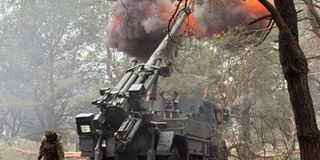
Ukrainian servicemen fire toward Russian troops during fighting in Ukraine. PHOTO | COURTESY

A casket draped with a mercenary flag sits solemnly in a small hall, while Russian men in military gear hold candles beside a framed photograph.

This was the funeral of Nemes Tarimo, the first confirmed Tanzanian fighter contracted to fight for Russia in the Russo-Ukraine war.

He was not a trained soldier but a young man convinced that his seven-year jail sentence for drug-related offences could be pardoned if he enlisted as a mercenary. On 24 October 2022, Tarimo died on the battlefield. His family mourned. The world moved on.

Nearly six years later, more than 1,000 African men, including Tanzanians, have joined the conflict.

Tarimo’s fate should have served as a stark cautionary tale, yet the pipeline of young Africans willing, or even eager, to enlist on the Russian side continues.

What began as a war expected to last a few days has now stretched to nearly four years, leaving a generation of young Africans exposed to violence, trauma, and exploitation.

The Tanzanian government has officially addressed the involvement of its citizens in the conflict only once. In 2022, then Minister of Foreign Affairs, Stergomena Tax, confirmed Tarimo’s death in Ukraine and issued a stern warning against joining foreign armies.

Since then, public acknowledgment has been minimal. But online, the story tells a different tale.

A viral video surfaced showing a Tanzanian fighter on the Russian side.

In fluent Tanzanian Kiswahili, he boasted of a $35,000 signing bonus for joining and a monthly salary of $3,000. By the time of recording, he had already received his first month’s pay and was contemplating extending his contract.

He insisted that no one was coerced into fighting, a claim echoed by the Russian Embassy in Nairobi, which stated that foreigners with legal permits to stay in Russia may join the army voluntarily.

While technically voluntary, the financial incentive is a glaring lure for young Africans facing economic hardship.

Online reactions to the video revealed the dangerous appeal of pay over principle. Comments ranged from admiration for the salary to inquiries about how to enlist.

Few mentioned the human cost, the deaths witnessed on the frontline, or the physical and psychological trauma of war.

Many seemed oblivious to the reality that the Tanzanian fighter himself spoke openly about casualties around him.

The recruitment drive reflects the protracted and deadly nature of the war. Ukraine imposed mandatory conscription, prompting many young men to flee across borders to Romania and Slovakia to avoid service.

Russia, facing heavy battlefield losses, has broadened recruitment to include foreigners, immigrants, students on visas, and even employed recruitment agents in Africa, Asia, and other regions.

Moscow maintains that all recruitment is legal and voluntary, yet the persistent flow of foreign fighters raises ethical and security concerns.

In Tanzania, the story remains largely under the radar. Attempts by The Citizen to contact the Russian and Ukrainian embassies in Dar es Salaam have yielded minimal response.

On 18 November 2025, following Ukraine’s foreign minister, Andrii Sybiha, revealing that more than 1,400 Africans had been recruited to fight for Russia, the Ukrainian Embassy in Dar es Salaam acknowledged receiving the inquiry but did not provide detailed information.

Meanwhile, social media continues to document the involvement of Africans. Videos show young soldiers clapping, singing, and smiling before being sent to the frontline—many of whom will not return.

With no official data on Tanzanians fighting in Ukraine, citizens must rely on reports from other African countries. Kenya, for example, confirmed through a National Intelligence report that thousands of its youth are on the Russian front.

Reports of Ugandan and South African recruits are also emerging, including allegations that Duduzile Zuma-Sambudla, daughter of former South African President Jacob Zuma, has been involved in recruitment efforts under the guise of security training.

The allure of money cannot be underestimated. Many young Africans see war as a shortcut to financial independence, ignoring the immediate risk to life and long-term psychological consequences.

This phenomenon is not entirely new. For years, youth from West, Central, and East Africa, including Tanzania, have risked their lives crossing the Mediterranean to reach Europe.

The International Organization for Migration has documented these dangerous journeys, highlighting the desperation that pushes young people into high-risk situations.

The longer the war drags on, the more young Africans become “expendable” in the conflict. Algorithms on social media amplify testimonies of African fighters in Russia, dancing, smiling, and showcasing material benefits.

The imagery creates a dangerous perception: that the war is glamorous or financially rewarding. It is not. Each month, more lives are lost, families are shattered, and communities are left with the consequences of absence, injury, or death.

Tanzania has the opportunity, and the responsibility, to act. The government should proactively inform citizens of the dangers, open communication channels for concerned families, and monitor suspicious travel abroad.

Community vigilance is essential, including reporting unexplained absences or travel to conflict zones.

Immigration authorities must also remain alert to prevent young Tanzanians from boarding flights to their deaths.

Equally important is addressing the economic drivers behind this trend.

Job creation initiatives, vocational training and entrepreneurship programmes should be publicised and made accessible to youth.

Without viable local opportunities, war will continue to appear as a solution to financial hardship, despite the mortal risks involved.

The lessons of Nemes Tarimo’s death remain urgent. Economic desperation should not be a passport to the frontline.

Tanzanian authorities, civil society, and communities must work together to prevent a generation from being sacrificed abroad. The pursuit of survival should not come at the cost of life, health, and future potential.

As the Russo-Ukraine war grinds on, young Africans stand at a crossroads. Awareness, education, and proactive government measures can save lives and prevent economic hardship from translating into battlefield casualties. The choice to “die to live” should never be one forced by circumstance alone.