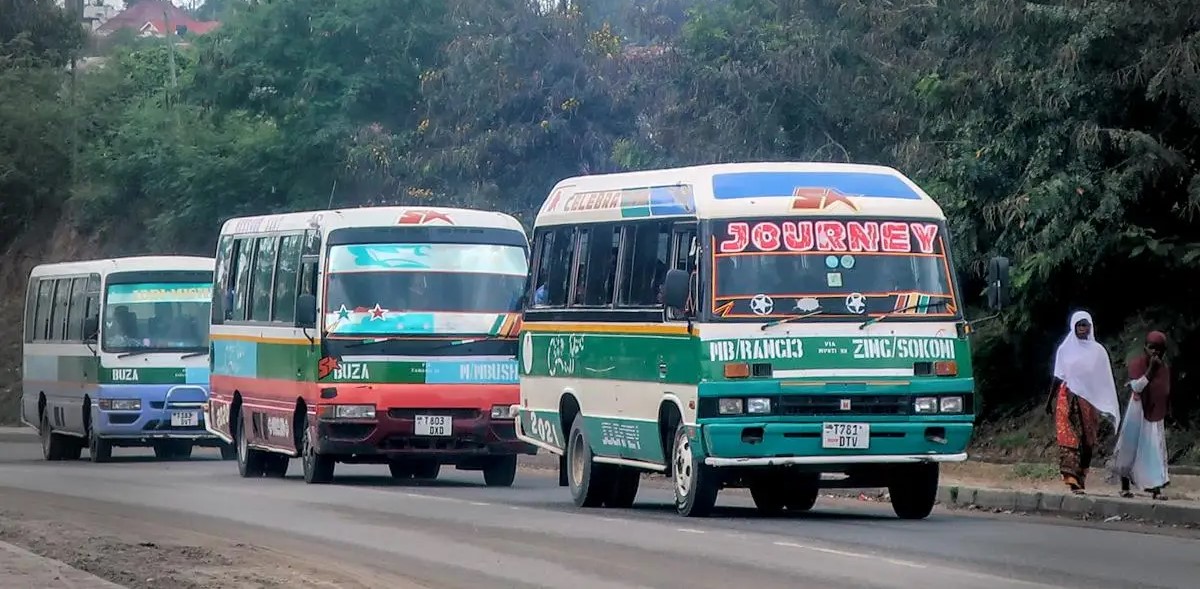
Dar es Salaam. The Land Transport Regulatory Authority (Latra) has begun engaging public transport stakeholders to explore the introduction of an electronic ticketing system for commuter buses, commonly known as daladalas, as part of wider efforts to modernise urban transport services and improve fare collection.
Currently, commuter bus conductors collect the fares in cash from passengers.
Under the proposed system, passengers will pay through digital platforms, making it easier to track payments and ensure operators receive their rightful income without leakages.
Latra Public Relations and Communications head Salum Pazzy said the initiative follows the rollout of electronic ticketing in upcountry buses, where selected transport companies have already begun issuing digital tickets under the regulator’s supervision.
He said ten companies that met the required standards were approved to pilot the system, while others are being advised to partner with compliant firms as they work to meet the conditions.
“We have already released the final list of companies that qualified and the system has been working well in regional bus services. We are now preparing to engage daladala operators and other stakeholders so that we can introduce electronic ticketing in commuter transport,” Mr Pazzy said.
He added that the move is intended to strengthen revenue collection, ensure fairness between operators and passengers and reduce disputes over fares.
“We want to make payment systems easier, safer and more transparent for both passengers and bus owners.”
How it works
According to Mr Pazzy, the new arrangement will connect daladala owners to an e-ticketing system through authorised vendors, in line with regulations that govern public transport services and ticketing procedures.
“Under the proposed system, passengers and transport operators will access ticketing services through vendors who will be issued with devices known as Point of Sale (POS) machines. Through these machines, vendors will be able to issue a ticket to every passenger boarding the bus,” he said.
“The system will enable passengers to pay for their tickets electronically, including through their vendors mobile phones. However, passengers will also have the option of paying in cash, similar to the current practice in upcountry buses.”
Mr Pazzy hinted that beyond the immediate rollout of e-ticketing, authorities are also exploring the possibility of introducing a broader Integrated Transport System (ITS) for urban commuter transport.
The system would allow passengers to pay fares using a rechargeable transport card.
To support the system, Mr Pazzy said buses will be equipped with infrastructure that allows passengers to tap or swipe their cards, ensuring that payments are automatically transferred to the respective service providers.
“Our long-term goal is to integrate all urban transport services including BRT buses, daladala and the planned commuter trains into a single payment system. As you are aware, the government is also preparing to introduce commuter train services. Our intention is to ensure that all these modes of transport are integrated so that passengers can move across the city using a single payment system.”
Mwanza among early adopters
Preparations have already started in Mwanza, where transport operators are expected to begin using electronic ticketing through a coordinated network by the end of March.
Mr Pazzy said Mwanza was selected as an early adopter because local transport unions had shown strong commitment to improving commuter services.
A commuter in Dar es Salaam, Ms Hope Kizigo, raised concerns about its implementation adding that electronic ticketing could help address fare disputes and overcharging.
“Digital ticketing would make fares clearer and reduce arguments between passengers and conductors. Sometimes conductors change fares suddenly or refuse to give change. With electronic tickets, we will know the real price,” she said.
Another commuter, Mr Hamis Mgaya, supported the idea but warned that network reliability must be ensured.
Experts urge public education
Latra Consumer Consultative Council executive secretary Daudi Daudi said the country is moving towards a future where cash transactions in public transport will gradually decline.
“This is the direction we are heading. Travelling with cash will not always be necessary. I support the decision to start with Mwanza as a case study so that challenges can be identified and resolved before expanding to other cities,” he said.
Mr Daudi described the use of technology as a positive step for operators but stressed the need for adequate public education.
“Whenever something new is introduced, people need time and guidance to adopt it. Latra should also involve mobile network operators so they can help pioneer and support e-ticketing in the market.”
Dar es Salaam Commuter Bus Owners Association acting secretary-general Shifaya Lema said the introduction of e-ticketing for daladala is not entirely new, as it is already reflected in Latra regulations.
He added that bus owners are ready to cooperate, provided the system is affordable and practical.
Register to begin your journey to our premium contentSubscribe for full access to premium content