Turning trees into jobs, income and sustainable growth across the board
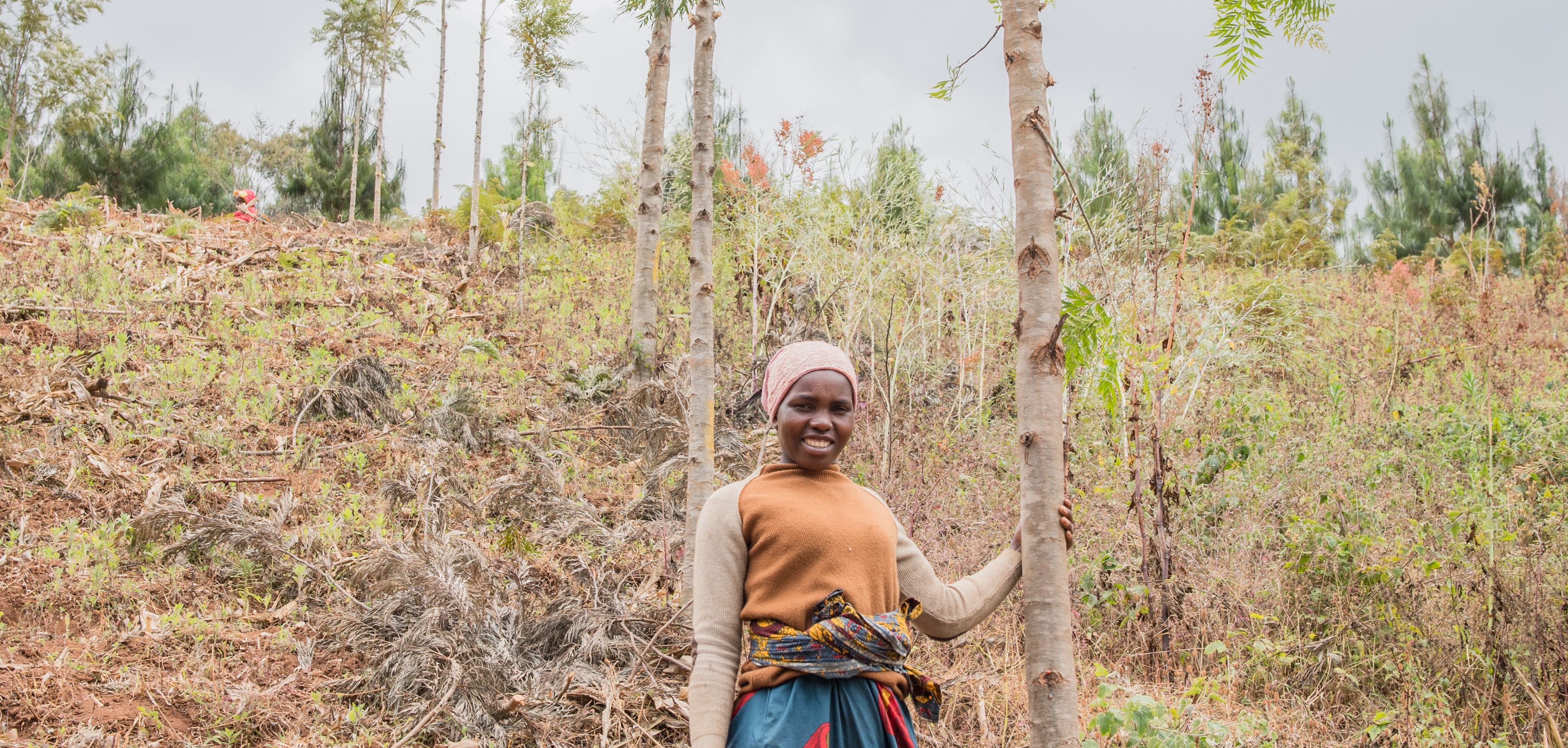
Rehema Seleman Mgova showcases her Grevillea tree plot in Kilolo District, Iringa Region, a result of the One Acre Fund initiative. PHOTO | COURTESY
By Fatuma Kweka
Across Africa, a defining economic question is coming sharply into focus: how will the continent generate enough decent jobs for its rapidly expanding youth population? Each year, millions of young people enter the labour market, yet formal opportunities remain scarce and very competitive.
While policy discussions often focus on urban industrialisation or the dynamism of the technology sector, one of the most scalable engines of employment remains largely overlooked. Agroforestry, the deliberate integration of trees into crop and livestock systems, is an environmental imperative and a promising, underutilised solution for job creation.
By 2030, Tanzania’s Ministry of Agriculture aims to create three million decent jobs for women and youth through expanded collective farming. Achieving this ambition requires changing agriculture from subsistence work into a modern, job-creating sector. For farmers like 31-year-old Rehema Mgova from Kilolo District, integrating high-value timber and fruit trees into traditional plots is turning uncertain harvests into predictable, income-generating assets.
“My hope is that what I am investing in now will help me live a comfortable life in the future. As I continue planting trees and other crops, I want to earn yields and income that can lead me toward a successful future. I want a future where my children can pursue their own dreams, and not have to farm just because it is the only option available to them,” Rehema says.
Forests represent one of Africa’s most overlooked economic frontiers. Beyond environmental benefits, trees can power value chains in food production and carbon markets. With the right investment and policy support, the forest economy can create a viable career path for young people, particularly women, who make up 67 percent of the sector’s labour force.
The economic advantage
Tree farming offers a unique economic advantage because it generates value at multiple levels simultaneously. Unlike seasonal crops that depend entirely on annual harvests, fruit and nut trees continue generating income year after year while also improving soil health and farm productivity.
High-value crops such as cashew and avocado are particularly beneficial. They connect farmers to expanding regional and export markets and create additional employment across nursery management, aggregation, processing, and logistics value chains. When farmers use even a small portion of their land for fruit or nut production, they can diversify their income streams.
This year alone, the organisation I work for, One Acre Fund, has distributed over 5 million seedlings to over 45,000 farmers in the Iringa, Njombe, Mbeya, Songwe, Morogoro, Mtwara, and Singida regions. Beyond seedlings, we also work to ensure farmers have access to markets, so that tree planting translates into real income rather than uncertainty at harvest.
Emerging carbon credit programs are also creating additional opportunities. By planting and maintaining trees, farmers can participate in global climate markets and receive payments linked to environmental stewardship. For young farmers in particular, carbon finance represents a new and innovative income stream tied directly to climate solutions.
“I was motivated to take carbon credit trees after a One Acre Fund Field Officer told me that I would earn money for taking care of the trees. The first year I remember receiving my survival payment while I was at the market and I used it to buy household essentials,” Rehema says. “Once I start receiving payment from the program, other people will see how I am benefitting, and therefore more farmers will also want to benefit and plant the trees.”
Why women and youth should lead the way
Africa’s agricultural workforce increasingly has to be the youth, and young women, like Rehema, already form the backbone of rural food systems by managing farms and ensuring household food security. Young people also bring energy, innovation, and a willingness to adopt new technologies, so engaging both youth and women’s groups in agroforestry is essential.
This month, as we commemorate International Women’s Day and the Day of Forests, we have an important opportunity to push the conversation around agroforestry beyond conservation alone. The real opportunity lies in positioning trees as engines of inclusive economic growth, sectors where young farmers, particularly young women, can earn income, build assets, and shape the future of sustainable agriculture.
The opportunity is within reach, but it demands coordinated action. Policymakers must prioritise youth-focused financing and expand access to land. Financial institutions need to provide accessible, affordable loans and innovative blended-finance models for agriculture. Development partners and organisations like One Acre Fund must continue to connect farmers to seedlings, training, and reliable markets.
If these pieces come together, agroforestry can move from the margins of policy conversations to the centre of Africa’s economic strategy. By investing in pioneers like Rehema, it is about reforesting land, cultivating a sustainable, high-value economic backbone, creating jobs, and long-term farmer prosperity for youth and women.
Fatuma Kweka is the Government Relations Lead at One Acre Fund in Tanzania