A person can spend years fixing real-world problems but remain excluded from some opportunities because the system has no clear mechanism for translating that experience into a recognised competency.
At Keko in Dar es Salaam, plumbing expert Peter Tarimo has built a reputation over the years for solving problems that many people would struggle to fix.
From leaking water systems to difficult installations, his knowledge has largely been acquired through hands-on experience. He knows the tools, understands the systems and most importantly, knows how to get the job done.
But last year, his practical expertise was not enough to secure him a role in a project he believed he was qualified to handle. The reason, he says, was simple: he did not have the required formal academic credentials.
“I knew I could do the work. I had done similar jobs for years, but because I did not have the required academic papers, I was left out,” he says.
For him, the experience was painful not because he lacked ability, but because the system seemed to measure his worth by qualifications rather than by what he could actually do.
Today, the Keko-based plumber says he is following with interest the Tanzania Commission for Universities’ (TCU) plan to develop guidelines for micro-credentials, a move he believes could finally give people like him a formal way to have their practical skills recognised.
“If there is a system that can test what I know and recognise the skills I have gained through experience, it will give people like me a better chance,” he says.
His experience captures a wider problem facing Tanzania: people with useful skills do not always have recognised credentials.
For years, workers have learnt through apprenticeships, employment and short courses, adding skills to what they already know. Yet those additional competencies can remain invisible within the formal qualifications system.
Now, Tanzania is considering a new way of addressing that.
Giving skills a place in the system
TCU plans to develop guidelines for micro-credentials as the country seeks to ensure that short, skills-based learning can be formally assessed and recognised.
The commission says Tanzania is currently at the awareness and framework-development stage, with detailed guidelines yet to be developed.
TCU Executive Secretary Prof Charles Kihampa says the commission expects to begin developing the guidelines in the current financial year, while drawing lessons from countries such as Mauritius, Seychelles and some European countries.
“We want to create awareness, and from this financial year, we will start developing some guidelines,” says Prof Kihampa.
Experts note that the proposed framework is significant because micro-credentials are not simply certificates showing that someone attended a short course. They are intended to demonstrate specific knowledge, skills and competencies gained through targeted learning and assessment.
In simple terms, the question changes from “Did you attend the course?” to “What can you actually do?”
That distinction could be particularly important for a country trying to produce more job-ready workers while also making better use of skills already available in society.
Mauritius offers a possible model
The discussions on micro-credentials have been informed by the experience of Mauritius.
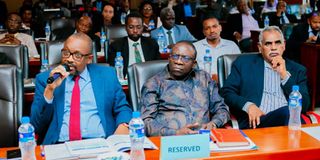
During a consultative workshop involving university leaders in Tanzania, held during the National Education, Skills and Innovation Week in Tanga, Commissioner of the Higher Education Commission of Mauritius, Prof Romeela Muhee, explained how her country has integrated micro-credentials into its higher education system.
She said technological change, shifting labour-market demands and the growth of lifelong learning have created a demand for more flexible ways of acquiring and recognising skills.
“Micro-credentials have emerged as an innovative approach to recognising the acquisition of specific knowledge, skills and competencies through short, targeted learning programmes,” she said.
Mauritius has developed a structured policy and quality-assurance framework for the system, with micro-credentials linked to its National Credit Value and Transfer System.
The Mauritian model defines micro-credentials as records of learning outcomes acquired through a small volume of learning and assessed against clear and transparent criteria.
“They can operate as standalone qualifications or, where appropriate, be combined to contribute towards larger qualifications,” she said.
That experience provides Tanzania with an important lesson: recognition cannot simply mean allowing universities to offer more short courses.
There must be a system that establishes what the credential means, who can issue it, how competence is assessed and who will recognise it.
For the plumber in Keko, such a system could offer something the traditional qualifications structure has not always provided.
Prof Kihampa says one could take a six-week micro-credential in plumbing and become qualified to do plumbing work. One could then take a micro-credential in electrical installation and become qualified to carry out electrical work in a building.
Such credentials could therefore be accumulated over time, allowing an individual to build a portfolio of recognised skills.
For plumbing expert Tarimo, that possibility matters.
“I may not have followed the same academic route as someone who has gone through university, but I have skills that people need every day. What I want is for those skills to be properly tested and recognised,” he says.
The proposed system, however, is not intended to replace degrees.
“This is not an academic degree that one can use to move to a master's. This is for work. It is only for being allowed to work,” says Prof Kihampa.
A micro-credential would not turn practical experience into a bachelor's degree. Instead, it would provide recognition for a specific competency that has value in the workplace.
Recognition could change short courses
The plan could also benefit thousands of workers who are already using short courses to improve their skills.
A university graduate may complete a short course in data analysis, digital technology, project management, financial systems or another specialised field.
The additional knowledge may make the employee more productive, but the course often remains separate from the person's main academic qualification, recorded only as a certificate of completion or participation.
Mzumbe University academic Dr Juma Mmari says this has been a longstanding challenge.
“This will help greatly in the process of academia-industry collaboration because experts without degrees will be recognised and able to help produce more skilled professionals. For academics, it will also give status to the short courses we undertake,” he notes.
The proposal therefore has implications beyond individual workers.
Tanzania is increasingly seeking closer collaboration between universities and industry, including bringing experienced practitioners onto campuses to teach practical skills.
A system that recognises specific competencies could make it easier to identify and value industry experts. The Keko plumber's experience illustrates why this matters.
A person can spend years fixing real-world problems but remain excluded from some opportunities because the system has no clear mechanism for translating that experience into a recognised competency.
Universities could also benefit
TCU Chairperson Prof Makenya Maboko says recognition could encourage universities to introduce more skills-oriented short programmes and attract workers who want to upgrade particular competencies.
“Because the credential will be recognised, people will be attracted to join short courses by paying for them, helping institutions as a source of income,” he says.
This could give universities another way of responding to labour-market changes.
Rather than developing only long academic programmes, universities could offer targeted learning opportunities that respond to specific skills shortages. TCU is also considering how micro-credentials could fit within existing degree programmes.
Prof Kihampa says university students could earn separate micro-credentials for particular competencies, with corresponding credits recorded on their academic transcripts.
This could mean that a graduate leaves university not only with a degree but also with a clearer record of practical competencies acquired along the way.
Despite the promise, Tanzania's micro-credential journey will not be without challenges. The country already has universities, colleges and training institutions offering short courses. The question is whether the skills gained will be recognised outside the institution that provides the training.
Prof Kihampa captured the challenge when discussing existing short courses, including those offered by institutions such as the Vocational Education and Training Authority (VETA).
“The issue is to make this thing recognised. By whom?” he queries.
That question should be at the centre of the guidelines now being developed. For micro-credentials to have real value, employers must understand them, professional bodies must trust the assessment and regulators must be satisfied that the holder has the competence required for a particular occupation.
If TCU can develop a credible system that protects quality while giving employers, professional bodies and regulators confidence in the credentials, the country could begin to unlock a large pool of skills it already has.