From schoolyard sweets trader to Africa's richest man, Dangote eyes his biggest deal yet
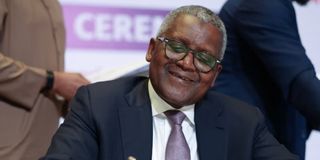
Aliko Dangote, President and Chief Executive Officer of Dangote Group, signs a document during the signing ceremony for the Dangote Refinery initial public offering (IPO) in Lagos, Nigeria, September 7, 2026. PHOTO | REUTERS
Nairobi/Lagos. More than half a century after launching his business career selling candy to classmates in northern Nigeria, serial entrepreneur Aliko Dangote is preparing the biggest stock market listing Africa has ever seen.
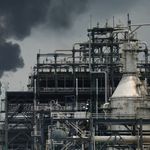
Launched on Monday, the sale of $1.6 billion worth of shares in his giant Lagos oil refinery — an initial public offering that will see the refinery list in Nigeria in November — values the company at $47 billion.
The deal is the culmination of Dangote's more than a decade-long effort to develop a mega-refinery now ranked among the world's 10 largest. It also marks the peak to date in a career that has seen him rise from schoolyard sweets merchant to Africa's richest man.
And the 69-year-old has no plans to stop there, with proceeds from the IPO destined for an expansion drive that will double the Nigerian facility's capacity and launch a new refinery project on the other side of the continent in Kenya.
Sugar, cement, rice and salt
Born in Nigeria's northern state of Kano in 1957, Dangote was raised principally by his maternal grandfather, whom he has credited with encouraging his interest in business.
"When you are raised by an entrepreneurial parent or grandparent you pick up that aspiration," he said in a 2015 interview. "It makes you be much more aggressive, to think anything is possible."
Reuters was unable to secure an interview with Dangote despite repeated requests.
After graduating from university in Egypt, he began trading sugar and rice in 1977 with a loan from a relative.
He incorporated Dangote Industries, in which he now holds 85%, in the early 1980s, building it into a conglomerate spanning sugar, cement and salt that operates in more than a dozen African countries.
Dangote's personal fortune, currently estimated at between $31 billion and $35 billion, grew on the back of his lucrative cement business.
Government policies that fostered domestic cement production helped Nigeria become largely self-sufficient in the essential building material, though they also fuelled criticism that limited competition kept prices high.
Economic folk hero to some, villain to others
With wealth came influence.
Already two decades ago, U.S. diplomats in a leaked 2005 cable said he was considered an "economic folk hero", opens new tab by some but was viewed as a "villain" by others, who suspected he used his proximity to politics to further his business.
"The truth resides somewhere between these caricatures," they wrote.
People who have met him often describe Dangote as unusually reserved for someone of his wealth and influence.
"He is a man with an instinct for opportunity and the discipline to turn ambition into something real," said Kenyan business owner and author Gina Din Kariuki.
"But that is not what stayed with me, it was his humility."
Shunning flashy displays, he often drives himself. And despite periodically threatening to buy his favourite soccer team — London's Arsenal — he prides himself on keeping the bulk of his fortune in Nigeria.
"He is one hell of a hard worker, who knows all the bolts and nuts of each of his business," said Bismarck Rewane, CEO of Lagos-based Financial Derivatives Company Ltd, who has known Dangote for more than two decades.
"Some people call him a control freak. I see it as passion to see things done."
Not everyone is a fan, however, and local fuel traders in Nigeria accuse Dangote of leveraging political ties to squeeze out competitors.
He argues his 700,000-barrels-per-day refinery can now meet Nigeria's fuel needs and is battling in court to end imports. Regulators, however, have warned of a risk of a fuel supply monopoly.
Neither Dangote nor officials at the Dangote Group responded to requests for comment on the allegations.
But he has said the listing should help counter monopoly concerns.
"They will now say we have shares, so let everybody have a part of it," he told a conference last year.
The Iran war's stark exposure of oil-rich but refinery-poor Africa's dependence on fuel imports brought heightened attention to Dangote's stated mission of pushing the continent towards self-sufficiency.
After the conflict sparked concerns over fuel supplies, Kenya approached Dangote about building an East African refinery, according to a person familiar with the discussions.
Two months later, Dangote joined Kenyan and Ugandan leaders to announce the project, which he said will break ground this month.