How colonial-era law delays road compensation for crash victims
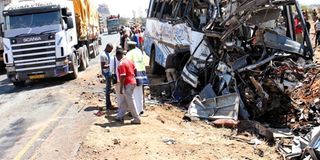
The bus accident scene at Pandambili in Kongwa District along the Dodoma-Morogoro highway, which claimed several lives and left others injured. PHOTO | FILE
Dar es Salaam. For many road accident victims in Tanzania, surviving a crash marks merely the start of another difficult journey to secure compensation.
Escaping death often leads directly into a complex legal battle to prove fault, assemble records, and navigate an unfamiliar system while coping with trauma.
Experts say systemic delays in compensating crash victims stem from outdated colonial legislation, police procedural delays, limited public awareness of insurance rights, and demanding paperwork requirements enforced by insurers.
The revelation was made during the three-month (May to August) investigation conducted by The Citizen in Coast, Morogoro, Dodoma and Mbeya Regions.
During the investigation, the Road Safety Ambassador executive director, Mr Augustus Fungo, told The Citizen that compensation delays are deeply rooted in the country’s legal framework.
He said that the governing statute, the Motor Vehicles Insurance Act (Cap 169), is an unrevised colonial relic.
“The problem begins with the law itself. The Motor Vehicle Insurance Act, Cap. 169, is a colonial-era law that Tanzania inherited and which has remained largely unchanged since it was enacted,” said Mr Fungo.
“It was originally introduced as an Ordinance during the colonial period and was later converted into an Act, but the underlying law has never undergone a substantive review to reflect the country’s current circumstances,” he added.
Under Cap 169, motor vehicles on public roads must carry third-party insurance covering liabilities for passenger injuries, loss of luggage or death.
Although the law aims to ensure compensation, public awareness of these rights remains low.
A major obstacle is fault liability.
“The biggest challenge in the law is that our legal system recognises what is called ‘fault liability,’ meaning a person cannot be compensated until it is established that the person who caused the damage was at fault,” remarked Mr Fungo.
Consequently, he said injured victims must await police investigation outcomes before insurance claims can proceed.
Delays worsen when crashes occur far from a victim’s home region, leaving them dependent on distant authorities for records.
Mr Fungo cited the case of a friend travelling from Dar es Salaam to Mwanza who was injured in Singida and has yet to receive compensation.
“An accident happens suddenly and everything is dealt with as an emergency. When relatives return to the police station, they may find that the documents are not ready,” he said. Finding a driver innocent can leave victims stranded, while uninsured vehicles force victims into civil suits against owners.
Where vehicles are insured, claimants must submit medical records, police files, claim forms and court judgments, while bearing immediate financial burdens.
Tanzanian law places no obligation on the party at fault to pay a victim’s medical expenses while a claim is being processed.
“If the person decides to help, that is simply humanity. Legally, there is no obligation on the person who caused the accident to pay the victim’s medical expenses while the compensation process is being handled,” explained Mr Fungo.
Household income is severely disrupted when victims cannot work. Technical errors on police forms or missed reporting deadlines can also trigger claim rejections. Procedural disconnects between criminal investigations and civil remedies further aggravate the situation.
The East Africa Law Society (EALS) Secretary General, Mr John Seka, said although road crash claims are civil matters, the process inevitably begins with a Traffic Police investigation.
“People simply do not know what to do when an accident occurs. A claim arising from an accident is a civil matter, but when an accident happens, the first process that must take place is the police traffic investigation,” he said.
When drivers admit liability early to settle minor penalties, police may conclude cases without engaging victims who are hospitalised.
When directed to insurers, victims face extensive document checklists and instructions to await complete physical recovery.
“The insurance company will start asking for documents, and there are many of them. The process of submitting those documents can take a very long time.
They may also tell you to wait until you have fully recovered,” said Mr Seka. Patients needing costly operations often abandon claims because they lack funds.
“You may find that someone has been injured because of another person’s negligence and needs two or three operations. At that point, they may not even have the money to pursue the claim. When many victims encounter the long insurance process, they simply give up,” he said.
Offered payouts are often inadequate for low-income earners, while court action requires costly legal specialists.
To assist crash victims, Mr Seka advocated exploring India’s “no-liability” compensation approach, which allows victims to receive immediate financial support before liability is determined.
A government Lawyer from the Tanzania Police Force, Deus Sokoni, affirmed that public ignorance remains a major obstacle.
“Many people are not familiar with the processes. They do not know what to do or which steps to follow. That is where some end up losing out on their rights,” he said.
He stressed that the Tanzania Insurance Regulatory Authority (Tira) must fulfil its responsibility to educate the public.
Commander Sokoni noted that police provide procedural guidance but do not represent victims before insurance companies.
“The police provide guidance and explain the procedure, but they do not go to the insurance company on your behalf. You have to go yourself.
If you go without basic knowledge of your rights, you may be told something, accept it because you do not know any better, and ultimately suffer a loss,” he explained.
He emphasised that victims should obtain Police Form 90 (PF90) promptly to notify insurers.
“The PF90 should be secured the same day the person has been involved in an accident so that he/she can notify the insurer.
If that is not possible, it should be done the following day, provided he/she can follow it up,” said the senior police official. Although victims naturally prioritise medical treatment over financial compensation, delays by officials frequently prolong the process unnecessarily.
To address delays caused by ongoing court cases, the Criminal Justice Commission recommended that victims receive interim compensation during court proceedings where their involvement in the crash is undisputed.
“Why should a victim not be compensated while the case is before the court? There is no dispute that this person was an accident victim.
Why should we wait until the case is concluded when the person being prosecuted is the bus owner, and there is no dispute that the bus was involved in the accident?” questioned Commander Sokoni.
He argued that Tira has the authority to enact insurance regulations requiring immediate compensation. Tira director of compliance and actuarial services, Mr Alex Rocky, said claims can be settled within 45 days or as quickly as one or two days, provided documentation is complete. “The claims could be settled in as little as a day or two, depending on their nature and whether all supporting documents were available,” he said.
“Normally, 45 days is the maximum period. Claims can be paid even within two days or one day, but the biggest challenge causing many claims to be delayed is challenge in the documentation,” he said.
He stressed that missing receipts cause many delays, emphasising that overcoming these hurdles requires legislative reform, interim payout regulations and streamlined workflows for accident victims.
Register to begin your journey to our premium contentSubscribe for full access to premium content