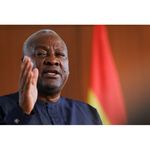
Ghana said France was open to having discussions with a coalition of countries that are calling for reparations for transatlantic slavery, following a meeting last week with President Emmanuel Macron.
Ghana's President John Dramani Mahama, accompanied by foreign minister Samuel Okudzeto Ablakwa and other officials, held talks with Macron in Paris on Wednesday last week.
Ablakwa said on X after the meeting that Macron has indicated France was open to discussions on reparations, including the return of looted artefacts, addressing global economic inequities and dismantling structural racism.
An official from Élysée Palace said on Sunday that both countries discussed France's efforts to return culturally significant objects and human remains, as well as the legal frameworks around these restitutions.
The official did not mention the additional measures cited by Ablakwa.
The meeting followed the United Nations' adoption last month of a Ghana-led resolution recognising slavery as the "gravest crime against humanity" and calling for reparations. France, along with other European countries, abstained.
France's representative at the U.N. said the abstention was due to concerns that the resolution appeared to "establish a hierarchy among crimes against humanity".
Ablakwa said that despite that abstention, Macron had said France was willing to have an "open and honest dialogue" on the matter.
In 2001, France recognised transatlantic slavery as a crime against humanity. But, like most European nations, it has not formally apologised for its involvement or committed to reparations.
From the 15th to the 19th century, at least 12.5 million Africans were kidnapped and forcibly transported by mostly European ships and sold into slavery. France trafficked an estimated 1.3 million people, according to the Slave Voyages database.
Last year, Macron said he would set up a commission to examine France's past with Haiti.
Longstanding calls for reparations have gained momentum worldwide but so has a backlash, with critics arguing modern states should not be held accountable for historical wrongs.