Mogadishu. The United States has said it will prevent the United Nations from supporting an African Union peacekeeping mission in Somalia starting next year, two documents showed, in a move that officials said is likely to end its operations.
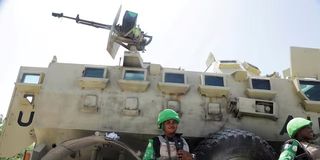
The nearly 12,000-strong AU mission props up the fragile government in Mogadishu, helping it push back al Qaeda-linked al-Shabaab militants, whose previous offensives have brought them within striking distance of the capital and who control large swaths of the countryside in southern and central Somalia.
However, the mission, known as the AU Support and Stabilisation Mission in Somalia (AUSSOM), relies heavily on UN support for essential logistics such as food, water, fuel, medical services and transportation of troops.
Under President Donald Trump, the US government has grown increasingly frustrated with the administration in Mogadishu, which is riven by political infighting and has failed to defeat the insurgents despite years of international support.
In a July 1 diplomatic note reviewed by Reuters, Washington informed the AU that it would not support the UN Support Office in Somalia (UNSOS), whose total budget is around $500 million, beyond the end of this year.
The US government would not object to the UN Security Council renewing the AU mission's mandate but would oppose any extension that included UN logistical or operational support, it said.
The AUSSOM budget last year was $190 million, but financing for the mission has become increasingly precarious, leading to a huge funding shortfall. Washington last year blocked a plan to shift to a financing model that would have seen UN funds cover three-quarters of the budget.
'Huge implications'
On Thursday, the AU Commission informed members of its Peace and Security Council of the US decision, warning that it carried "significant implications for the logistical sustainment, operational posture and financing of the Mission", according to a letter from the AU to its members.
A US State Department spokesperson confirmed to Reuters that Washington would no longer support UNSOS operations.
"The United States has provided nearly $2 billion in assessed contributions to UNSOS and its predecessor... Despite this investment, Somalia has been unable to independently sustain progress that AUSSOM and its predecessor missions have made to degrade and contain al-Shabaab or take ownership of most of its own security functions," the spokesperson said.
"We should not continue to fund a mission that has not met core objectives and diverts resources away from security priorities with more immediate and direct implications for US interests."
Somalia's defence ministry, the US Defense Department, the UN Transitional Assistance Mission in Somalia and the African Union Commission did not immediately respond to requests for comment for this article.
"This will have huge ramifications for Somalia," Ahmed Koshin, a former director general in Somalia's defence ministry and current member of the national parliament, told Reuters.
"The peacekeeping mission is in danger because ultimately you need to be able to support and sustain these forces," he said.
Two diplomats with direct knowledge of the AU mission said it would not be able to continue unless another body replaced the UN support.
UN spokesperson Stephane Dujarric said the UN was aware of the U.S. decision. "At this stage, we are discussing this internally and engaging with the African Union, Federal Government of Somalia and other partners," Dujarric said.
In its note to the AU, Washington delivered a stinging critique of the Somali government's efforts to restore order in the country.
"Internal rivalries and political infighting continue to undermine the fight against al-Shabaab and ISIS, and the benefits of international support will remain limited until Somalia's leaders unite to address the country's security and governance challenges," it said.
Reporting by David Lewis in London, Faisal Ali in Mogadishu and Giulia Paravicini in Nairobi; Additional reporting by Andrea Shalal in Washington; Editing by Ammu Kannampilly, Philippa Fletcher and Cynthia Osterman