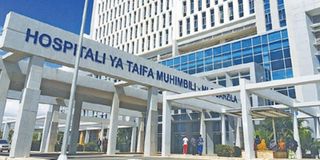
Dar es Salaam. The Muhimbili National Hospital (MNH) has launched a breast reconstruction programme aimed at restoring the confidence and quality of life of women who have lost their breasts due to cancer and other medical conditions.
The initiative follows hospital records showing that during the 2023/24 alone, about 200 women underwent mastectomy procedures, in which one or both breasts were surgically removed, mainly due to breast cancer.
Since the programme was introduced in 2024, the hospital has successfully performed one breast reconstruction surgery and is preparing to carry out four more procedures this week, bringing the total number of beneficiaries to five.
Speaking to journalists yesterday, July 1, the head of the Department of Plastic and Reconstructive Surgery at MNH, Dr Ibrahim Mkoma, said the service is being offered in collaboration with specialists from the University of California, San Francisco.
"Breast cancer remains the leading cancer among women in Tanzania, yet many patients do not have access to reconstructive services after undergoing mastectomy," he said.
According to him, many women who undergo breast removal surgery are left with significant physical and psychological challenges that affect their quality of life.
"Some patients lose one breast while others lose both. As Muhimbili, we decided to introduce these surgeries to help restore their appearance and improve their wellbeing," Dr Mkoma explained. He said the collaboration with international experts is also intended to equip local doctors with the skills needed to continue providing the service independently in the future.
The head of the Plastic and Reconstructive Surgery Unit at MNH, Dr Laurean Rwanyuma, said the unit is responsible for reconstructive procedures for patients who have completed treatment for breast cancer.
"There are different types of breast reconstruction procedures. Some involve reducing or reshaping the breast, while others focus on rebuilding a breast that has been completely removed," he said.
Dr Rwanyuma noted that reconstructive surgery significantly improves patients' quality of life by restoring self-confidence and helping them regain a sense of normalcy.
Since the specialists arrived this week, 18 patients have been assessed, with six found eligible for reconstructive surgery. Four of them are expected to undergo reconstructive surgery by Friday, while the remaining two will continue receiving care under local specialists.
"Our experts are continuously being trained to perform breast reconstruction using tissue from other parts of the patient's body," he added.
Plastic surgeon at MNH, Dr Frank Muhamba, said breast reconstruction involves using tissue from another part of the patient's body to rebuild the breast that has been removed.
"The procedure helps restore a patient's self-esteem, improves her quality of life and gives her the confidence to participate fully in society again," he said.
Dr Muhamba said the programme has been running since 2024 in partnership with specialists from the United States.
"We successfully performed the first reconstruction surgery in 2024 and follow-up assessments showed that the patient was doing well. We now hope to reach many more women," he said.
He added that MNH has established a special plastic surgery clinic operating between 9 am and 1 pm to provide consultation and follow-up services for patients requiring reconstructive procedures.
A plastic surgeon from San Francisco, Dr Edward Miranda, said breast cancer affects one in every nine women during their lifetime, making reconstruction an essential component of treatment for many patients.
"Breast cancer creates enormous stress not only for the patient but also for the entire family. Breast reconstruction is a critical part of comprehensive treatment," he said.
Although not every patient chooses reconstruction surgery, Dr Miranda said studies conducted over the years have consistently shown that women who undergo the procedure experience significantly better physical and mental wellbeing.
"I am happy to be here to assist, guide and support our colleagues as they expand access to these life-changing services," he said.
Register to begin your journey to our premium contentSubscribe for full access to premium content