UN warns Ebola outbreak could cost Africa up to $3.6 billion
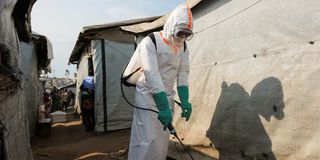
A health worker in full personal protective equipment (PPE) disinfects an area while preparing for the burial of suspected Ebola victims at the Kigonze displaced persons camp in Bunia, eastern Democratic Republic of Congo, on June 18, 2026, one month after the outbreak was declared.PHOTO | REUTERS
Geneva. The United Nations has warned that the ongoing Ebola outbreak in Central Africa could cost the continent up to $3.6 billion and lead to the loss of hundreds of thousands of jobs, raising fears of a wider economic and development crisis if containment efforts fail.
The warning comes as health authorities struggle to contain the rapidly spreading outbreak of the Bundibugyo strain of Ebola in the Democratic Republic of Congo (DRC) and neighbouring Uganda, with international agencies calling for urgent financial and logistical support.
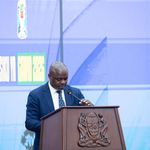
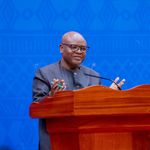
Speaking on Tuesday, the United Nations Development Programme (UNDP) Resident Representative in the DRC, Damien Mama, said the outbreak posed a threat not only to public health but also to economic growth, livelihoods and long-term development across Africa.
"If we have the resources and we step up, we can contain this outbreak and prevent further losses," Mr Mama said.
"If we do not, this health emergency risks becoming a much deeper and prolonged development crisis across the region and potentially the continent."
According to recent estimates by the World Health Organization (WHO) and the Africa Centres for Disease Control and Prevention (Africa CDC), the current outbreak has become the largest ever recorded involving the Bundibugyo strain, which has no approved vaccine or specific treatment.
The outbreak, declared in May, has infected more than 1,100 people in the DRC and Uganda and caused hundreds of deaths, with health officials warning that the actual number of infections could be significantly higher due to underreporting and difficulties in tracing contacts in conflict-affected areas.
The WHO has classified the outbreak as a public health emergency of international concern and warned that the spread of the virus is currently outpacing containment efforts.
Health workers have faced major challenges, including armed conflict, population displacement, attacks on treatment centres and widespread mistrust of health authorities in affected communities.
Africa CDC Director-General Jean Kaseya recently said the funding required to combat the outbreak had risen sharply from an initial estimate of $518 million to about $1.4 billion, reflecting the growing scale of the emergency and the humanitarian response needed.
Although international partners have pledged approximately $910 million to support response efforts, only a small portion of the funds has been disbursed, raising concerns about the ability of health authorities to contain the disease before it spreads further.
The United States Centers for Disease Control and Prevention has also elevated its Ebola response to its highest emergency level, warning that without stronger interventions the outbreak could eventually exceed 20,000 cases.
The United Nations has stressed that rapid investment in surveillance, treatment facilities, border screening, laboratory testing and community engagement remains critical to preventing the health crisis from evolving into a broader economic and social emergency affecting the continent.