Dar es Salaam. Lawyers representing applicants in a case challenging the establishment of the Presidential Commission of Inquiry into incidents surrounding the October 29, 2025, General Election have raised a series of legal objections, arguing that the commission was created and constituted in violation of the law.
Their arguments emerged during a detailed hearing before the High Court of Tanzania, Dar es Salaam Sub-Registry, where the court considered a judicial review application questioning the legality of the commission formed by President Samia Suluhu Hassan.
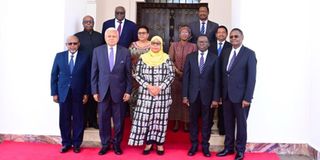
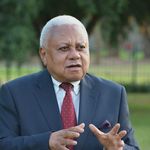
The commission, chaired by former Chief Justice Mohamed Chande Othman, was tasked with investigating violence and unrest reported during and after the October 29, 2025, General Election.
This article continues a review of the High Court ruling on the matter, focusing on the responses filed by the respondents and the legal arguments presented by the lawyers representing both sides.
Respondents oppose the application
After receiving the court documents, the first respondent, the Attorney General, opposed the application through an affidavit and supporting explanations submitted by Principal State Attorney Mark Mulwambo.
The second to ninth respondents, comprising the chairperson and members of the commission, also opposed the application through joint submissions.
In their responses, the respondents rejected the applicants’ claims and argued that the President acted fully within the law when establishing the commission and appointing its members.
They cited the Commissions of Inquiry Act as the legal basis for the President’s authority to create such a body.
According to the respondents, the allegations raised by the applicants regarding bias, illegality, and abuse of power were based on assumptions rather than verifiable evidence. They therefore urged the court to dismiss the application.
However, the 10th respondent, the Tanganyika Law Society (TLS), took a different position.
Through an affidavit and explanations submitted by its Executive Secretary, Ms Mariam Othman, the society largely supported the arguments advanced by the applicants.
Court hearing
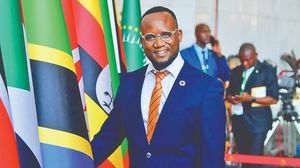
During the hearing of the case on February 26, 2026, the applicants’ lawyers, Hekima Mwasipu and Jebra Kambole, presented detailed arguments explaining the basis of the claims contained in the judicial review application and the supporting affidavit.
In their submissions, they also referred to several precedents previously decided by the Court of Appeal of Tanzania to support their arguments.
The Attorney General and the commission’s commissioners were represented by Principal State Attorney Vivian Method.
She was assisted by Senior State Attorneys Daniel Nyakiha and Narindwa Sekimanga, as well as State Attorney Erigh Rumisha.
Meanwhile, the Tanganyika Law Society was represented by lawyers Ferdinand Makore and Kulwa Shilemba.
Applicants question the legality of the commission
Presenting arguments on behalf of the applicants, Mr Mwasipu raised several issues concerning the legality of the commission.
One of the first issues he addressed was the manner in which the commission had been described.
He told the court that the body had been referred to as an “Independent Commission of Inquiry”, yet such a designation is not recognised by the law governing commissions of inquiry in Tanzania.
According to him, the law only empowers the President to establish a “Commission of Inquiry”, without attaching additional descriptions such as “independent”.
Mr Mwasipu argued that the use of such terminology created a fundamental legal defect that undermined the validity of the commission.
Lack of clarity in the mandate
Another key argument raised by the applicants concerned the commission’s terms of reference.
Mr Mwasipu told the court that Section 3(2) of the Commissions of Inquiry Act requires the appointing authority to clearly specify the subject matter of an inquiry.
However, he argued that the description provided in the Government Notice establishing the commission was not sufficiently specific.
According to him, the instruction that the commission should investigate “incidents of breach of peace” failed to clearly describe the nature and seriousness of the events that occurred.
In his view, the mandate should have explicitly mentioned deaths, destruction of public and private property, enforced disappearances, and other consequences of the unrest.
Oath and publication issues
The applicants also questioned whether the commission had complied with legal requirements concerning oaths and official publication.
Mr Mwasipu argued that members of the commission had not taken the required oath before assuming their duties.
He said this omission violated Section 7 of the Commission of Inquiry Act, which requires commissioners to take an oath before beginning their work.
In addition, he argued that the circumstances leading to the establishment of the commission had not been properly published in the Government Gazette as required under Section 3(1) of the Act.
Questioning the appointments
Mr Mwasipu further argued that the appointments made by the President were unreasonable and illogical.
He explained that a decision may be considered unreasonable if it is one that no reasonable authority would make or if the decision-maker fails to consider important factors.
To support this argument, he cited several cases, including Legal and Human Rights Centre and Two Others v Minister for Information, Culture and Sports and Three Others, Civil Case No. 25 of 2018, decided by the High Court of Tanzania in Mtwara.
He told the court that all commissioners appointed to the body were retirees aged above 60, which he said raised questions about the inclusiveness and representativeness of the commission.
According to him, the appointing authority should have considered including younger members as well as representatives from independent institutions.
Among the institutions he mentioned were the Tanzania Episcopal Conference and the Tanzania Muslims Council (Bakwata).
Concerns over possible bias
Another major issue raised by the applicants’ lawyers concerned the possibility of bias among certain commissioners.
Mr Mwasipu pointed out that one of the commissioners, Stergomena Lawrence Tax, previously served as Minister for Defence and National Service.
Another commissioner, Said Mwema, served as Inspector General of Police.
He argued that these previous roles could raise reasonable concerns about impartiality, particularly if the commission were required to examine the conduct of security institutions during the election unrest.
Mr Mwasipu further told the court that all members of the commission were retired public servants.
Because they previously served in positions appointed by the President, he argued, they might not be able to objectively investigate matters linked to the authority that appointed them.
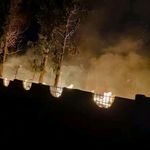
He also noted that during the unrest, some court buildings and police stations were reportedly damaged or burned.
In his view, the presence of retired judges and former police leaders on the commission could create perceptions of conflict of interest.
Allegations of abuse of discretion
On his part, lawyer Mr Kambole addressed what he described as the improper exercise of discretionary power.
He clarified that the applicants were not arguing that the President lacked the legal authority to establish a commission or appoint its members.
Instead, he said the applicants were challenging the manner in which that authority had been exercised.
According to him, the President appointed only former public officials without including representatives from other segments of society.
He argued that broader representation from independent institutions could have helped ensure balance and strengthen public confidence in the commission.
TLS supports applicants’ arguments
The lawyer representing the Tanganyika Law Society, Mr Makore, also supported several arguments presented by the applicants.
He told the court that the commission was invalid because its establishment had not been properly published in the Government Gazette.
According to Mr Makore, Section 20 of the Commissions of Inquiry Act requires the names of commissioners to be published in the Gazette for their appointments to be legally effective.
He further argued that Order C.27 of the Public Service Standing Orders of 2009 requires government publications and official announcements to be issued on Fridays of the relevant week.
However, he told the court that the Gazette copy presented by the respondents as proof of publication showed that it had been printed on Thursday, November 20, 2025.
In his view, this discrepancy meant the publication did not comply with the relevant administrative requirements.
Oath requirement questioned
Mr Makore also raised concerns about whether the commissioners had taken the oath required under Section 7 of the Commissions of Inquiry Act.
He argued that in the respondents’ affidavits and replies, there was no explicit statement confirming that the commissioners had taken the oath before commencing their duties. Nor were any oath forms attached as evidence.
According to him, this omission raised serious doubts about whether the commission had been lawfully constituted.
The court later examined these and other arguments before reaching its final decision on the matter.