Dar es Salaam. The High Court in the Kigoma Sub-Registry has ordered that members of the Presidential Commission of Inquiry into post-election violence investigations be served through a public notice to be published in Mwananchi newspaper.
The directive was issued on Monday, June 1, 2026, by Justice Agustine Rwizile, who is presiding over a case challenging the legality of the commission.
The order followed the failure of the commissioners, or their representatives, to appear in court when the matter was called.
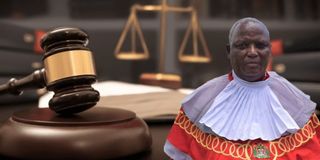
The commission, commonly known as the Judge Lila Commission, is chaired by Court of Appeal Judge Shaban Lila.
It was established by President Samia Suluhu Hassan, with members announced on May 18, 2026.
Other members include retired High Court judges Gad John Mjemmas, Awadh Mohamed Bawazir and Aishieli Nelson Sumari.
President Hassan established the commission following the report of an earlier Presidential Commission of Inquiry into post-election violence, chaired by retired Chief Justice Mohamed Chande Othman.
Days after the new commission was announced, activists Buberwa Kaiza and Joseph Mabugo, through lawyers Mpale Mpoki and Hekima Mwasipu, filed a case challenging its legality.
They named the Attorney General, Justice Lila, and the three commissioners, Mr Mjemmas, Mr Bawazir and Ms Sumari, as respondents.
The applicants are seeking leave to institute judicial review proceedings to nullify the President’s decision to establish the commission and appoint its members, and to restrain it from continuing its work.
On May 27, 2026, the court sat in the absence of all parties and directed respondents to file counter-affidavits within one day, while fixing the matter for hearing and ordering service of summons.
However, only the Attorney General appeared in court, represented by Senior State Attorney Stanley Kalokola, who confirmed receipt of the documents and said a response had been filed on behalf of the first respondent, but he did not represent the remaining commissioners.
Applicants’ counsel Mpoki told the court that all respondents had been duly served, including service at the Attorney General’s Office.
Mr Kalokola maintained that while the Attorney General had filed a counter-affidavit, he had no instructions to represent the other respondents.
In light of this, Mr Mpoki applied for substituted service through a newspaper of wide circulation, proposing Mwananchi.
Justice Rwizile granted the application and ordered publication of the summons in Mwananchi by June 4, 2026, ahead of the next hearing scheduled for June 8, 2026.
The case, filed under certificate of urgency, argues that unless heard promptly, the commission may continue its work despite allegedly lacking constitutional and legal authority.
Court documents show that following post-election violence, police arrested several suspects and instituted multiple criminal cases.
While those cases were ongoing, President Hassan ordered the release of some suspects on the basis of available evidence.
She later established a commission to investigate alleged breaches of peace, known as the Chande Commission, which submitted its report on April 23, 2026.
The report indicated that 518 people had been killed, with others injured, warning that the figure could be higher.
After receiving the report, the President formed another commission to investigate criminal conduct arising from the same events.
The applicants argue that the move lacks legal basis, particularly as suspects had already been released without judicial determination, and that it amounts to discrimination contrary to Article 13(1) of the Constitution.
They further argue that under the Commission of Inquiry Act (Cap. 32 R.E 2023), the President has no authority to establish another commission after the Chande Commission concluded its work.
They contend that under Section 21(1)(a) and (b), any further action should have been directed to the Director of Public Prosecution (DPP) to instruct police to conduct additional investigations.
They also argue that where sufficient evidence exists, those implicated should be prosecuted.
In addition, they maintain that the President has no authority to establish a commission to investigate criminal matters, as that mandate rests exclusively with the DPP.
They cite the Office of the Director of Public Prosecutions Act (Cap. 430 R.E 2023), arguing it vests sole authority in the DPP to oversee criminal investigations, except those under military jurisdiction.
They further submit that the DPP is constitutionally mandated to direct and supervise criminal investigations, except those tried by military courts.