Josephine Christopher is a senior business journalist for The Citizen and Mwananchi newspapers
Mwananchi Communications Limitted
What you need to know:
The logistical setbacks quickly became the dominant narrative of the day, fuelling accusations from opposition leaders
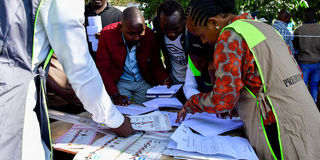
Dar es Salaam/Kampala. Ugandans went to the polls yesterday in a highly charged presidential and parliamentary election marred by delayed voting, malfunctioning biometric equipment, and a sweeping nationwide internet shutdown.
Polling was scheduled to open at 7am. Still, according to media reports, the process began late at many stations across Kampala and other urban centres as biometric voter verification machines failed to function.
At a number of polling centres in the capital, voters stood in lines stretching hundreds of metres into the mid-morning, with some stations yet to begin operations by 10 am.
The logistical setbacks quickly became the dominant narrative of the day, fuelling accusations from opposition leaders that the system was being deliberately sabotaged.
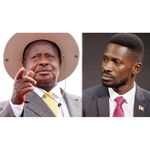
Incumbent President Yoweri Museveni, 81, cast his ballot at Karo High School in Rwakitura Village mid-morning, completing the exercise in under 12 minutes.
According to reports by Ugandan media Daily Monitor, President Museveni acknowledged challenges with the biometric system and indicated that a probe would be launched to determine whether delays were inadvertent or deliberate, underscoring the high stakes of electoral credibility.
"They had a problem with voter verification machines. It works. But first, it didn't accept my fingerprints because I think when they took them, they had a different angle, but when my face [was scanned], the machine recognized me," Museveni was quoted by the platform.
When asked if he will accept the outcome of the election, Museveni said: "This is one of the manipulations we have to find out why...what was the problem? So, we don't know if this was just an oversight or part of manipulation, but we shall study all other factors."
Opposition leader Robert Kyagulanyi Ssentamu, popularly known as Bobi Wine, reacted sharply, accusing the government of squandering billions of shillings on technology that failed on the most critical day.
Bobi Wine voted at Freedom Square in Magere, Wakiso District, in the company of his wife, Barbie Kyagulanyi, amid heavy security deployment.
Speaking to journalists afterwards, he alleged that the biometric failures were part of a broader strategy to undermine the credibility of the vote.
He further warned that security agencies were preparing to “steal our victory” and urged citizens to protest peacefully if the outcome was manipulated.
"We have made it clear that this is a protest vote. So, should the security forces and EC attempt to subvert the voice of Ugandans, the citizens have every right to protest unarmed and non-violently,” he said.
The opposition leader also condemned the arrest of National Unity Platform deputy president for the Western Region, Jacklyn Jolly Tukamushaba, alleging she had been taken to army barracks along with electoral materials.
Other presidential candidates echoed similar concerns. Mubarak Munyagwa Sserunga of the Common Man’s Party, who voted in Kawempe-Kikoni-Makerere, said the biometric breakdowns provided “grounds for an electoral petition”, arguing that widespread irregularities could prevent any candidate from securing the constitutionally required 50 percent plus one threshold.
" This is an abuse of the law and a ministerial pronouncement that voting was to be conducted using biometric machines. If they hadn't rushed for these machines, it would be perfect voting. I don't think any of the candidates will raise 50 percent+1. The law requires that we go for a rerun," Munyagwa said.
In Makindye Ssabagabo, Conservative Party candidate Joseph Mabirizi left a polling station without voting after officials failed to commence the exercise by 10 a.m., citing the absence of materials.
At Lufuka Playground polling station in Makindye Ssabagabo, no voting materials had arrived by 10 a.m., according to Monitor reporter Sylvia Namagembe, who was at the scene.
"I'm not surprised by the delay because the government has to do it in Kampala since it is an opposition stronghold," Mabirizi said as he left the station.
Former army commander Mugisha Muntu of the Alliance for National Transformation was the first presidential candidate to cast his ballot, doing so within three hours of polls opening.
Beyond the technical failures, the election unfolded under an unprecedented nationwide internet blackout, imposed two days before polling. Authorities defended the shutdown as a necessary measure to curb misinformation and safeguard public order.
Security was heavy across the country, with police and military officers deployed at polling centres, road junctions, and in urban neighbourhoods. The atmosphere followed weeks of tension marked by arrests of opposition supporters and disruption of campaign rallies, particularly those associated with Bobi Wine.
Museveni, who has been in power since 1986 and previously removed constitutional age and term limits, is seeking another five-year term against a field of seven challengers.
Bobi Wine, a pop star-turned-politician, remains the most prominent opposition contender, leveraging strong youth support amid high unemployment and calls for political reform.
International observers from the African Union, COMESA, and IGAD are present to monitor the elections, reflecting regional interest in the conduct and outcome of the process.
The outcome is expected to shape Uganda’s political trajectory and regional dynamics, with results anticipated within 48 hours following the close of polls.
Apart from Mr Museveni of the National Resistance Movement, Bobi Wine of the National Unity Platform, other confirmed candidates include Mugisha Muntu Oyera of the Alliance for National Transformation (ANT), Nathan Nandala Mafabi of the Forum for Democratic Change (FDC), Joseph Elton Mabirizi of the Conservative Party (CP), Robert Kasibante of the National Peasants Party, Mubarak Munyagwa Sserunga of the Common Man's Party (CMP), and Frank Bulira Kabinga of the Revolutionary