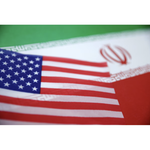
Washington/Dubai. The United States and Iran have agreed to hold talks in Oman on Friday, officials from both sides said, but sharp disagreements remain over what should be discussed.
Washington wants the negotiations to cover not only Tehran’s nuclear programme but also its ballistic missile arsenal, support for armed proxy groups in the Middle East and domestic human rights concerns. Iran, however, insists the talks should focus strictly on its nuclear activities.
The diplomatic push comes at a time of heightened tensions in the Middle East, with the US building up military forces in the region and neighbouring countries anxious to avoid a confrontation that could spiral into a wider war.
Disputes in recent days over the scope and venue of the meeting had raised doubts about whether the talks would proceed. US President Donald Trump has previously threatened possible military action against Iran if negotiations fail.
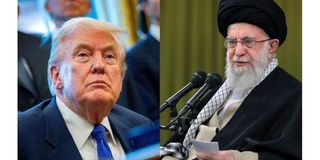
Asked whether Iran’s Supreme Leader Ayatollah Ali Khamenei should be worried, Trump told NBC News: “I would say he should be very worried. Yeah, he should be,” adding only that “they’re negotiating with us.”
After those remarks, officials confirmed the talks would be moved to Muscat, Oman, from the originally proposed venue of Istanbul. However, no agreement has been reached on the agenda.
US Secretary of State Marco Rubio said Washington is ready to meet but insisted discussions must address Iran’s missile capabilities and regional influence alongside nuclear issues. Iranian officials rejected that position, saying their missile programme is “off the table” and warning that expanding the agenda could jeopardise the talks.
The meeting is expected to involve Trump’s son-in-law Jared Kushner, US special envoy Steve Witkoff and Iranian Foreign Minister Abbas Araqchi.
Change of venue
Iran pushed for Oman as the host, citing earlier negotiations there that focused solely on the nuclear dispute. Tehran maintains its nuclear programme is for peaceful purposes, while the US and Israel accuse it of pursuing weapons capability.
Several countries could act as mediators, though Iran prefers direct talks between Washington and Tehran.
Rising tensions
The talks follow weeks of rising friction. The US has deployed thousands of additional troops and military assets to the Middle East, including an aircraft carrier, warships, fighter jets, surveillance aircraft and refuelling tankers.
Regional states fear that renewed conflict between the two adversaries could trigger broader instability. Oil prices have also risen amid the uncertainty.
Trump has warned that “bad things” could happen if no deal is reached, while Iran’s leadership fears that a US strike could worsen domestic unrest and threaten its grip on power.
Iran is also seeking relief from Western sanctions linked to its nuclear programme, which have severely damaged its economy.
Sticking points
According to Iranian sources, Washington has demanded zero uranium enrichment, limits on Iran’s ballistic missile programme and an end to support for regional proxies as conditions for talks.
Tehran considers these demands unacceptable, though officials say they may show some flexibility on enrichment. Since US strikes in June, Iran says its uranium enrichment activities have stopped.
Tensions have also spilled into the Gulf. The US military recently said it shot down an Iranian drone that approached the aircraft carrier USS Abraham Lincoln, while another incident saw Iran’s Revolutionary Guard allegedly threaten to board a US-flagged tanker in the Strait of Hormuz.
Despite the agreement to meet, deep mistrust and unresolved differences continue to cast uncertainty over whether the Oman talks can produce a breakthrough.