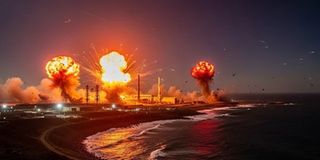
Washington. The United States military has released footage showing what it says were precision strikes on Iranian coastal radar installations after American forces intercepted four Iranian one-way attack drones near the Strait of Hormuz, marking the latest escalation in tensions between Washington and Tehran.
According to the US Central Command (CENTCOM), the drones were launched toward the strategically important Strait of Hormuz and posed an “immediate threat to regional maritime traffic.”
American forces subsequently shot down all four drones before carrying out strikes against Iranian surveillance radar sites located in Goruk and on Qeshm Island along Iran’s southern coast.
CENTCOM said the strikes were intended to prevent further attacks and safeguard international shipping routes through the narrow waterway, which handles a significant portion of the world’s oil exports. Video footage released by the US military reportedly showed the targeted radar facilities being struck.
The incident triggered wider regional security concerns. Iranian authorities said they retaliated by targeting US military facilities in the Gulf. Shortly afterward, air defence systems in Kuwait were activated to intercept incoming missiles and drones, while authorities in Bahrain sounded warning sirens and urged residents to seek shelter.
CENTCOM later reported that Iran launched seven ballistic missiles toward Kuwait and Bahrain. US and partner forces intercepted most of the projectiles, with one missile reportedly failing before reaching its target. No immediate reports of significant damage or casualties were released.
The latest confrontation comes amid a fragile ceasefire and ongoing diplomatic efforts aimed at reducing hostilities between the two countries. However, repeated exchanges of fire have complicated negotiations and heightened concerns about the security of the Strait of Hormuz, a vital global energy corridor.
Military analysts warn that continued attacks and counterattacks could further disrupt maritime trade and energy supplies, while raising the risk of a broader regional conflict involving Gulf states and international forces operating in the area.