Dar es Salaam. The Muhimbili University of Health and Allied Sciences (Muhas) has emerged as Tanzania’s highest-ranked university in the Times Higher Education World University Rankings 2026, placing third in East Africa.
Beyond institutional prestige, the ranking has renewed debate on why global university rankings matter, how Tanzanian universities can use them to strengthen teaching, research and societal impact, and what this milestone signals about the country’s ambition to position its higher education sector on the global stage.
Founded in 2004, THE has become one of the most influential arbiters of university performance worldwide. Its rankings assess institutions across their core missions; teaching, research and impact, using 18 performance indicators that capture everything from staff-to-student ratios and research citations to international outlook and knowledge transfer.
For students, policymakers and investors, the tables offer a shorthand for institutional credibility; for universities, they are a mirror that reflects strengths, gaps and priorities.
Against this backdrop, Muhas’ performance is not merely a trophy moment. It signals a maturation of systems that translate policy intent into measurable outcomes.
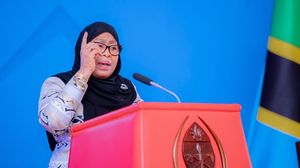
Commenting on the achievement, Muhas vice chancellor Prof Appolinary Kamuhabwa described the ranking as “a clear testament to the collective commitment, hard work, and resilience of the Muhas community,” adding that it affirms the university’s strategic focus on “excellence in teaching, impactful research, innovation, and service to society” .
Over the past five years, Muhas has steadily tightened the link between training, practice and research. Investment in postgraduate supervision, stronger ties with teaching hospitals, and an emphasis on publishable, policy-relevant research have raised visibility and citation impact.
The integration of clinical training with national referral institutions, such as Muhimbili National Hospital and specialised centres, has strengthened teaching quality while ensuring research addresses Tanzania’s health priorities.
These are precisely the attributes that THE’s methodology is designed to capture. The lesson here is not that rankings reward cosmetic changes; they reward systems. As one senior higher education analyst, Dr Mutalemwa Mtebe, notes, rankings “do not create quality, but they make quality visible.
Institutions that align governance, funding and academic incentives tend to climb because the metrics are outcomes of good practice, not ends in themselves.”
For Tanzania, the utility of rankings lies in benchmarking and discipline. They offer an external yardstick that helps universities and regulators assess whether reforms; curriculum reviews, staff development, research funding, are delivering results.
Importantly, rankings also influence student mobility. International students and partners often use THE profiles to assess institutional fit, scrutinising indicators such as international outlook, income per student and research strength.
Education experts argue that Tanzanian universities can harness this by being intentional. First, by embedding data culture, accurate reporting of staff numbers, outputs and international collaborations.
Second, by prioritising research clusters where the country has comparative advantage, from health sciences to agriculture and energy. Third, by internationalising at home: joint degrees, visiting scholars and co-authored research that lift global visibility without compromising national missions.
There is a cautionary note. Rankings should not become a vanity project. “The risk is chasing metrics rather than mission,” said a university governance specialist, Mr Amos Magore. “But when used well, rankings sharpen focus on teaching quality, research integrity and societal impact, exactly what Tanzania needs as enrolments rise.”
Muhas’ case illustrates this balance. Its health mandate anchors research to public value, while international collaborations expand reach. The result is credibility that attracts partners and students—benefits that ripple across the system as peers emulate proven practices.
THE does not publish a standalone Tanzania-only league table; rather, it includes institutions that meet its data and quality thresholds. In recent cycles, alongside Muhas, several Tanzanian public universities have featured in the global tables, reflecting gradual system-wide gains.
The significance is collective: each additional institution included improves the country’s academic footprint and signals readiness for deeper international engagement.
MUHAS’s top national ranking in 2026 should therefore be read as a marker on a longer journey. It underscores the payoff from aligning teaching, research and impact and from treating rankings as diagnostic tools.
If more Tanzanian universities adopt this approach, the country stands to gain not just higher positions on global tables, but stronger universities that attract international students, inform policy and deliver solutions.
Register to begin your journey to our premium contentSubscribe for full access to premium content