Stranded villagers wait 6 decades for a new bridge
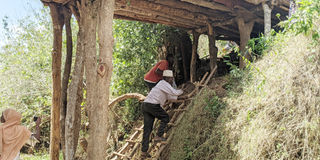
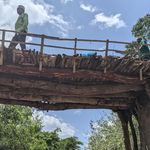
Residents of Kwasunga Ward in Handeni District demonstrate how they navigate the Mligazi River during the rainy season when cracks appear on the bridge. PHOTO | NEVUMBA ABUBAKAR
Tanga. Why has the Mligazi River bridge, linking Bagamoyo District in Coast Region and Handeni Rural District in Tanga, not been built since Tanganyika attained Independence in 1961, despite existing policies, laws, political and administrative leadership?
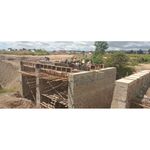
This question continues to trouble residents of Kwasunga, Miono, and Kwamsisi villages, who depend on a temporary crossing built from substandard materials.
Each rainy season, the crossing endangers lives, while economic activity, education, and social services grind to a halt.
The crossing in use is made from trees, timber, logs, and soil, materials that quickly rot and collapse, particularly during the rainy season.
Although the problem has long been known to political and administrative leaders at various levels, construction of a permanent bridge has stalled due to leadership challenges, funding constraints, and weak accountability systems.
A three-month investigation by The Citizen has found that the bridge becomes a political agenda item during every election.
Ward councillors and parliamentary candidates routinely present it as a priority, but once elections are concluded, implementation ceases.
Former Kwasunga councillor, Mr Hamis Mwingwa, admitted that the bridge issue was repeatedly used as a political tool.
“We raised it at public rallies because it was residents’ biggest concern. Once, an MP came to Miono, and when I presented documents explaining the challenge, I was sidelined. The truth is it was never given the weight it deserved in budgets,” he said.
“Lower-level leaders often struggle to secure cooperation from higher authorities, from Members of Parliament to councils and regional administration.
Once in power, many appear to forget those at the grassroots. During my tenure, I grappled even with the dire state of roads, which we were forced to repair manually through contributions raised from residents,” he added.
According to Kwasampa Hamlet Chairperson in Kwasunga Ward, Mr Hussein Kamnama, village councils in Kwandugwa, Kwanyanje, and Kwasunga each contributed Sh1 million to build the temporary crossing.
Mr Mwingwa said the lack of accountability among leaders has significantly delayed construction of a permanent bridge.
At the administrative level, the Mligazi River Bridge has featured in various district development plans but has failed to reach full implementation. A former ward executive officer in Kwasunga, who requested anonymity, said proposals for the bridge were submitted repeatedly but stalled due to shifting priorities.
“During my tenure, I witnessed nearly six deaths each year. The bridge is a serious challenge. Plans existed, even preliminary designs, but frequent leadership changes and new priorities each budget year stalled progress,” said the officer.
The former village leader added that other projects, such as water and electricity, were prioritised, while the bridge, despite being the greatest obstacle, was neglected.
Lack of funding is another major challenge hampering construction. Building a durable bridge requires substantial resources, unlike temporary crossings residents have built themselves.
The Tanzania Rural and Urban Roads Agency (Tarura) Handeni District Manager, Ms Judica Makyao, said construction requires funding from the central government.
“Projects like this need large sums. Internal council revenue cannot cover the cost, so without central government funding, implementation is difficult,” she said.
Under the Tarura Act and guidelines from the Prime Minister’s Office – Regional Administration and Local Government (PMO-RALG), rural bridge construction and maintenance should be implemented through council development plans in collaboration with Tarura and central government.
However, *The Citizen* investigation found that despite the Mligazi River Bridge being recognised for years as a high-risk site, it has not been included in a permanent project’s implementation, raising questions about accountability among rural infrastructure institutions.
Ms Makyao said legally the bridge falls under council authority, but execution depends on central government funding.
“Legally, Tarura implements projects according to the allocated budget. If a bridge is not in the annual financial plan, implementation becomes difficult,” she said.
An official from the Prime Minister’s Office (Tamisemi), who requested anonymity, said that although policies and guidelines exist, challenges remain in prioritisation and project follow-up.
“Policies and guidelines exist, but implementation depends on how councils submit their projects and follow them up until funding is secured,” the official said.
Handeni Rural District executive director, Mussa Mwanyumbu, said the bridge issue is discussed at every Regional Consultative Committee (RCC) meeting.
“When we meet, council leaders raise this challenge and are told to wait for a government programme. The RISE project may assist us. Tarura knows; they say applications were submitted to headquarters and are awaiting the feedback,” he said.
RISE is a rural road improvement project aimed at community participation and enhancing social and economic opportunities.
“This bridge is large and requires central government funding. Tarura knows this, and we remind them during meetings, but they say there are competing priorities, for example, Kwa Nyanje still lacks a health dispensary,” he said.
“In 2005, Sh300 million was allocated for this bridge, but when water shortages arose and residents were consulted, they opted for water supply instead, and the funds were redirected,” added the DED. Mr Mwanyumbu, a former Mkata councillor, advised the government to classify the bridge as a strategic project.
“I believe if the minister for Works saw the situation firsthand, action would have been taken. This is not a bridge for one village; it links wards and two districts. If designated a strategic project, funding will be secured,” he said.
Kwasunga councillor, Jasmini Paulo, added, “If there were a bridge, transport costs for people travelling from Dar es Salaam to Handeni would fall. One pays the normal fare, but upon reaching Miono, an extra Sh10,000 is required for a motorcycle ride to the villages.”
She appealed to the government to resolve the long-standing challenge this year.
A traditional leader in Kwasunga Village, Mr Yusuph Suleiman, popularly known as Kulufi, said construction delays have affected social services and cooperation between villages during the rainy season.
“People cannot attend funerals or reach hospitals during the rainy season. Residents of Miono and Masimbani remain on one side, while we in Kwasunga and Kwakonje are stuck on the other, greeting each other from across the river. This touches on human dignity,”
he said. “It disrupts health, education and agriculture, services that residents depend on this bridge to access,” added Mr Kulufi.
The Mligazi River Bridge remains a stark example of the gap between policy, promises and implementation. Without political, administrative, and financial accountability, Handeni Rural residents will continue to risk their lives every rainy season.
The question remains whether the bridge will remain a campaign promise, or finally become a permanent project that saves lives and boosts the local economy.
Register to begin your journey to our premium contentSubscribe for full access to premium content