Budget reforms could reduce Tanzania’s gender imbalance
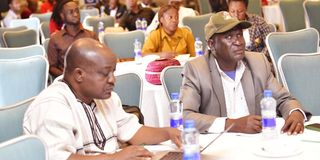
A section of participants at a recent high-level dialogue organised by Policy Forum in collaboration with the United Nations Development Programme (UNDP) under the Equanomics initiative, which seeks to promote gender-responsive fiscal policies across Africa. The event was held in Dar es Salaam. PHOTO | COURTESY
Participants argued that the challenge is not only about budget allocations but also whether approved funds are released and used effectively
Dar es Salaam. The belief that national budgets are gender-neutral came under scrutiny last week as experts warned that public spending continues to reinforce inequalities unless gender considerations are deliberately integrated into planning and implementation.
They said women, particularly those engaged in agriculture and other productive sectors, remain disadvantaged by budget priorities, funding delays, and unequal access to resources.
The concerns were raised during a high-level dialogue organised by Policy Forum in collaboration with the United Nations Development Programme (UNDP) under the Equanomics initiative, which seeks to promote gender-responsive fiscal policies across Africa.
Participants argued that the challenge is not only about budget allocations but also whether approved funds are released and used effectively to address citizens’ needs.
Presenting an analysis by the Agricultural Non-State Actors Forum (Ansaf), programme officer, Ms Werner Hillary, compared planned allocations with actual disbursements, saying the gap between the two determines the real impact of public spending.
She noted that although agriculture contributes 24.6 percent of Tanzania’s gross domestic product (GDP), the sector receives only three percent of the national budget, below the 10 percent target under the Malabo Declaration.
“The consequences are real. In the 2024/25 financial year, the Ministry of Agriculture received only Sh500 billion out of the planned Sh1.19 trillion,” she said.
Ms Hillary said delayed release of funds remains one of the sector’s biggest challenges, with money often reaching ministries towards the end of the financial year.
“When funds are released in May or June, they often return to the Treasury unused,” she said.
She linked the delays to poor agricultural performance, noting that Tanzania produced only 9,000 tonnes of seed in 2025 against a national target of 80,000 tonnes.
Beyond financing challenges, women involved in agricultural value addition continue to face regulatory obstacles that increase production costs.
Tanzania Milk Processors Association (Tampa) representative, Ms Rose Lyimo, said dairy processors must obtain 28 different permits from institutions, including the Occupational Safety and Health Authority (Osha), the National Environment Management Council (Nemc), and the Tanzania Rural and Urban Roads Agency (Tarura).
“These regulatory hurdles make Tanzanian milk uncompetitive,” she said, adding that imports from Kenya and South Africa often enter the market at lower prices due to more favourable tax arrangements.
She said processors pay Sh150,000 for permits to transport milk between districts, while supplies to Zanzibar attract an additional Sh50 per litre levy.
Ms Lyimo also highlighted gender disparities in livestock ownership, saying women own only 7.4 percent of ranches, leaving them vulnerable when male relatives decide to sell family livestock.
UNDP SDG Finance and Investment Specialist Mr Simon Moshy said the organisation is working with civil society organisations to strengthen public participation in gender-responsive budgeting.
He identified agriculture as a key area because women play a major role in food production, but continue to face limited access to land, finance, farm inputs, irrigation, and markets.
“Civil society has an essential role in bringing the realities of women farmers into budget discussions and holding institutions accountable for whether public commitments translate into actual spending and measurable outcomes,” he said.
A senior programme officer at the Kenya-based Budget Hub, Ms Faith Kinyanjui, said fiscal policy discussions should focus on three questions: who pays, who benefits, and who decides.
“Budgets are never gender-neutral,” she said.
While acknowledging that governments face limited fiscal space and rising debt, she said expenditure priorities, including agricultural subsidies, must be examined for hidden inequalities. She warned that allocating resources without addressing implementation challenges does little to improve the lives of intended beneficiaries.
The Tanzania Gender Networking Programme (TGNP) head of programme activism and movement building, Ms Florah Ndaba, said women make up about 71 percent of the agricultural workforce but receive only 11.6 percent of sector wages.
She said land insecurity remains a major barrier, noting that 82 percent of land acquired under the government’s Building a Better Tomorrow (BBT) project lacked title deeds, limiting women’s ability to use land as collateral.
Citing the Controller and Auditor General (CAG) report, Ms Ndaba said only 282 of the 812 BBT participants in 2023 were young women, while the programme reached 514 youths against a target of 12,000.
She recalled how women in Kiluleni carried bottles of contaminated water to Parliament to protest poor services, an action that later prompted infrastructure improvements.
Policy analyst, Mr James Mlali, questioned the government’s practice of increasing budget projections despite repeated revenue shortfalls.
“If we failed to reach last year’s target, why plan for an even larger one?” he asked.
He called for more realistic budgeting to reduce corruption risks and urged greater representation of women in local decision-making bodies.
Farmer, Mr Fred George, suggested that Tanzania adopt Botswana’s approach of allowing women to access credit using national identity cards rather than land titles.
Concluding, Ms Kinyanjui cited a Kenyan example where a community rejected partial delivery of water tanks until all demands were met, saying collective action can strengthen accountability and ensure public resources respond to citizens’ priorities.