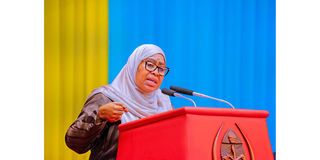
Dar es Salaam. With just 10 days remaining until President Samia Suluhu Hassan reaches her 100th day in office since her swearing-in on November 3, 2025, the country finds itself balancing political healing and lingering divisions, with reconciliation emerging as both a promise and a contested process after the unsettled 2025 General Election.
The October 29 polls, followed by unrest in several parts of the country, tested Tanzania’s long-held reputation as an island of peace in a politically fragile region.
In the aftermath, President Hassan has framed reconciliation, unity, and economic stability as inseparable pillars for national recovery, while critics argue that genuine healing requires accountability, truth and reforms.
From State House pronouncements and parliamentary debates to opposition scepticism, civil society demands, and religious appeals, the first 100 days reveal both progress and fault lines in Tanzania’s journey toward national reconciliation.
Reconciliation as a foundation for stability and growth
President Hassan has used national addresses, parliamentary speeches, and regional engagements to emphasise unity as the bedrock of Tanzania’s political and economic future.
For instance, in her end-of-year address from Tunguu, Zanzibar on December 31, 2025, she announced preparations for a National Reconciliation Commission to heal divisions exposed during the election period.
“As we enter 2026, the government has started steps to build national unity. We will work with all stakeholders to agree on the commission’s framework,” she said, stressing consultations would determine the body’s structure, mandate, membership, and duration.
She has consistently warned against letting ideological and political differences derail development, arguing that peace and cohesion are prerequisites for economic progress.
Reconciliation is linked directly to investor confidence, social stability, and Tanzania’s long-term development ambitions, including National Development Vision 2050.
Government data shows economic growth of 5.8 per cent in 2025, inflation at 3.4 per cent, and foreign reserves rising to $6.6 billion, enough to cover more than five months of imports. Public debt remained sustainable after refinancing high-interest loans.
Vice President Dr Emmanuel Nchimbi has assured regional leaders, including at SADC forums, that Tanzania remains safe, stable and committed to a successful reconciliation process.
“Tanzania is safe and secure and is ready to continue receiving visitors from all over the world for the benefit of all countries,” Dr Nchimbi said. Concrete gestures include directives to halt police action against certain religious leaders and lifting restrictions on places of worship, intended to cool tensions and rebuild trust.
Skepticism, conditions and unresolved grievances
Opposition parties remain sceptical, questioning the timing and sincerity of the reconciliation initiative. Chadema Vice-Chairperson (Mainland) Mr John Heche dismissed the process as “deceptive reconciliation,” arguing it cannot proceed meaningfully while long-standing demands for electoral reforms remain unaddressed.
“It is absurd and disrespectful to call this reconciliation when the government deliberately ignored citizens, political parties and democracy stakeholders on the need for electoral reforms,” Mr Heche said.
ACT-Wazalendo secretary general Mr Ado Shaibu said reconciliation cannot move forward where political detainees remain in custody and accountability is perceived as selective.
“We cannot engage in reconciliation in an environment where political detainees are still in custody, nor can we proceed with a process that is centred on looking for a scapegoat,” he said.
CUF deputy secretary general Ms Magdalena Sakaya called for an independent investigation into killings linked to post-election violence, noting bitterness persists because authorities have not officially acknowledged wrongdoing.
NCCR–Mageuzi vice-chairperson Mr Joseph Selasini questioned reconciliation without truth. “Reconciliation must start from the truth of what happened and between whom it is sought,” he said.
Across the opposition spectrum, the consensus is that reconciliation must begin with electoral justice, accountability, and reforms, rather than being a stand-alone political gesture.
Calls for peace, restraint and moral responsibility
Religious leaders urge calm, unity, and ethical leadership while avoiding uncritical political endorsement. President Hassan has repeatedly acknowledged faith leaders’ role in safeguarding peace and called on them to preach unity.
She has warned against politicising religion, arguing faith should unite communities.
Catholic Bishop Wolfgang Pisa of Lindi appealed for national unity and restraint.
“Let us ask Mother Mary to intercede for us so that our nation will be united and everything will be done for the good of this nation,” he said, warning rigid positions could hinder national unity.
Muslim leaders, through the Council of Imams, emphasised reconciliation must be grounded in truth, integrity, and accountability. Secretary-general Sheikh Issa Ponda said electoral irregularities underscore the urgent need for reforms and honest dialogue.
“Efforts to build national unity must be based on truth, integrity and accountability from all authorities involved in the electoral process,” he said, noting without reforms, reconciliation would remain fragile.
Interfaith voices largely agree that peace is fragile and must be protected through responsible leadership, ethical conduct, and respect for human dignity.
Accountability, justice and citizen-centred healing
CSOs insist genuine healing requires accountability, human rights respect, and citizen participation. Following the election unrest, human rights groups warned reconciliation risks being superficial if not anchored in justice and truth.
THRDC and Tanganyika Law Society called for measures to restore public trust, including ending arbitrary arrests, home raids, and misuse of terrorism-related charges. They also urged authorities to account for people reported missing.
“Freedom and justice are not privileges granted by those in power; they are rights every citizen is entitled to. Protecting these rights is essential for national stability and lasting peace,” the organisations said.
The Legal and Human Rights Centre called for an independent judicial commission to investigate post-election violence, stating accountability is vital for healing. Tamwa echoed these concerns, noting lasting peace requires respect for rights and freedom of expression.
Reconciliation as a necessity for long-term stability
Analysts argue reconciliation is essential to preserve Tanzania’s stability. Dr Paul Loisulie of the University of Dodoma says reconciliation must be institutional, inclusive, and structured, involving political parties, religious leaders, civil society, and professionals. Excluding key groups, particularly youth, undermines legitimacy.
“Reconciliation must address unresolved weaknesses in the electoral process and ensure broad participation if it is to deliver lasting stability,” Dr Loisulie said.
Dr Onesmo Kyauke of the University of Dar es Salaam argues truth is the foundation of reconciliation and warns against scapegoating. “Meaningful reconciliation is only possible if all parties accept responsibility and prioritise truth over blame,” he said, noting compromise is inevitable.
Prof Makame Ali Ussi of SUZA views reconciliation as a critical investment in long-term peace, warning unresolved grievances can erode social cohesion.
“Reconciliation is not a sign of weakness; it is a recognition that national stability requires dialogue, trust and institutional credibility,” he said.
Register to begin your journey to our premium contentSubscribe for full access to premium content