Iringa. While Tanzania’s national stunting rate remains above the global average of 22 percent, the Iringa Region continues to rank among the worst-affected areas, recording a rate of 56.9 percent, despite being one of the country’s leading food producers.
Raising children in workplaces and giving alcohol to those under five years have contributed to the high prevalence of stunting in Iringa, an investigation by The Citizen has found.
Iringa has a large number of children under five affected by stunting, even though it is one of Tanzania’s main food-producing regions.
A child is considered stunted when their height-for-age is more than two standard deviations below the median set by the World Health Organization (WHO).
Stunting is caused by poor nutrition before and during pregnancy, inadequate feeding in early childhood, frequent infections, and lack of psychosocial stimulation, all of which hinder a child’s growth and development.
Data from the 2022 Tanzania Demographic and Health Survey and Malaria Indicator Survey (TDHS-MIS) indicate that stunting affects 56.9 percent of children under five in Iringa, followed by Njombe at 50.4 percent and Rukwa at 49.8 percent.
Among stunted children in Iringa, 17.3 percent are classified as severely stunted.
The Citizen’s investigation, conducted in Iringa Municipality, Kilolo District, and Iringa Rural between October and December 2025, found that diet alone does not drive malnutrition, which also includes wasting and underweight.
Other contributing factors include the child’s sex, age, birth weight, body mass index, breastfeeding practices, the mother’s education level, antenatal care attendance, hygiene, and household economic status.
Stunting deprives children of opportunities from early life into adulthood, with some failing to reach their full physical height or cognitive potential.
Stunted children often struggle academically, earn lower incomes as adults, face social barriers, and are at higher risk of non-communicable diseases.
Beyond these scientific explanations, the investigation revealed that limited nutrition knowledge among mothers and caregivers, combined with economic and social pressures, worsens stunting in Iringa.
Mothers at a crossroads
Many mothers and caregivers face a dilemma between staying home to provide proper nutrition and engaging in income-generating activities.
Given the importance of both, many opt to take children to their workplaces, where they cannot provide the recommended feeding schedules, thus exacerbating stunting.
This practice contravenes Sections 17 and 20 of Child Act (Cap. 13), Sections 3 and 4 of the Tanzania Food and Nutrition Act (Cap. 109), and the Second National Multisectoral Nutrition Action Plan (2021/22–2025/26).
These laws and policies require nutrition and social welfare officers to ensure children are properly cared for and receive meals that promote growth and well-being.
They also mandate officers to implement nutrition interventions outlined in national development plans and collaborate with stakeholders to safeguard food quality.
These measures aim to ensure healthy child development, help children reach their full potential, and support sustainable nutrition programmes that contribute to individual well-being and national development.
The investigation found that many women work in farms, markets, local brew clubs, security jobs, as caterers, laundry workers, in clothing businesses, and other informal sectors.
They rise early to prepare porridge from sorghum, maize, and bananas before going to work.
Some mothers reported breastfeeding frequently but sometimes relying on food purchased from local caterers, which is often intended for adults and does not meet children’s nutritional needs.
At Mlandege Market in Iringa Municipality, a trader who requested anonymity said she breastfeeds her eight-month-old child after waking up but sometimes cannot do so when overwhelmed by customers.
“There is no one to stay with the child. If I stay home, I cannot do business and will fail to feed my family,” she said, adding that she gives her child porridge as supplementary food.
Another mother, Ms Beatrice (not her real name) said she has no relatives to care for her child, while her husband works at a construction company.
“I cannot afford to hire a housekeeper. So I must take my child wherever I go. I breastfeed him and give supplementary food prepared at home,” said Beatrice, who works as a security guard at a primary school on Mkimbizi Street.
She said she has been taking her child to work since he was three months old, when babies are supposed to be exclusively breastfed.
According to her, she wakes early to prepare porridge in a vacuum flask, which she feeds during the day.
A trader at Kihesa Market, Ms Christina Chatanda, mother of two, said she can only afford to buy maize flour and vegetables she sells, but not eggs, meat, or milk.
“I received nutrition training at the clinic during pregnancy. Knowing what to feed my child and being able to afford it are two different things,” she said.
Another trader, Mzee Anthony, echoed this view, saying: “A caregiver may spend Sh2,000 on doughnuts to fill children instead of buying eggs for the same amount.”
“Many families sell nutritious foods but cannot provide the same to their households. Instead, they give cheaper foods, prioritising business and satiety over good nutrition,” he added.
Mothers and caregivers admitted that when overwhelmed with work, children eat late or miss meals, including breastfeeding, putting them at higher risk of health and developmental problems.
Alcohol consumption
Investigation findings include the fact that local brew clubs are unsafe for child-rearing, exposing children to hazardous environments at an early age.
Besides dirty surroundings, insects, dust, and smoke, some children are given alcohol.
“Some mothers give their children traditional brew (ulanzi) so that they sleep longer while they attend to work or business,” said a ward health officer who requested anonymity.
The investigation further revealed that lack of time prevents mothers from preparing balanced meals, leading to nutritional deficiencies that affect child growth.
Irregular feeding schedules and a lack of dietary diversity increase the risk of stunting and poor development.
For many Tanzanians, meals still lack adequate diversity, with 71 percent of dietary energy coming from staple foods, mainly maize flour, with limited nutrients from other sources.
Under Tanzanian law, maternal and child welfare is a public responsibility overseen by local authorities and the central government.
Iringa Municipal Nutrition Officer Anzaeli Msigwa said nutrition education is provided at health centres, ward offices, public meetings, and through household visits.
“We provide these trainings four times a year alongside seminars for pregnant women, mothers with children under five, and the general public,” he said.
Mama Millen of Magari Mabovu Street said, “We usually receive mother-and-child training and nutrition education, sometimes with practical cooking sessions. However, this year (2025), no training has been conducted here.”
An officer from Kilolo District nutrition office, who spoke on condition of anonymity, admitted it has been difficult to gather mothers and children for training because they are busy seeking income.
“Our programmes focus mainly on clinics and household follow-ups. Attendance at community meetings is low because mothers are in farms, markets, schools, or local brew clubs working to earn a living,” he said.
However, The Citizen’s investigation found that food scarcity plays a minor role in stunting.
Economic pressures on mothers and communities, rather than absolute shortages, limit timely and proper feeding and monitoring of child growth.
Although the Second National Multisectoral Nutrition Action Plan (NMNAP II) emphasises multi-sector coordination to address malnutrition drivers, gaps in implementation remain significant.
Existing nutrition policies, strategies, and laws have not been fully implemented to provide community-acceptable solutions.
Iringa Municipal Social Welfare Officer, Ms Tiniel Mbaga, said he is not deeply familiar with NMNAP II but stressed that her office follows the National Integrated Early Childhood Care, Development, and Education Plan (PJT-MMMAM) to ensure child health and development.
She said the plan recognises nutrition as one of five key areas of child development, alongside health, early learning, safety, and responsive caregiving.
“The plan brings together all stakeholders, but each has responsibility in their area. If we fail to implement sustainable early childhood development programmes, children may not reach their full potential,” she said, adding that community-level challenges are significant as many mothers must take children under five to workplaces due to a lack of caregivers at home.
“This is why we continue urging parents to take children to daycare centres,” she said.
She added that the municipality, in collaboration with the private sector, has identified 20 buildings to serve as affordable daycare centres, though implementation is still incomplete.
Ms Mbaga said Kihesa, Mkwawa, and Ruaha wards have been prioritised due to a lack of such services.
He noted that Kihesa Ward has a high concentration of local brew clubs, raising concerns about child safety and supervision.
Meanwhile, local leaders, health workers, and community organisations say meaningful progress will depend on stronger enforcement of existing laws, better childcare services, sustained nutrition financing, and practical support for working mothers across Iringa’s urban and rural communities.
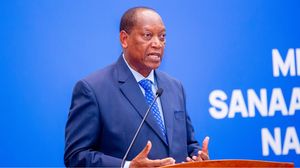
The Minister of State in the Prime Minister’s Office – Regional Administration and Local Government (PMO-RALG), Prof Riziki Shemdoe, emphasised the importance of investing in research to strengthen nutrition interventions.
He recently told members of the ninth Joint Multi-Sectoral Review meeting on the implementation of the National Nutrition Compact signed in September 2022 that PMO-RALG, in collaboration with the Ministry of Health, is developing a strategic plan to outline effective ways to implement NMNAP II to achieve visible results in child nutrition and development.
“The link between Early Childhood Development (ECD) and overall child development deserves special attention. From my perspective, I closely examine the relationship between early childhood care and development and a child’s overall growth,” he said.
“My appeal is that we pay attention to the current statistics. Only 47 percent of children under five are experiencing adequate growth, while 53 percent show signs of poor growth. Nutrition is one of the key indicators used to measure a child’s growth and development. Therefore, it must be given the highest priority,” he stressed.
Register to begin your journey to our premium contentSubscribe for full access to premium content