Chande team defends approach in election violence investigation
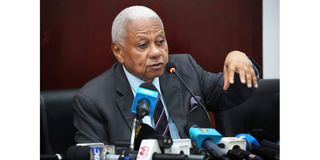
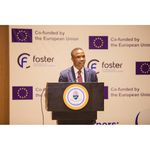
Chairperson of the Presidential Commission of Inquiry into incidents of violence during and after the General Election of October 29, retired Chief Justice Mohamed Chande, addresses the media in Dar es Salaam yesterday. PHOTO | SAID POWA
Dar es Salaam. Tanzania’s Presidential Commission of Inquiry into election-related violence has defended its approach to accountability, clarified figures on missing persons and proposed new oversight mechanisms following unrest linked to the October 29, 2025 General Election.
The commission’s members addressed journalists here yesterday, just days after submitting their report to President Samia Suluhu Hassan.
They said their findings pointed to organised, financed and coordinated incidents of violence, but stressed that their mandate was strictly limited to establishing facts rather than attributing criminal guilt.
Commission chairperson, retired Chief Justice Mohamed Chande Othman, said there had been public expectation that the report would name individuals responsible for killings and destruction, but insisted that the commission was bound by legal constraints.
“Many expected that on the day of presenting the report, the key actors would be named. But what we stand for is fair accountability that abides by the law. Those concerned should be held accountable and those unconcerned shouldn’t be held accountable,” he said.
He emphasised that the commission’s work was guided by principles of fairness, due process and evidence-based inquiry, warning against what he described as the danger of scapegoating individuals to satisfy public anger.
Justice Chande said the commission had instead proposed a structured, three-tier accountability framework designed to ensure that responsibility is established in a legally sustainable manner.
The first level, he explained, is individual criminal responsibility. This applies to persons directly involved in committing offences such as violence, destruction of property or unlawful use of force.
“For instance, the law is clear that a police officer who causes death using a firearm bears personal responsibility,” he said.
The second level is command responsibility, which applies to those in leadership positions.
He said this standard requires proof of three key elements: that a leader had effective control over subordinates, that they knew or ought to have known about unlawful conduct, and that they failed to take reasonable steps to prevent or punish it.
“You cannot simply accuse a commander. You must establish control, knowledge and failure to act,” he said.
The third level is institutional accountability, which focuses on systemic weaknesses within institutions that may have enabled or failed to prevent violence.
This includes failures in oversight, coordination, training or enforcement structures.
Justice Chande stressed that commissions of inquiry are not prosecutorial bodies and cannot declare individuals guilty.
“We were not tasked to prosecute or declare anyone guilty. That is not the role of commissions of inquiry, whether in Tanzania or across Commonwealth member countries,” he said.
The commission also addressed growing concerns over missing persons and alleged enforced disappearances, which it said were among the key triggers of tension during the election period and its aftermath.
It reported that police data presented to the commission showed 758 people were reported missing between 2023 and 2025.
Of these, 66 percent were later found, while 34 percent remain unaccounted for.
In 2022, a total of 216 people were reported missing, with 160 later found and 56 still missing. In 2025 alone, 237 cases were recorded, of which 176 individuals were recovered and 61 remain untraced.
Justice Chande said that while some disappearances were voluntary or linked to personal, social or economic reasons, others involved abduction or forced disappearance.
He said international comparisons showed that missing persons remain a global challenge, citing data from humanitarian organisations indicating large numbers of disappearances worldwide each year.
He also referenced the International Convention for the Protection of All Persons from Enforced Disappearance, noting that such cases require serious and structured investigation due to their complexity and sensitivity.
To strengthen national capacity in handling such cases, the commission proposed that the Controller and Auditor General (CAG) conduct performance audits of police investigations into missing persons.
The aim, he said, would be to assess efficiency, identify systemic gaps and improve accountability in how such cases are handled.
“The objective is to evaluate how effectively investigations are conducted and where improvements are needed. This would complement, not replace, criminal investigations,” he said.
The commission further suggested that disappearances fall into several categories, including revenge-related incidents, criminal activity, evasion of law enforcement, superstition, voluntary disappearance, and human trafficking.
Former Chief Justice and a member of the commission, Prof Ibrahim Juma defended the decision not to publicly name individuals implicated in the report, citing legal safeguards and constitutional rights.
“You cannot publicly name individuals without giving them a chance to be heard. Courts have ruled against such actions in other jurisdictions. Natural justice must be respected,” he said.
He said that premature disclosure of identities could prejudice ongoing or future legal proceedings and risk violating data protection principles.
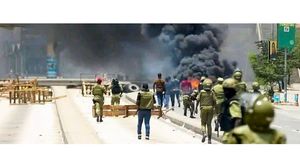
Former Inspector General of Police who is also a member of the commission, Said Mwema provided additional details on the nature of the violence. He said evidence gathered during the inquiry suggested that some participants were mobilised with financial incentives.
“We identified more than 16 coordinated strategies used to execute the unrest,” he said.
He added that incidents were recorded in 202 locations nationwide, which significantly strained police capacity and response systems.
Mwema said testimonies, images and other forms of evidence indicated that the violence was not spontaneous but involved planning and coordination across multiple locations.
The commission said its findings were based on extensive engagement with the public and institutions.
It received 953 sworn affidavits from civilians and 26 from police officers. It also collected 4,891 structured questionnaires and engaged 201 discussion groups involving 3,595 participants.
Overall, the commission said it interacted with more than 63,000 people during its 153-day investigation, including 6,205 face-to-face interviews conducted across the country.
Justice Chande described this level of engagement as unprecedented for a commission operating within such a timeframe, noting that it provided a broad evidential base for its conclusions.
On fatalities, the commission documented 518 deaths linked to the unrest, the majority of which were classified as non-natural.
Of these, 260 bodies underwent post-mortem examinations to support forensic analysis.
However, the commission cautioned that witness testimony alone is insufficient for criminal conviction, stressing the need for corroborating evidence and judicial scrutiny.
“Such evidence is sufficient to trigger investigations, but courts require both sides to be heard and tested through due process,” Justice Chande said.
To avoid fragmented accountability, the commission recommended the establishment of a specialised follow-up inquiry to examine specific incidents in greater detail.
These include 21 cases involving child deaths, including two children under the age of four, and 39 cases where individuals were allegedly shot outside designated riot zones.
Justice Chande said stakeholders consulted during the inquiry, including political leaders, security officials and victims, consistently warned against scapegoating.
“We were advised that those who deserve accountability should face it, and those who do not should not be victimised,” he said. “No one should be sacrificed to satisfy public anger.”
He reiterated that the central question guiding the commission’s recommendations was not whether accountability should exist, but how it should be established in a lawful, fair and evidence-based manner capable of withstanding judicial scrutiny.
Register to begin your journey to our premium contentSubscribe for full access to premium content