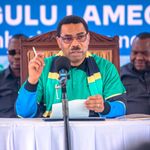
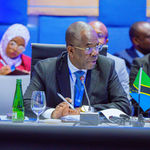
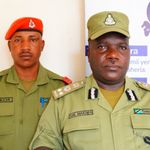
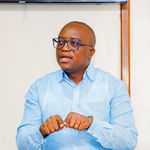
The focus has turned to whether the commission possesses sufficient institutional, judicial and diplomatic depth to handle one of the most sensitive assignments in recent years
Dar es Salaam. As Tanzania awaits the submission of the report by the Presidential Commission of Inquiry into the October 29, 2025 election-related violence, attention has gradually shifted from speculation over its findings to scrutiny of the calibre and experience of the individuals who carried the burden of the investigation.
The focus has increasingly turned to whether the commission, chaired by retired Chief Justice Mohamed Chande Othman, possesses sufficient institutional, judicial and diplomatic depth to handle one of the most sensitive assignments in recent years.
The commission, established under the Commissions of Inquiry Act (Cap 32) had the mandate of investigating the “breach of peace” events before, during and after the October 29 election.
The commission carried a heavy burden, as he is expected either to confirm the doubts of his sceptics or to prove its doubters wrong by telling the truth as he gathered it on the ground.
To what extent will the findings meet the expectation of both local and international audiences remains everybody’s guesswork.
What is clear, however, is that the team brings together a rare blend of expertise drawn from the judiciary, security services, diplomacy, regional governance and international justice mechanisms—qualities that are expected to shape both the credibility and reception of the final report to be handed to President Samia Suluhu Hassan today.
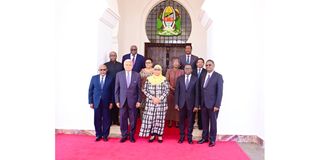
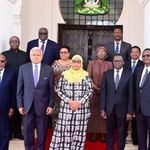
The commission comprises retired Chief Justice Mohamed Chande Othman (Chairperson), retired Chief Justice Ibrahim Juma, former Chief Secretary Ombeni Sefue, diplomat Radhia Msuya, retired senior military officer Paul Meela, former Inspector General of Police Said Mwema, diplomat David Kapya and former SADC Executive Secretary Stergomena Tax.
Mohamed Chande Othman: The judicial anchor
At the centre of the commission is Mohamed Chande Othman, a jurist whose career has traversed the highest levels of Tanzania’s judiciary and complex international investigative mechanisms.
He served as Chief Justice of Tanzania between 2010 and 2017, during which he also chaired the Commission for the Administration of Justice and the Judicial Service Commission, as well as overseeing legal education institutions. Prior to that, he held positions as Judge of the Court of Appeal and Judge of the High Court, building what colleagues describe as deep institutional memory of the justice system.
Internationally, Chande has established a strong profile in global justice and fact-finding missions. Since 2019, he has been appointed by the United Nations Secretary-General to serve in the investigation into the death of former UN Secretary-General Dag Hammarskjöld in Ndola, Zambia.
He has also chaired or served in multiple UN-linked bodies, including the Independent International Fact-Finding Mission on Sudan under the UN Human Rights Council and the International Commission of Human Rights Experts on Ethiopia (ICHREE).
In addition, he has served as Special Adviser to the Prosecutor of the International Criminal Court (ICC) and participated in expert reviews of the Court’s performance in The Hague. He also chairs the Governing Council of the African Institute of International Law and serves as Chancellor of the University of Arusha.
Ombeni Sefue: Diplomatic governance experience
Ambassador Ombeni Sefue brings extensive experience in public administration and diplomacy. A former Chief Secretary to the Government of Tanzania, Sefue has also served in senior diplomatic postings, including at the United Nations.
He has been involved in governance reform processes, public service coordination and continental peer review mechanisms under the African Union, giving him exposure to both domestic administrative systems and international governance standards.
Saidi Mwema: Security and policing systems
Former Inspector General of Police Saidi Mwema provides the commission with deep operational insight into national security and policing structures.
During his tenure as IGP, Mwema oversaw national policing systems, coordinated internal security mechanisms and managed operational command during key periods of national importance. His experience is expected to be central in analysing security-related aspects of the post-election violence.
Stergomena Tax: Defence and regional diplomacy
Dr Stergomena Tax brings a unique combination of defence policy expertise, regional diplomacy and economic planning experience.
She has served as Executive Secretary of the Southern African Development Community (SADC), Minister for Foreign Affairs and East African Cooperation and later as Minister of Defence and National Service.
Her background also includes senior roles in national planning and economic management, positioning her as a key contributor to the commission’s broader institutional and structural analysis.
Ibrahim Juma: Judicial interpretation
Retired Chief Justice Ibrahim Juma serves as another key judicial pillar within the commission.
He was Chief Justice of Tanzania from 2017 to 2025 and previously served as Acting Chief Justice and Judge of the High Court. His experience is expected to strengthen the commission’s interpretation of legal processes, constitutional principles and judicial standards.
Paul Meela: Military and strategic operations
Retired senior military officer Paul Meela contributes defence and strategic operations expertise. His career has combined military command responsibilities with diplomatic and regional security engagements.
He has participated in defence coordination frameworks linked to regional peace and security efforts, providing insight into military organisation and crisis response systems.
David Kapya: Peace and mediation expert
Diplomat David Kapya is widely recognised for his extensive work in conflict resolution and mediation across Africa.
He has been involved in peace processes in the Great Lakes region, Sudan and South Sudan, as well as broader African Union and international mediation initiatives. His experience in fragile political transitions is expected to be critical in contextualising conflict dynamics.
Radhia Msuya: Veteran diplomat
Ambassador Radhia Msuya brings long-standing experience in international diplomacy, having served in multiple postings across continents.
She has extensive exposure to multilateral diplomacy within the Ministry of Foreign Affairs and is known for her work in international relations and global cooperation frameworks.
Mandate and approach
The commission officially began its work on November 20, 2025, with an initial 90-day mandate ending on February 20, 2026.
However, due to the scale and complexity of the inquiry, the deadline was extended twice—first by 42 days to April 3, 2026 and later by 21 days to April 24, 2026—to allow for further evidence verification and completion of the report.
From the outset, the commission emphasised an evidence-based approach.
“Our main responsibility has been to collect evidence and the commission goes wherever the evidence leads,” said Chande during the inquiry.
He added that the commission relied on sworn testimonies rather than informal accounts.
“Our evidence is not based on rumours or street stories. It is sworn evidence where individuals pledge under their faith to tell the truth.”
He also clarified that the commission’s role was not prosecutorial.
“We are not here to accuse anyone of a crime or civil wrongdoing. Our task is to determine who was affected, how they were affected, where and why.”
Scope of investigations
The commission received testimony from more than 63,603 individuals nationwide through sworn statements, written submissions, questionnaires and expert consultations.
Chande described the volume of evidence as unprecedented.
“We received an overwhelming amount of evidence—far more than we initially expected.”
He added that sworn statements carry legal weight and may be admissible in court proceedings.
Expert input was also drawn from specialists in medicine, law, economics, psychology and digital forensics to strengthen analysis of the events.
Public participation
To widen participation, the commission used physical hearings, written submissions, digital platforms and anonymous questionnaires to allow individuals to share experiences without fear of exposure.
“This method allowed people to freely explain the causes, triggers and impacts of the violence without revealing their identities,” Chande said.
Submission of final report
The submission of the report on April 23, 2026 marks the culmination of a process that has spanned more than five months, two formal extensions and extensive nationwide engagement.
The report is expected to outline the causes of the violence, sequence of events and recommendations aimed at preventing similar incidents in future elections.
“We aim to explain what happened, what we discovered and what should be done moving forward,” Chande said.
He confirmed that the report has been prepared in both English and Swahili, reflecting its national importance and international relevance.