Consolata: From classroom leader to Kiswahili champion

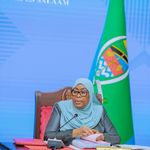
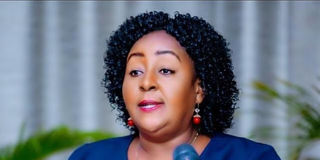
The head of the National Kiswahili Council of Tanzania (Bakita), Ms Consolata Mushi.

What you need to know:

  • A seasoned teacher with a deep-seated passion for linguistic development, Ms Mushi sat down with Salome Gregory of The Citizen to discuss her path to leadership.
  • She shares her vision for a future where Kiswahili serves as a bridge to global opportunity and a significant contributor to the national bottom line. Read on: 
How did you get to where you are today?

My leadership journey started in primary and secondary school, where I served as a class leader and later became a house captain, a system used by schools to group students for cleanliness and farming activities. During my National Service training, I was chosen as the women’s dormitory leader. When I began my career journey in 1993 at Rungwe Secondary School, I was assigned the responsibility of being the girls’ patron until my transfer to Kilangalanga Secondary School in 1995, where I served as the Secretary of the Kiswahili Teachers’ Association in the Coast Region for one year.

In 1997, I joined the University of Dar es Salaam to pursue a Bachelor’s degree in Political Science and Kiswahili. I later completed a Master’s degree in 2004. I then joined the National Kiswahili Council (BAKITA) in 2004 as a Language Planner and later rose to the rank of Senior Language Planner.

At BAKITA, I have served as Head of the Terminology and Dictionaries Department, Acting Head of Public Relations, Deputy Executive Secretary for four years, acting Executive Secretary for two years, and Executive Secretary since 2021.

I oversee all the day to day operational activities of BAKITA. The activities focus on the development and use of the Kiswahili language both within and outside Tanzania.

I have also worked as a part time lecturer at the Open University of Tanzania and the University of Dar es Salaam.

I have been a language analyst on both local and international radio stations, translated various documents from English into Kiswahili, and edited several books written in Kiswahili. I have also participated in book writing projects, especially dictionaries, including Kamusi Kuu ya Kiswahili, Kiswahili Dictionary for Primary Schools, and Kamusi ya Karne, all of which have been published. I have participated as an organizer and presenter in numerous seminars and workshops and have written various articles on the Kiswahili language.


Are there any programs or initiatives that BAKITA is undertaking to support women or girls in social issues or to help them advance into leadership positions?

Yes, we do have programs to support women. As an institution, we have set aside 30 percent of our tenders for women, youth, and special groups. As a result, the cleaning company that provides services at our offices is Tununu Company, which is owned by women. Additionally, through our training programs, we provide entrepreneurship education using Kiswahili.

What attracted you to teaching Kiswahili language, and how did you know early on that this was your life’s calling?

I have had a deep love for the Kiswahili language from secondary school through higher education. Initially, I aspired to become a journalist and always felt proud listening to a woman confidently reading the news in fluent language. I admired that broadcaster and wished to be like her. Today, that dream has manifested through my participation in various radio and television programs that educate the public. I truly love teaching because it gives you lifelong friendships, both in youth and old age, and even if you leave the profession, the respect remains. Even today, I am greeted with “Shikamoo, Teacher,” and when I ask who they are, they joyfully remind me that I taught them in a certain school. To me, that is a gift.


What leadership principles guide you, and which ones can you never compromise?

The leadership principles I strongly believe in are cooperation, justice, and self-confidence. I believe that alone I cannot accomplish much or it will take too long to reach my goals. As the elders say, one finger cannot lift a pot. I value collaboration. Justice is also very important to me in execution. Do not oppress me and vice versa. The confidence I have supports my achievements as I keep pushing until everything works for the best.


As a woman leading a key national language institution, what social or institutional mindsets did you need to change?

The lack of belief in what we already have. Some people think Kiswahili is a weak language with no global power, which I strongly disagree with. The purpose of any language is communication, and no language is superior to another. Kiswahili is capable, and we must abandon the misconception that it is not a major international language.


How has your work at BAKITA contributed not only to the development of Kiswahili but also to creating space for women in policy and language matters?

As a leader whose tenure has witnessed major developments in Kiswahili, I am convinced that under women’s leadership, great achievements are possible. Such success builds trust in women and demonstrates their ability to participate fully in transformative policy matters. Kiswahili has made significant progress and is now an official language in major UNESCO conferences, an official language of SADC, the African Union, and the East African Community. Currently, we have begun efforts to have it adopted by the United Nations, which I believe will happen in the near future.


What has your leadership taught you about patience, resilience, and difficult decision making as a woman leader?

These are essential pillars for any leader. Without patience, you can destroy many things. Patience brings blessings. Leadership involves desires that require patience to be realized. A self aware leader must be patient. For example, never judge anyone without careful assessment. Ask yourself before deciding: are the mistakes recurring? Have you advised the person? Warn them and give them a chance to improve. Some will change, become better, and even turn into your advisors. That is the result of patience.

Equally important is firmness in execution and decision making. A leader is measured by firmness in decisions and the ability to handle difficult situations. Make the right decision at all times, but if you later realize you were wrong, be able to step back and correct it.

To err is human. Accept that you can make mistakes. Refusing to be swayed is also crucial. As a leader, I do not allow myself to be easily shaken. I am evaluated by both my superiors and subordinates, and satisfying both sides requires firmness and strong decision making ability.


How do you view the role of Kiswahili in empowering women economically, educationally, and politically within and beyond Tanzania?

Kiswahili has great potential to advance professionals and society at large. Its current global position clearly shows that it can benefit its practitioners. Women can benefit by becoming professional teachers, translators, interpreters, authors, and through various arts related careers.

Politically, competence requires strong language skills, especially Kiswahili for Tanzanians. Women have a great opportunity to use this to attain political positions. Women are skilled at promoting and managing issues. Mastery of Kiswahili will enable them to access political platforms. This does not mean abandoning other disciplines. Rather, it adds value by enabling clear, calm, and attractive expression.

Educationally, women still have vast opportunities to advance in Kiswahili. Today, one can study up to a PhD in Kiswahili, which was not possible in our time when linguistics was taught in English. Opportunities are many now, and there is no reason to hesitate. The old notion that Kiswahili is meaningless no longer exists. I emphasize that this does not mean we should not learn other languages. Let us learn as many as possible.


What advice would you give to girls and women who love languages but think the field lacks opportunities?

My advice is that language is the foundation of everything in life. Nothing is possible without language. It is a major pillar. Let us study languages, and they will connect us to many opportunities globally.

A mother is the first language teacher to all human beings. A child learns their first language through the mother. Therefore, let us be confident that the gift of knowing and using language well was granted by the Creator, and through it we can become excellent Kiswahili teachers both within and outside the country.