Dar es Salaam. Have you ever driven along the eight-lane highway from Kibaha to Kimara and watched traffic flow smoothly and swiftly, giving Dar es Salaam a modern, refreshed look?
Perhaps you simply enjoyed the ride without wondering who quietly sat in an office, reflecting and drawing the first line of the blueprint that gave birth to the major project now transforming the city’s entrance and exit.
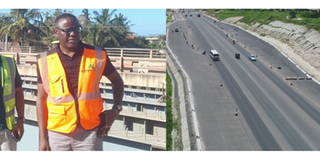
Behind that modern image stood a skilled professional, Mr Humphrey Shoo, also the founder of Safi Company.
Long before concrete was poured and machines roared to life, he used pen, paper, and sharp thinking to design the road project stretching from Kimara in Dar es Salaam to the Coast Region.
His pen carried a vision to ease traffic congestion, connect people and businesses, and give Dar es Salaam the face befitting its status as a commercial city.
The road is not merely a transport corridor; it is a symbol of development that began as ideas on paper under his expertise.
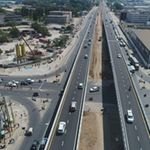
If that were not enough, have you ever crossed the flyover toward Mloganzila that links lives and opportunities?
Before it stood firmly on its pillars, Mr Shoo had already designed it with nothing more than pen and paper.
Despite lingering doubts about trusting local professionals, especially for large projects, Mr Shoo never saw this as an obstacle.
He surveyed the land, calculated loads, analysed water flow and soil conditions, and ensured the safety of the thousands who use the infrastructure daily.
He belonged to a new generation of local experts who translated the nation’s dreams from paper into visible, living infrastructure that serves citizens every day. His work spoke quietly.
Tragically, a road accident claimed his life while he was on a work trip in Lindi Region.
The accident occurred on Saturday, February 7, 2026, when the bus he was travelling in rammed into a truck from behind, killing two people.
Among the two was Mr Shoo, while a young child and 12 others were injured. His death is a blow to his family, friends, and the construction sector.
Yet even in grief, his contribution remains firm and valuable, etched in indelible ink.
Stakeholders in the sector have described him as a pioneer who delivered results and proved that local professionals are capable.
An engineer at the company he founded, Ms Dominica Chrispin, said his death shocked them as he was travelling to Lindi and Mtwara for road safety and quality inspections.
“He was going to check whether contractors had followed designs showing hazardous areas. He was not used to travelling by bus, but on that day he chose that means of transport and met the accident,” she said.
She described him as more than an ordinary engineer, a highly skilled professional trusted by authorities wherever he worked.
“Shoo was more than an engineer. He was brilliant, and authorities had full confidence in his expertise. He was involved in designing all Bus Rapid Transit (BRT) roads,” she said.
He was among the first specialists in BRT road design, having gained extensive experience through studies abroad, “He was among the first to acquire these skills and designed the eight-lane highway as well.”
Throughout his career, Mr Shoo worked on numerous projects inside and outside Tanzania, including Zambia, and was particularly skilled at preparing technical reports, a challenge for many in the industry, especially on international projects.
“He worked on projects as far as Zanzibar. He was excellent at writing reports and participated in projects in several countries,” she said.
“He trained many professionals and was generous with knowledge. We honour him especially because he valued others’ ideas,” she added, pledging preservation of his legacy by ensuring the company he founded remains strong.
“He was never greedy. We will honour him by ensuring the company endures, and his projects continue,” she said, sorrowfully.
An expert from Estim Company that constructed the Kimara–Kibaha highway, Mr Fred Nyenga, described his death as a major loss to the road construction sector, especially BRT projects.
“BRT roads are complex. If you make mistakes, you must call him to fix them. We may find a replacement, but getting someone like him is difficult,” he said.
Mr Nyenga said the deceased was a skilled designer of roads and bridges who carefully planned infrastructure according to community needs.
He designed the eight-lane highway from Kimara to Kibaha and determined bus stop locations based on population density.
“He was among the first teams to design BRT routes and also worked on road safety markings through his Safi Company,” said Mr Nyenga.
He also helped design roads for the Government City in Mtumba, located in Dodoma, and other projects in collaboration with fellow experts.
Despite his major contributions, he remained humble and avoided self-promotion.
“For road engineers, he was a giant. Whenever we were stuck, we turned to him, and he was always ready to help,” stressed Mr Nyenga.
He added that Mr Shoo designed many bridges in Dar es Salaam and played a key role in BRT projects from the first to the fourth lot.
Regarding the Mloganzila flyover, Mr Nyenga said they initially struggled to understand his instructions, but after following his guidance, they later confirmed the accuracy of his vision.
According to him, even the trip during which he lost his life was part of his commitment to inspect new works, demonstrating his dedication to the job until his final moments.
The Dar es Salaam manager of the Rural and Urban Roads Agency (Tarura), Mr Godfrey Mkinga, described him as a leading professional who designed roads for the Government City in Dodoma and participated in the Dar es Salaam Metropolitan Development Project (DMDP), including roads in Ubungo and Kinondoni districts.
“Honestly, he was a leader. As an industry, we have lost someone whose contribution was still greatly needed. He believed Tanzanians can deliver,” he said.
Mr Shoo, who leaves behind a wife and three sons, is expected to be buried today, Thursday, February 12, 2026, at Kondo Ununio cemetery in Dar es Salaam.
Farewell service was slated to take place at the Evangelical Lutheran Church of Tanzania (ELCT) in Msasani Parish.