Dodoma. For the first time since Dodoma became Tanzania’s administrative capital, the city’s persistent traffic congestion along the busy Dodoma–Dar es Salaam corridor is set for a major relief following the launch of a Sh241 billion project to expand the Dodoma–Chamwino Ikulu road into a modern six-lane highway.
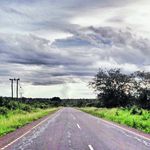
The 32-kilometre project, unveiled on Monday, May 18, 2026, is expected to ease chronic morning and evening traffic jams that have increasingly frustrated motorists, residents and government officials travelling in and out of the rapidly growing capital.
The contract was signed between the Tanzania National Roads Agency (Tanroads), on behalf of the government, and Chinese contractor China Railway Construction Engineering Group (CRCEG), marking the start of one of the largest urban transport infrastructure projects ever undertaken in Dodoma.
Once completed, the highway is expected to transform urban mobility in the capital, offering residents and visitors a faster, safer and more efficient transport corridor while reinforcing Dodoma’s transition into a modern administrative city.
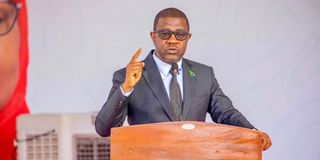
Speaking during the signing ceremony at Mashujaa Grounds in Dodoma, Minister for Works Abdallah Ulega directed Tanroads to closely supervise the contractor to ensure the project is delivered to standards befitting the national capital.
He said the new highway must reflect a modern city image through smart lighting systems, landscaped surroundings, pedestrian walkways and world-class urban infrastructure.
Mr Ulega also emphasised road safety, instructing designers and engineers to include safe crossing points, including pedestrian overpasses and underpasses, to reduce accidents that have become common in densely populated sections along the route.
“Dodoma deserves infrastructure that matches its status as the country’s capital city,” Mr Ulega said, adding that the government would not tolerate delays or substandard work.
The project forms part of the broader Dodoma Integrated and Sustainable Transport Project (DIST), a major transport modernisation programme jointly financed by the government and the World Bank.
Under the DIST programme, several key roads leading into Dodoma are being upgraded to improve traffic flow, reduce congestion in the city centre and divert heavy trucks away from residential and administrative areas.
According to Tanroads Chief Executive Officer Mohamed Besta, the Dodoma–Chamwino highway will be implemented under the Design and Build model, in which the contractor handles both design and construction works.
He said the project is expected to be completed within 36 months, including six months for detailed design and three months for preliminary works.
Mr Besta said the upgraded road will significantly improve mobility within Dodoma while boosting economic and social activities in the fast-growing capital.
Originally conceived under the “Decongestion of Dodoma” initiative, the wider programme initially targeted more than 220 kilometres of roads connecting Dodoma to Kongwa, Zamahero, Mpamantwa and Mlowa before being redesigned into the integrated DIST project.
The revised scope now focuses on three key corridors: Dodoma to Chamwino Junction on the Morogoro highway, Dodoma to Msalato Airport junction on the Arusha road, and the route linking Image Roundabout to the Standard Gauge Railway (SGR) station.
The project also brings together multiple government institutions, including Tanroads, Tarura, Latra and the Dodoma City Council, alongside stakeholders such as Duwasa, Tanesco, TTCL and transport service providers.
In addition to the highway expansion, the government has signed another agreement for construction of a 6.4-kilometre inner ring road in Dodoma, funded by the government of Japan at a cost of 2.78 billion Japanese yen.
Dodoma Urban District Commissioner Jabir Shekimweri thanked the government for allocating Sh19 billion for compensation to residents affected by the project and pledged full cooperation from regional authorities during implementation.
He urged the ministry to prioritise citizen safety by installing surveillance cameras and constructing modern pedestrian crossings along the busy route.
Meanwhile, Parliamentary Infrastructure Committee Chairman Seleman Kakoso called on the government to accelerate completion of stalled infrastructure projects across the country even as new ones continue to be launched.
Responding to concerns over accidents in the Kimbinyiko and Kisasa areas, Mr Ulega acknowledged the risks posed by rising traffic volumes and assured residents that improved lighting and modern safety measures would be central to the project.