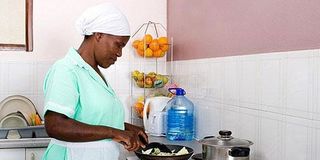
Dar es Salaam. The introduction of revised minimum wages for domestic workers has triggered mixed reactions among households in Tanzania, with some employers citing added financial pressure while others support the move as necessary to improve working conditions in the sector.
Under the Labour Institutions (Minimum Wage for Private Sector) Order, 2025, which took effect on January 1, 2026, domestic workers are entitled to revised minimum wages depending on the category of employment.
Live-in domestic workers, who previously earned about Sh60,000, are now set to receive Sh80,000. Live-out workers have seen their pay rise from Sh120,000 to Sh160,000.
Those employed by senior government officials are entitled to Sh265,000, up from Sh250,000, while domestic workers employed by major business owners and diplomats will earn Sh320,000, up from Sh300,000.
Speaking to The Citizen, Conservation, Hotels, Domestic, Social Services, and Consultancy Workers Union (Chodawu) secretary and legal officer Wagala Shungu said domestic workers should be recognised as part of the formal workforce and paid fairly.
She said many workers had long been underpaid, with some earning as little as Sh30,000 to Sh50,000 per month.
“Domestic workers are part of the workforce like any other employees. Many are struggling with very low wages, while the cost of living continues to rise,” she said.
Ms Shungu said even the revised Sh160,000 minimum for live-out workers remains low relative to current living costs, urging employers to comply with the new rates.
On the other hand, some employers said while they support fair pay, rising household costs also need to be considered.
Habiba Mapesa said domestic workers should be treated with dignity but also recognised as employees with obligations on both sides.
“While we treat them like family, they are employees who deserve to be paid fairly and on time,” she said.
She added that clearer wage structures could help reduce disputes between employers and workers.
Another employer, Musa Frank, said the new wage levels remain low for live-in workers and should be reviewed upward.
“In my view, even Sh160,000 is still low. A fair minimum should start at about Sh150,000 and rise higher for other categories,” he said.
Yasinta Raphael said she currently pays her live-in domestic worker about Sh100,000 and described it as a significant cost within her household budget.
She said concerns over discipline and performance also affect willingness to increase pay.
“Sometimes expectations rise with higher pay, but behaviour and professionalism also matter,” she said.
From the workers’ side, domestic worker Joyce John called for stronger legal protection, including written contracts.
“Salary is important, but we also need written contracts so that both employers and workers understand their responsibilities,” she said.
She said some workers face sudden dismissal or lack rest days, and called for clearer enforcement of labour regulations.
Register to begin your journey to our premium contentSubscribe for full access to premium content