Josephine Christopher is a senior business journalist for The Citizen and Mwananchi newspapers
Mwananchi Communications Limitted
When Doreen Matekele speaks about impact, she does not begin with statistics or performance indicators. She speaks of smiles. Not the ceremonial kind captured in donor reports, but the unfiltered joy she encounters in the field.
Women holding newly acquired skills. Young people finding livelihood pathways. Families regaining dignity. For her, these moments of human renewal are the truest measure of whether development work is working.
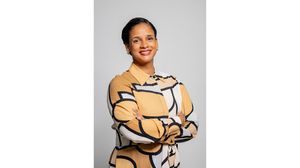
Today, Doreen serves as Country Director of Stromme Foundation Tanzania, providing strategic leadership in inclusive quality education and job creation. Yet her leadership journey did not originate in a boardroom. It began in the field, among communities whose daily struggles and aspirations would shape her professional compass.
Her path into development work traces back to her early days as an intern at the United Nations International Children’s Emergency Fund (UNICEF). That experience exposed her to grassroots realities and the complexities of programme delivery.
She later joined a national non-governmental organisation, OCODE, where she steadily advanced from Project Officer to Programme Officer, and eventually to Head of the Community Livelihood Department.
Each role deepened her understanding of how development interventions intersect with real lives.
In July 2023, she joined Stromme Foundation as Programme Manager, when the organisation’s Tanzania country office was established. Within six months, in January 2024, her leadership capabilities and strategic clarity led to her appointment as Country Director. The rapid progression reflected not only competence, but also the depth of experience she had accumulated through years of field engagement.
Those early encounters, she says, permanently shaped her approach to leadership. “I had the opportunity to meet our right holders, to understand their needs, and to hear their stories of change,” she reflects. “That transformation has always inspired me to ensure that we place our programme participants at the centre of what we do and address real needs.”
Her leadership philosophy is grounded in proximity. Before she began making strategic decisions, she spent years listening.
Before she started aligning partners, she walked alongside communities. This immersion gave her an unfiltered view of poverty, resilience, and the quiet determination that defines many lives in rural and peri-urban Tanzania.
Transitioning from operational roles into country leadership did not intimidate her. Instead, she found it motivating. With practical experience informing her judgement, she saw an opportunity to elevate perspective.
She could now shape broader systems, influence partnerships, and ensure that individual projects formed part of a coherent, sustainable development strategy.
Stromme Foundation does not implement projects directly. It works through partnerships with national non-governmental organisations. For Doreen, this operational model requires a distinct form of leadership. It demands systems thinking, deliberate coordination, and an ability to harmonise learning across diverse partners, while preserving responsiveness to local realities.
Operating through partners, she explains, requires a careful balance between oversight and trust. “You are not in the field implementing every day, but you remain accountable for the quality and integrity of the work,” she notes. That accountability, she adds, depends on continuous dialogue, shared learning platforms, and the humility to recognise that local organisations understand their communities better than anyone else.
In Tanzania, where youth unemployment, learning poverty, and rural livelihood vulnerability persist, she believes collaboration is not optional. It is strategic. Partnerships, she says, provide the opportunity to view challenges from a broader perspective and to ensure synergy across interventions. This integrated approach, she argues, is essential for sustainable development.
Her broader vantage point has sharpened her appreciation for systems change. Education initiatives must align with livelihood pathways. Skills training must translate into income. And hope must be underpinned by tangible opportunity. Development, in her view, should be interconnected rather than fragmented, addressing root causes rather than isolated symptoms.
She often describes herself as “a researcher at heart,” a phrase that captures her analytical leadership style. “I am keen on details,” she explains. “I do a thorough analysis before making any strategic decision. I always need to assure myself before making a move.” In a sector often constrained by tight funding cycles and urgent timelines, her deliberation reflects discipline and foresight. She is methodical, not impulsive. She calibrates, rather than reacts.
Yet leadership, particularly as a woman leading a country office, sometimes requires firmness. There have been moments, she acknowledges, when she has had to set clear boundaries and reinforce roles and responsibilities. In those instances, authority is not about dominance. It is about clarity, structure, and professional accountability.
Despite the operational complexity of her role, impact remains her anchor. Beyond indicators and performance frameworks, she measures transformation through what she sees and hears: renewed zeal, restored confidence, and stories of change that ripple through families and communities. Development, in her framing, is not transactional. It is relational. It is about dignity, belonging, and possibility.
When asked what she hopes people will say about her in years to come, she pauses. The question unsettles her, perhaps because her focus remains firmly on the present. “I don’t really know what they will say,” she admits. “But maybe they will say that Doreen was passionate about what she did, and that she held the people she served close to her heart.” It is a modest aspiration, yet deeply revealing. Titles fade. Human connection endures.
Outside the responsibilities of country leadership, she seeks balance through simplicity. The ocean offers her calm. Acts of service, especially towards those in need, bring fulfilment. She finds joy in cooking her favourite dish, pilau, and unwinding with films and television series. These small rituals, she says, help her recharge and maintain emotional equilibrium.
There is also a quieter dimension to her resilience: the practice of setting boundaries. “It is that part of my life where I set boundaries,” she reflects. “It has helped me to remain focused and live authentically.” In leadership, boundary-setting can be misunderstood as distance. For her, it is preservation. It safeguards values, maintains clarity of purpose, and protects against burnout.
If she could speak to her 20-year-old self, she would begin with affirmation. She would express pride in the journey towards becoming the best version of herself without losing her smile. And perhaps, she adds gently, she would encourage herself to take more chances, to trust instinct, and to embrace uncertainty as part of growth.
Her understanding of womanhood has also evolved. In today’s Tanzania, she defines it in a single phrase: living authentically. There is quiet power in that framing. Not spectacle. Not performative strength. But authenticity.
Knowing who you are. Setting boundaries. Leading with analysis. Centring communities. And finding joy in simple, grounding rituals.
In a development landscape increasingly driven by frameworks, metrics, and funding imperatives, Doreen Matekele’s leadership stands out for its fusion of rigour and humanity. Her approach blends field-informed strategy, relational impact, and a deep conviction that communities carry within them the capacity for transformation.
Perhaps, years from now, when her story is written in full, it will not only recount her rise from programme officer to country director. It will remember the steadiness, the calm resolve, and the ocean-like composure with which she carried both responsibility and hope.
For now, she continues to lead with measured purpose, guided by research, grounded in lived experience, and attentive to the smiles that remind her why the work matters.