Dar es Salaam. Business leaders from Tanzania and the Democratic Republic of the Congo (DRC) are exploring ways to maximise trade opportunities arising from the construction of the Standard Gauge Railway (SGR), as both sides seek to deepen bilateral economic ties.
Discussions held in Dar es Salaam on Tuesday focused on how the modern railway network will ease cargo transportation between Tanzania’s principal gateway, the Port of Dar es Salaam, and eastern and central parts of the DRC, including Maniema Province.
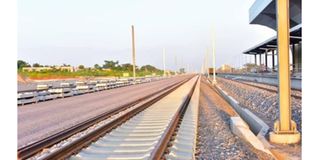
The SGR is designed to link Dar es Salaam on the Indian Ocean to Mwanza Port on the shores of Lake Victoria, creating a strategic transport corridor to land-linked neighbouring countries such as Rwanda, Burundi and the DRC.
The project is expected to significantly reduce reliance on long and often challenging road routes that currently dominate cross-border trade.
Business representatives from both countries noted that unreliable road infrastructure and vast distances have made transporting cargo from Dar es Salaam to parts of the DRC both costly and time-consuming.
Shipments to areas such as Maniema can currently take up to two months for a round trip.
The government is implementing the SGR in phases, including the Makutupora–Kigoma section. Stakeholders said that once the railway becomes fully operational, transit times are expected to drop substantially, lowering transport costs and improving efficiency in the movement of goods.
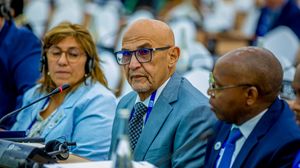
The talks brought together members of the Tanzania Private Sector Foundation (TPSF) and a delegation from Maniema Province, who are visiting the country to explore opportunities in transport, logistics and cross-border trade.
Maniema Governor Moises Kabwankubi, who led the Congolese delegation, said improved rail connectivity would strengthen bilateral trade, enhance regional integration and position Tanzania as a key logistics hub for Central and East Africa.
“Our province is blessed with numerous minerals and agricultural produce,” he said, expressing optimism that better infrastructure would unlock the region’s economic potential.
Mr Kabwankubi highlighted investment opportunities in cement production, citing increased construction activity in the region. He also pointed to strong demand for petroleum products and livestock.
“Tanzania is endowed with abundant raw materials for cement manufacturing, which places Tanzanian investors in a strong position to establish factories or enter joint ventures with partners in the DRC to meet demand in Maniema and neighbouring areas,” he said.
Addressing concerns over security, he said that Maniema is located far from conflict-affected areas, encouraging investors to explore opportunities in the province with confidence.
For his part, TPSF Acting Executive Director Deogratius Massawe said stakeholders had identified a range of challenges and opportunities affecting trade between the two countries.
He noted that while several provinces in the DRC are land-linked, presenting logistical hurdles, the situation also offers an opportunity for Tanzania — particularly with the ongoing SGR construction expected to enhance regional connectivity.
Mr Massawe further highlighted the potential role of Air Tanzania Company Limited (ATCL) in transporting cargo and strengthening trade links between the two nations. “Through our discussions, we agreed that in April a delegation of Tanzanian businesspeople will travel to Maniema Province to meet their Congolese counterparts and explore practical ways of enhancing trade and investment,” he said.
He emphasised that the private sector is expected to implement about 80 per cent of the country’s Development Vision 2050 targets, making such engagements crucial.
“The meeting provides a timely opportunity for Tanzania’s private sector to contribute actively to national development while expanding its footprint in regional markets,” he added.
Meanwhile, Bravo Group Acting Group Chief Executive Officer Ngobile Ngwenya outlined the logistical challenges her company faces when transporting agricultural equipment to Maniema and other parts of the DRC.
“Today’s meeting was important as it enabled us to identify the challenges we normally face and determine where to report them. Some issues have already been addressed, and for those that have not, guidance was provided on how to seek solutions,” she said.
Ms Ngwenya said security and safety remain major concerns, noting that vehicles and drivers often lack adequate protection. Documentation procedures and permit requirements also make the transportation process lengthy and complex.
She said round trips currently take up to two months, whereas an ideal timeframe would be about three weeks.
Despite the challenges, she pointed out that Maniema and surrounding areas offer vast opportunities in agriculture, with significant tracts of land still underutilised.
The ongoing SGR project is therefore seen not only as a transport upgrade but as a catalyst for unlocking trade, investment and agricultural potential between Tanzania and the DRC.
Register to begin your journey to our premium contentSubscribe for full access to premium content