The decision follows persistent delays in the remittance of membership contributions, which have placed significant financial strain on the regional body and slowed the implementation of key programmes and development projects
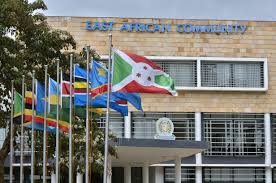
Arusha. The Council of Ministers of the East African Community (EAC) has been tasked with reviewing the bloc’s contribution framework and proposing a revised formula that aligns each Partner State’s financial obligations with its economic capacity.
The decision follows persistent delays in the remittance of membership contributions, which have placed significant financial strain on the regional body and slowed the implementation of key programmes and development projects.
According to official figures, as of January 31, 2026, the EAC was owed $89,372,865 in outstanding contributions from Partner States.
The Democratic Republic of the Congo leads with arrears amounting to $27 million, followed by Burundi ($22.7 million), South Sudan ($21.8 million) and Somalia ($10.5 million).
Speaking at a press briefing, EAC Secretary General Veronica Nduva said only Tanzania, Kenya, Uganda and Rwanda have fully met their financial obligations for the 2025/2026 financial year.
In response to mounting fiscal pressure, Heads of State have directed the Council of Ministers to undertake a comprehensive review of the current equal-contribution model, under which each Partner State contributes $7 million annually to the Community’s budget.
“We recognise that our eight Partner States are not operating at the same level of economic growth or revenue generation,” Ms Nduva said.
“The proposal under discussion seeks to introduce a more equitable and realistic contribution framework based on each country’s economic capacity, rather than maintaining a uniform rate for all.”
She said the matter, being a policy issue, is under active deliberation by the Council of Ministers, with expectations that by March 7, 2026, a clear direction will be provided to guide the adoption of a sustainable and inclusive funding formula.
Ms Nduva emphasised that the Community has opted for diplomatic engagement rather than coercive measures in addressing the arrears.
“We have not issued any ultimatums. Instead, we are engaging Partner States diplomatically to understand the specific challenges they face and to encourage compliance with their financial commitments,” she said.
She added that financial constraints are not unique to the EAC, noting that several regional and international organisations face similar difficulties, particularly when member states experience economic downturns or political instability.
“Contributions must not divide us. Today one country may face economic hardship, and tomorrow it could be another. Political and economic solidarity remains the cornerstone of the EAC’s success,” she said.
The Council of Ministers is expected to table recommendations on a sustainable contribution mechanism aimed at strengthening the Community’s financial resilience while safeguarding unity among Partner States.
Meanwhile, during a virtual sitting of the Third Meeting of the Fifth Assembly of the East African Legislative Assembly (EALA), the EAC presented a $109.3 million budget for the 2025/2026 financial year.
The Chairperson of the Council of Ministers and Kenya’s Cabinet Secretary for EAC Affairs, Beatrice Askul Moe, said 62 per cent of the proposed budget ($67.76 million) will be financed through Partner States’ contributions, while development partners are expected to cover the remaining 38 per cent ($41.58 million).
Key priorities for the 2025/2026 fiscal year include strengthening peace, security and political stability across the region — critical pillars for deepening economic integration and safeguarding the Community’s long-term development agenda.