EAC takes regional peace push to AU over eastern DRC conflict

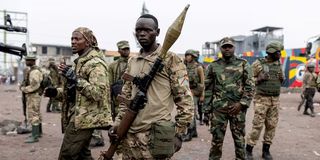
Members of the M23 rebel group in Goma, eastern Democratic Republic of Congo. The East African Community is seeking support from the African Union to address ongoing conflict in the region. PHOTO | REUTERS
Arusha. The East African Community (EAC) has taken its regional peace and security agenda to the continental stage, seeking the support of the African Union (AU) to address persistent conflicts affecting parts of the region, particularly eastern Democratic Republic of Congo (DRC).

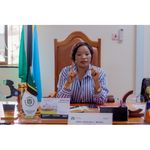
Speaking to journalists in Arusha on Friday, EAC Secretary General Veronica Nduva said the move forms part of a broader strategy aimed at ensuring a stable and secure East African region capable of advancing economic growth and regional integration.

Responding to a question on efforts by the regional bloc to ensure security and stability among partner states, Ms Nduva said under the leadership of Kenya’s President William Ruto, who currently chairs the EAC, the eastern DRC conflict has been tabled within the AU framework, allowing African leaders to collectively deliberate on sustainable pathways to restore peace in the troubled region.

Ms Nduva explained that the EAC intensified its peace efforts in early 2025 when the bloc convened consultations to identify urgent measures to address conflicts that continue to undermine stability and economic progress in some member states.

The consultations culminated in joint meetings of regional heads of state, paving the way for the establishment of a formal peace process and the appointment of international mediators to spearhead reconciliation efforts.

“International partners are now also actively participating in the process, demonstrating that this is a comprehensive strategy involving multiple institutions, regional bodies and global stakeholders,” she said.

She noted that the situation in eastern DRC has also been discussed within the AU Peace and Security Council, which convened a special session to examine the crisis alongside other security challenges facing the continent.

Ms Nduva emphasised that under the AU framework, regional economic communities such as the EAC are assigned specific responsibilities in managing conflicts within their respective regions.

“As such, even when the EAC does not appear to be directly leading certain initiatives, it remains actively engaged through a coordinated division of responsibilities among regional actors,” she said.

She added that some EAC partner states, notably the Democratic Republic of Congo and Rwanda, continue to face localised conflicts that have slowed economic development and regional stability.

To address the challenge, the EAC has been working closely with the Southern African Development Community (SADC) to coordinate joint peace initiatives aimed at stabilising the region.

Under the Nairobi peace process, several former African leaders have been appointed to spearhead mediation efforts, including former Kenya President Uhuru Kenyatta, former Nigeria President Olusegun Obasanjo, former South Africa President Kgalema Motlanthe, former Ethiopia Prime Minister Hailemariam Desalegn, former Central African Republic President Catherine Samba-Panza, former Ethiopia President Sahle-Work Zewde and former Botswana President Mokgweetsi Masisi.

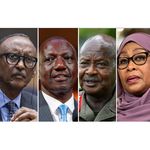
The mediation efforts are supported by regional leaders including EAC Chairperson William Ruto of Kenya, Angola’s President João Lourenço—who oversees the Luanda peace process—Tanzania’s President Samia Suluhu Hassan,  and Zimbabwe’s President Emmerson Mnangagwa.

According to Ms Nduva, the joint EAC–SADC framework seeks to harmonise the Nairobi and Luanda peace processes, halt hostilities in north-eastern DRC, disarm militia groups and facilitate diplomatic dialogue between the DRC and Rwanda.

She said peace and security remain fundamental pillars for regional development, noting that without stability, efforts towards regional cooperation and integration cannot succeed.