Economic diplomacy delivers investment, trade gains for Tanzania
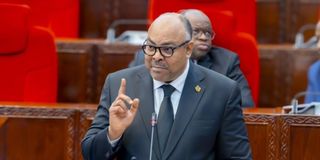
Minister of Foreign Affairs and East African Cooperation, Mahmoud Thabit Kombo, presents the ministry’s revenue estimates and expenditure budget in Parliament in Dodoma on May 26, 2026. PHOTO | COURTESY
Dodoma. Tanzania’s economic diplomacy drive has been yielding gains in trade, investment, infrastructure, healthcare and tourism, Foreign Affairs and East African Cooperation Minister Mahmoud Thabit Kombo told Parliament on Tuesday.
Presenting his ministry’s proposed Sh359.3 billion budget for the 2026/27 financial year, Mr Kombo said the government has continued to use diplomacy as a strategic tool to unlock economic opportunities and strengthen Tanzania’s global partnerships.
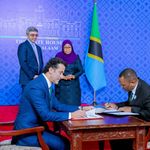
The minister outlined a series of bilateral and multilateral engagements that have attracted billions of shillings in concessional loans, grants, infrastructure financing and trade opportunities.
Among the major achievements highlighted was the growth of medical tourism following President Hassan’s state visit to Comoros in July 2025.
During the visit, President Hassan pledged to dispatch Tanzanian medical specialists to Anjouan Island, leading to a medical outreach programme conducted in October 2025.
“Approximately 3,600 patients received direct treatment, while 1,500 others were referred to Tanzania for specialised medical care,” Mr Kombo said.
He added: “That initiative has stimulated an increase in the number of patients from Comoros coming to Tanzania for specialised treatment services and, in turn, boosted medical tourism.”
The minister also cited progress in regional infrastructure integration, including the launch of construction works for the 282-kilometre Standard Gauge Railway (SGR) line linking Uvinza in Tanzania and Musongati in Burundi.
According to him, the project will stimulate economic activities and deepen regional integration once completed.
In March 2026, Tanzania and Uganda also signed a memorandum of understanding for the development of the Isaka-Lusahunga-Murongo-Kikagati SGR project connecting the two countries.
At the same time, construction of the East African Crude Oil Pipeline (EACOP) reached 79 percent by January 2026 and is expected to be completed in July this year.
“The completion of this project is expected to increase government revenue, strengthen investment in the energy sector and create employment opportunities for Tanzanians,” Mr Kombo said.
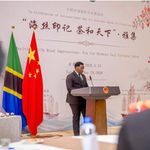
Mr Kombo further highlighted Tanzania’s expanding cooperation with Asian partners, particularly China, Japan, South Korea and Singapore.
He said China had agreed to cancel an interest-free loan worth RMB100 million (equivalent to approximately Sh34 billion), easing the financial burden on the government.
“Through that visit, Tanzania successfully negotiated debt relief amounting to RMB100 million,” he said while referring to the January 2026 visit by Chinese Foreign Affairs Minister Wang Yi.
Mr Kombo said China had also pledged continued support for development projects under the Forum on China-Africa Cooperation (FOCAC), including livestock technology initiatives and the deployment of specialist doctors to Tanzanian hospitals.
Japan, meanwhile, has committed major support to healthcare and fisheries development projects.
Among the projects is the establishment of a kidney treatment and transplant centre at Benjamin Mkapa Hospital, valued at ¥1.5 billion and funded by Tokushukai Medical Corporation of Japan.
“The centre will improve kidney treatment services in the country, support specialist training and reduce the costs and challenges faced by patients travelling abroad for treatment,” the minister said.
South Korea also approved a concessional loan package worth $2.5 billion through the Economic Development Cooperation Fund (EDCF) to finance strategic projects, including the expansion of Muhimbili National Hospital, construction of Bagamoyo fishing port and a railway training college in Dodoma.
According to Mr Kombo, South Korea has recognised Tanzania among its five priority African partners for development cooperation between 2026 and 2030.
He said the decision reflected investor confidence in Tanzania’s political stability, investment climate and development performance.
The minister also reported strong growth in Tanzania’s regional trade.
Exports to East African Community (EAC) member states increased from $1.16 billion in 2024 to $1.22 billion in 2025, while exports to Southern African Development Community (SADC) countries rose by 19.4 percent from $2.97 billion to $3.55 billion over the same period.
“Tanzania continues to benefit from a positive trade balance within SADC,” he noted.
Mr Kombo further revealed that Tanzania secured preliminary financing commitments worth approximately $1.52 billion from international investors for Phase Seven of the SGR project during an investment forum held in Morocco in November 2025.
The investors included JP Morgan, AIIB, Standard Bank/Stanbic Tanzania and Credit Agricole CIB.
In tourism, the minister said Tanzania had intensified promotional campaigns in Qatar, China and Oman as part of efforts to increase tourist arrivals and foreign exchange earnings.
He pointed to the launch of the Ngorongoro-Lengai Geo Museum project in Arusha, valued at around Sh32 billion and funded through Tanzania-China cooperation.
“The museum is expected to become a major catalyst for increasing the number of tourists from China and other countries,” he said.
The minister also highlighted growing opportunities in education and skills development through partnerships with China, India and Indonesia.
Register to begin your journey to our premium contentSubscribe for full access to premium content