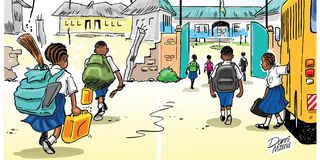
Dar es Salaam. At Sinza Primary School in Ubungo District, Dar es Salaam, the principle of "equal opportunity" is separated by a literal and figurative wall. On one side, the newly "upgraded" English Medium wing boasts well-designed, clean classrooms and attractive environments.
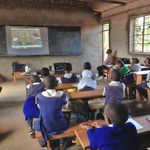
On the other, the regular Swahili-medium wing continues to grapple with the "sorrowful" state of public education that has long plagued the nation.
This internal schism within a single government compound is the most visible face of Tanzania’s emerging "two-tier" education system.
The situation in Sinza is no longer an isolated incident.
A random survey conducted in the Kinondoni District alone found that government English medium primary schools increased from just one in 2021 to more than ten in 2026.
Nationally, the appetite for these institutions has exploded, with the government now owning 68+ such schools across the country as of April 2025, branding it as "progressive," there’s an alert over the creation of institutionalised class divisions within the public sector.
A parent residing in Sinza, Ms Sophia Amoni, represents the desperate middle. "I’ve always wanted my child to attend a quality school, but private schools were beyond my reach," she admits. To her, the English Medium wing is a lifeline, despite the annual fee of Sh400,000.
However, for her neighbour, Juma Amos, a petty trader in Kimara, that fee is an insurmountable barrier. His children are relegated to the Swahili side, where the national average classroom-to-pupil ratio (PCR) is a staggering 1:72, compared to the 1:47 enjoyed by their peers just metres away.
The situation in Bahi District, Dodoma, mirrors this pathetic inequality but with even steeper entry barriers.
The Bahi English Medium Primary School, a government institution, mandates a "food contribution" of Sh250,000 and an "admission fee" of Sh250,000.
In a region where basic education is constitutionally intended to be "fee-free," these mandatory costs effectively exclude the very citizens the public sector is meant to serve.
Furthermore, Bahi enforces a strict "SPEAK ENGLISH ONLY" rule within the school premises, creating a linguistic enclave that critics say fosters a misguided perception of Kiswahili as an "inferior" medium.
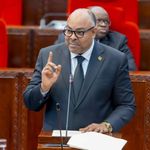
The then Minister for State (PO-RALG), Mr Mohamed Mchengerwa, defended these developments during the launch of the Chief Zulu English Medium Primary School in Songea back in 2024.
He argued (in front of President Samia Suluhu Hassan, who officiated the launch) that the school, built for Sh626.4 million using internal municipal revenue, aimed to help parents who need quality English medium services at a "more affordable" cost.
He highlighted that the Songea school provides practical ICT education and French lessons to meet global market demands. However, child psychologists warn of the long-term impact of this physical and social separation on young minds.
The psychological cost
A child psychologist in Dar es Salaam, Dr Amina Mrema, notes that when children in the same neighbourhood enter different gates of the same school, one for the "elite" and one for the "poor", it creates a "class consciousness" that can lead to resentment and low self-esteem in those excluded.
"We are teaching children from the age of six that their worth is tied to their parents’ ability to pay contributions to a government they all theoretically own," she observes.
The intensity of the problem lies in the statistics: English Medium public schools enjoy a pupil-teacher ratio (PTR) of 1:47, while the Swahili-medium majority remains at 1:70 or more.
By creating these tiers, the government risks violating Article 11 of the Constitution, which guarantees equal education opportunities for every citizen.
As concerned groups highlight in this investigation, this "two-tier system" is effectively producing two different types of Tanzanians within the same public institution.
Joining this psychological critique is a prominent Educational Psychologist from the University of Dar es Salaam, Dr Robert Mbele, who points to a fundamental "variation between the recently enacted and the intended curriculum".
He argues that while the national curriculum aims to promote 21st-century skills such as collaboration and social responsibility, the current segregated school structure actively undermines these goals.
"Collaboration requires a shared environment where students of different backgrounds learn to solve problems together," he explains. "When you segregate them by their parents' ability to pay, you are not just separating classrooms; you are stunting the development of the very socio-emotional skills the policy claims to prioritise".
He observes that the focus on "quality" in English wings often masks the underlying reality that graduates across the system still lack creativity and problem-solving skills because the system elements, like proper teacher training and inclusive environments, are weak.
An education analyst, Dr Thomas Jabir, further underscores that the "appeal" of English medium public schools is often not about the language itself, but about the government’s decision to provide better infrastructure to those select few.
When “quality education” becomes a luxury
Register to begin your journey to our premium contentSubscribe for full access to premium content