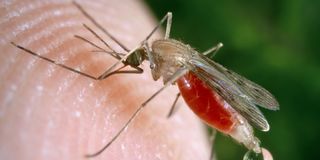
Dar es Salaam. Tanzania’s ambition to eliminate malaria by 2030 has received a major scientific boost following new research that has identified and mapped different malaria parasite types across the country.
This development, experts say, will strengthen surveillance systems and improve responses to emerging drug resistance.
Researchers from the Ifakara Health Institute (IHI) said the country had for years operated with limited detailed data on the diversity of malaria parasites circulating in different regions, a gap that had constrained the design of targeted, location-specific control strategies.
The new findings, presented during the second annual dissemination meeting of the Malaria Molecular Surveillance Phase II project, now provide a clearer picture of parasite distribution and are expected to guide both diagnosis and treatment approaches in line with regional transmission patterns.
Speaking at the meeting, Principal Researcher at IHI, Prof Deusdedit Ishengoma, said malaria in humans is caused by multiple parasite types that must all be addressed for elimination efforts to succeed.
“Malaria is caused by about 11 different parasite types, and elimination efforts must target all of them simultaneously,” he said.
He warned that focusing on only some parasite strains while neglecting others could sustain transmission in communities and undermine national elimination goals.
“Targeting only some parasites while leaving others behind can sustain transmission in the community.
Malaria elimination is not only about reducing symptoms but ensuring all parasites are completely cleared from the body,” Prof Ishengoma said.
The study also detected early indicators of reduced susceptibility of malaria parasites to commonly used antimalarial drugs, raising concerns about possible emerging resistance.
These warning signs were most evident in Kagera Region, where some patients were found to still carry malaria parasites three days after starting treatment — longer than expected under normal treatment response.
“Normally, a patient is expected to have significantly reduced or completely cleared parasites within that period, but these findings showed delayed parasite clearance in some cases,” Prof Ishengoma said.
He said that surveillance data suggests similar signals may already be spreading to other regions, including Kigoma, Katavi, Ruvuma, Njombe and Morogoro.
The research further shows that modern molecular diagnostic tools can now detect even very low levels of malaria parasites in the human body, offering more precise data for clinical and public health decision-making.
Researchers say this advancement will significantly improve national surveillance systems and allow earlier detection of changes in transmission patterns.
They have recommended strengthened surveillance in high-burden areas, particularly Kagera Region, to enable early response to any further spread of drug-resistant strains.
They also urged faster review and implementation of revised antimalarial treatment guidelines in response to evolving scientific evidence.
The researchers further called on the government to continue investing in malaria research institutions to ensure sustained scientific data collection and evidence-based decision-making towards elimination by 2030.
Responding to the findings, Director General of the National Institute for Medical Research, Prof Said Aboud, said the government values research outputs and will continue to rely on scientific evidence in shaping health policy.
“There has been significant progress in various methods of detecting and monitoring malaria and other diseases,” he said, noting that molecular surveillance was strengthening national response capacity.
IHI Chief Executive Director Dr Honorati Masanja said the second phase of the surveillance project, launched in 2024, continues to generate critical evidence to support malaria control and elimination efforts.
Register to begin your journey to our premium contentSubscribe for full access to premium content