Tanzanian universities urged to boost research, partnerships to compete globally
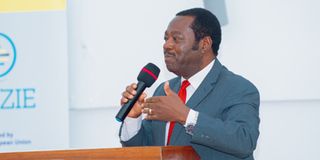
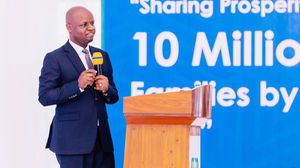
The Inter-University Council for East Africa (IUCEA) senior principal for quality assurance and qualifications framework, Dr Cosam Chawanga, presents a paper on strategic approaches to strengthening university internationalisation at an international higher education internationalisation conference held in Arusha on Sunday, June 21, 2026. PHOTO | BERTHA ISMAIL
Arusha. The Inter-University Council for East Africa (IUCEA) has urged higher learning institutions in Tanzania to learn from leading global universities to enhance international competitiveness, improve academic quality, and strengthen research and innovation.
The regional body also called on universities to deepen collaboration with regional and international institutions, describing partnerships as a key pillar in advancing the higher education sector.
The call was made on Sunday, June 21, 2026, by IUCEA senior principal for quality assurance and qualifications framework, Dr Cosam Chawanga, while presenting a paper on strategic approaches to strengthening university internationalisation through global best practices at an international higher education conference on internationalisation in Arusha.
Dr Chawanga said leading universities worldwide have attained global prominence through substantial investment in international partnerships, joint research initiatives, innovation, student and academic mobility programmes, and integration of technology in teaching and research.
He said internationalisation of higher education has become a key global agenda, enabling institutions to enhance international visibility, attract researchers and students from different countries, and improve the quality of teaching and research.
“African universities should make internationalisation an integral part of their development strategies rather than relying on short-term projects,” he said.
“This is a long-term process that encompasses teaching, research, institutional governance, and international collaboration,” added Dr Chawanga.
Furthermore, he said that IUCEA continues to implement student and academic mobility programmes across East African Community member states while supporting collaborative research initiatives aimed at producing professionals capable of operating in regional and international environments.
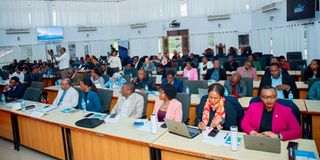
The conference, organised by the Tanzania Commission for Universities (TCU) under the TANZIE project and funded by the European Union, brought together university leaders, policymakers, education experts, and development partners to discuss ways of strengthening internationalisation in higher education.
Discussions also focused on enhancing collaboration between Tanzanian universities and international institutions, expanding research and innovation capacity, and positioning Tanzania’s higher education system to compete globally more effectively.
Closing the conference, Nelson Mandela African Institution of Science and Technology (NM-AIST) vice-chancellor, Prof Maulilio Kipanyula, said the modern world requires universities to operate beyond national borders in generating knowledge, conducting research, and fostering innovations that contribute to societal development.
He said Tanzania should leverage international partnerships to strengthen research capacity and develop solutions to pressing development challenges.
“Let us agree that we want to see Tanzania’s higher education system become an active part of the global academic ecosystem through research, innovation, academic collaboration, and exchange of students and academic staff,” he said.
During the event, Mzumbe University vice-chancellor, Prof William Mwegoha, said Tanzania needs to address policy, regulatory, and institutional barriers that limit universities’ ability to compete in the global higher education landscape.
He said universities should develop internationally recognised academic programmes, strengthen partnerships with foreign institutions, and ensure graduates possess the skills and competencies required in the international labour market.
“We are building a system that connects Tanzania to the global higher education community. We must strengthen student and staff exchanges, expand research collaboration, and ensure our academic programmes meet international standards,” he said.
Register to begin your journey to our premium contentSubscribe for full access to premium content