Samia, Nandi-Ndaitwah push economic liberation as Africa’s next frontier
President Samia Suluhu Hassan and her guest, President of Namibia Netumbo Nandi-Ndaitwah, during the Tanzania–Namibia Business and Investment Forum held in Dar es Salaam on June 20, 2026. . PHOTO | AFP
Dar es Salaam. More than three decades after Namibia attained independence and over six decades since Tanzania became a frontline state in Africa’s liberation struggles, the leaders of the two nations believe a new battle must now be fought- the battle for economic liberation.
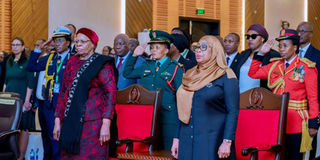
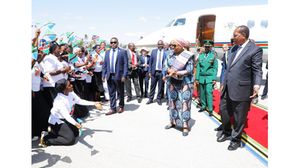
That message dominated Namibian President, Dr Netumbo Nandi-Ndaitwah’s three-day State Visit to Tanzania, where she and President Samia Suluhu Hassan repeatedly stressed that the historical ties forged during the struggle against colonialism and apartheid must now be translated into jobs, investments, trade and prosperity for ordinary citizens.
Their shared argument was simple: political freedom alone is no longer enough.
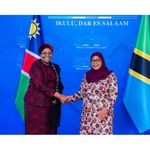
“We have spoken a lot about our historical relationship; now it is time for that relationship to bring economic benefits to all of us,” President Hassan said after bilateral talks at State House in Dar es Salaam on Saturday.
The statement captured the essence of a new chapter in Tanzania-Namibia relations, one that seeks to move beyond commemorating the past and instead focus on creating tangible economic opportunities for future generations.
The relationship between Tanzania and Namibia is deeply rooted in the liberation struggle. Tanzania hosted Namibian freedom fighters, provided diplomatic support and became home to many leaders who would later shape independent Namibia.
President Nandi-Ndaitwah herself has a personal connection with Tanzania, having spent part of her liberation movement years in Dar es Salaam.
But both leaders acknowledged that while political relations remain exceptionally strong, economic cooperation has not kept pace.
President Hassan noted that bilateral trade stood at only about Sh20 billion in 2024, a figure she said falls far short of the potential offered by the two economies.
“The current level of economic cooperation does not reflect the strength of our political relations,” she said.
That mismatch has become the driving force behind the new strategy.
For President Nandi-Ndaitwah, the changing global environment has made such a shift urgent.
“The purpose of my visit is to transform our long-standing political relationship into an economic partnership because that is what the world we live in today demands,” she said.
The message was echoed during the Tanzania-Namibia Business and Investment Forum later on the day, where she argued that success should not be measured by the number of agreements signed but by the investments, businesses and jobs that emerge from them.
“We must move from opportunities to production, from discussions to action, and build partnerships that create jobs and development for our people,” she told investors.
Why economic liberation matters now
The leaders’ call comes at a time when African countries are facing mounting economic pressures, including global trade uncertainties, rising youth unemployment and growing competition for investment.
President Hassan argued that Africa possesses all the ingredients needed to overcome these challenges, just as it overcame colonial domination.
“If African countries cooperate effectively, as we did during the liberation struggle, we will be able to solve many of the challenges confronting us and achieve our development aspirations,” she said.
She pointed to Africa’s youthful population, vast natural resources and fertile land as strategic advantages that can drive growth if countries work together rather than in isolation.
The two leaders identified several sectors where Tanzania and Namibia can jointly unlock economic value, including trade, agriculture, livestock, fisheries, mining, tourism, aviation, health, education, oil and gas, and the blue economy.
Perhaps the clearest symbol of the shift towards economic cooperation emerged not from government ministries but from a partnership between private sector and community institutions.
During the presidential business forum, Tanzania and Namibia signed a five-year agreement aimed at promoting beekeeping, tourism, research and skills development.
The partnership brings together Tanzania’s Kijiji Cha Nyuki Company Limited, Namibia’s Nknongo Community College and Apimondia, the global federation of beekeepers’ associations.
The initiative seeks to establish Namibia’s apiculture research and training institute while creating employment opportunities through sustainable beekeeping and tourism.
Namibian social entrepreneur Ms Hilya Nghiwete said Tanzania’s success in using beekeeping to transform rural communities inspired the partnership.
“I have followed with great interest the development of the apiculture sector in Tanzania and how beekeeping initiatives have transformed villages into centres of employment creation and income generation,” she said.
The project will particularly target indigenous communities, women, youth and persons with disabilities, demonstrating how economic cooperation can directly improve livelihoods.
For Tanzania, Kijiji Cha Nyuki founder, Mr Pholemon Kiemi, described the agreement as evidence that local innovations can become regional development models.
“This is a big achievement because we are now expanding the beekeeping industry in SADC countries through a model that has already demonstrated success in Tanzania,” he said.
Apimondia Africa Regional Commissioner Mr David Mkoma said Tanzania’s beekeeping villages have already shown how apiculture can stimulate rural economies while supporting environmental conservation.
Register to begin your journey to our premium contentSubscribe for full access to premium content