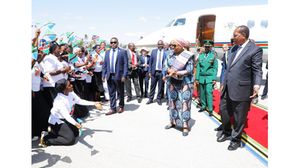
Msalala District acting executive director and district vector control coordinator Julieth Petro (centre) presents a certificate to one of the participants involved in the indoor mosquito control exercise under Barrick Bulyanhulu’s “Zero Malaria” campaign. At far left is Barrick Bulyanhulu community relations officer Zuwena Senkondo. PHOTO | COURTESY
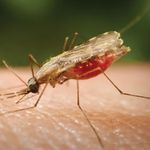
Shinyanga. Barrick Bulyanhulu Mine has extended its “Zero Malaria” campaign to approximately 44,000 households in Msalala District, Shinyanga Region, through indoor spraying and mosquito breeding control measures aimed at reducing malaria transmission.
The campaign has reached households in Bugarama and Bulyanhulu wards, targeting communities surrounding the mine as part of ongoing efforts to support public health interventions.
Speaking after the completion of the exercise, Msalala District acting executive director Julieth Petro, who also serves as district coordinator for vector control activities, said the programme had successfully covered the targeted households in the two wards.
Barrick Bulyanhulu has been supporting various community initiatives, including health interventions such as Indoor Residual Spraying (IRS) programmes designed to reduce malaria cases in areas surrounding the mine.
Barrick Bulyanhulu community relations officer Zuwena Senkondo said the annual campaign seeks to reduce malaria infections by eliminating mosquito breeding sites and controlling mosquito populations in communities near the mine.
She said the company would continue supporting government efforts aimed at improving the welfare of communities and strengthening public health initiatives.
“Health remains an important issue in any community. That is why Barrick Bulyanhulu has continued implementing initiatives aimed at reducing malaria infections, particularly among women and children who are among the groups most affected by the disease,” she said.
Ms Senkondo said the first phase of this year’s campaign reached 44,000 households through spraying activities while residents were also provided with mosquito nets.
She added that the insecticides used in the exercise are approved and considered safe for household use, including pyrethroid-based products.
The spraying exercise was implemented by Gekahil Inter-Trade Ltd and created temporary employment opportunities for approximately 95 young people who participated in the programme.
Barrick said broader interventions under the “Zero Malaria” initiative, including mosquito spraying, distribution of treated mosquito nets, public education and promotion of regular health screening, have contributed to reducing malaria infections in communities surrounding the mine.