Starmer resignation paves way for Britain's seventh leader in 10 years
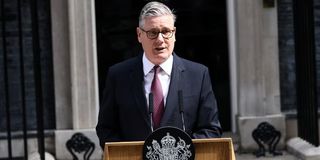
ritish Prime Minister Keir Starmer speaks outside 10 Downing Street, following Andy Burnham's decisive victory last week in the Makerfield by-election, in London, Britain, June 22, 2026. PHOTO | REUTERS
London. Prime Minister Keir Starmer said on Monday that he would resign, with a new leader expected to be in place by the time Parliament returns in September, paving the way for Britain to have its seventh leader in 10 years.
Less than two years after securing a landslide election victory that promised to restore stability to British politics, Starmer said it had become clear that his party wanted him to step aside.
He said nominations for his successor would open on July 9, with Greater Manchester Mayor Andy Burnham emerging as the frontrunner.
"The question my party is asking now is whether I am best placed to lead us into the next general election. I have heard the answer of my parliamentary party to that question, and I accept that answer with good grace," he said.
Pressure on Starmer, which had been building for months, intensified on Friday after Burnham decisively won a parliamentary by-election, defeating a candidate from Nigel Farage's Reform UK party, which has led national opinion polls for more than a year.
The victory raised hopes among Labour lawmakers that Burnham, known for his communication skills, could revive the party's fortunes after support for Labour declined and Starmer's approval ratings fell to record lows for a British leader.
Starmer thanked colleagues for their support and paid tribute to his wife and children, his voice breaking with emotion.
Financial markets reacted calmly, with the pound and British government bonds largely unchanged, reflecting investors' expectations of the move.
However, analysts warned that a leadership transition carries risks. Beyond pledging fundamental change and lower living costs, Burnham has yet to outline detailed positions on foreign affairs, the economy and defence.
Like Starmer, he may face limited room for manoeuvre amid pressure from bond markets and a frustrated electorate concerned about living standards, public services and illegal immigration.
Britain currently has the highest borrowing costs among the Group of Seven wealthy nations, reflecting high debt levels, weak economic growth, pressure to contain spending and the need to increase defence investment.
Investors interviewed by Reuters were divided over whether Burnham, who said last September that Britain needed to move beyond being "in hock to the bond markets", would maintain fiscal discipline. He later said his comments had been misrepresented.
Economists at Citibank said a Burnham premiership would inherit a fragile fiscal position with limited options to deliver significant change.
Starmer had insisted on Friday that he would contest any formal leadership challenge, but his position appeared to shift over the weekend.
Whoever succeeds him will become Britain's seventh prime minister since the Brexit vote a decade ago, underlining the difficulties successive leaders have faced in maintaining public support.
Political consultancy Eurasia said the most orderly outcome would have been for Starmer to remain until September, allowing him to attend a UK-European Union summit in July and giving Burnham time to prepare for government.