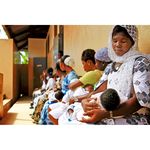
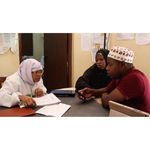
Dar es Salaam. Expectant mothers in Tanzania continue to face charges for medical services despite the National Health Policy of 2007 clearly stipulating that maternal healthcare should be provided free of charge.
The situation has renewed debate among health experts, policymakers and stakeholders over the gap between policy and implementation, with calls growing for the policy to be anchored in law to ensure compliance across all health facilities.
Reports from different regions indicate that expectant mothers are being asked to pay between Sh15,000 and Sh30,000 for services at some facilities, while others are required to bring basic medical supplies such as cotton wool, gloves, syringes, disinfectants and delivery materials before receiving care.
Health policy provisions under section 5.3.4(c)(i) state that the government, in collaboration with non-profit private providers and international partners, shall ensure free services for expectant mothers, users of family planning services and children under five years of age.
The policy further classifies expectant mothers as a special group that should not be required to contribute towards the cost of healthcare services, with the intention of promoting equitable access to maternal and child health services.
Section 5.4.8.3 of the same policy reinforces this position, recognising expectant mothers as a vulnerable group that should be exempted from healthcare charges due to their inability to meet such costs.
Despite these provisions, enforcement on the ground remains inconsistent.
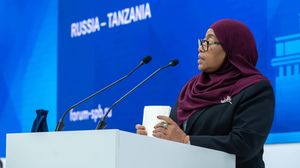
Speaking on the matter, Prime Minister Dr Mwigulu Nchemba recently reiterated government directives, calling on health facilities to ensure that expectant mothers are attended to immediately upon arrival without being subjected to delays or additional requirements.
“A expectant mother should not be asked to bring items such as basins or buckets before receiving care. She must be attended to immediately. Maternal health is not a luxury; it is a necessity. The country has the capacity to provide basic services to mothers and children,” he said during a public engagement.
However, health sector stakeholders argue that such directives are not sufficient without stronger institutional backing.
The Chief Executive of the Association of Private Health Providers Tanzania (Aphta), Dr Samwel Ogilo, said the policy remains largely unimplemented due to the absence of legal enforcement mechanisms, clear regulations and adequate budget allocations.
He said most public health facilities rely on funding from central and local government authorities and without dedicated budget lines for exempted groups such as expectant mothers and children under five, implementation becomes difficult.
“Policy statements alone are not enough. They must be supported by legislation, regulations and budgetary provisions. Otherwise, implementation becomes inconsistent and dependent on individual facility management.”
Dr Ogilo further noted that private health facilities face additional challenges in implementing the policy, as reimbursement mechanisms are either weak or unclear. He said contractual agreements between local authorities and private providers are necessary to ensure compliance and sustainability.
He added that the introduction of universal health insurance could provide a more structured solution by pooling resources and ensuring predictable funding for essential health services.
Other experts have also suggested alternative financing mechanisms, including the creation of a dedicated maternal health fund supported by government allocations and modest contributions from women during antenatal visits, which could be pooled and managed transparently to support delivery services.
Medical professionals have similarly emphasised the importance of systemic reform.
The president of the Medical Association of Tanzania (MAT), Dr Nkoronko Mugisha, said healthcare delivery is inherently costly and requires a stable financing system to ensure that policy commitments translate into real services.
He said without proper funding mechanisms, health facilities struggle to balance service delivery with operational costs, particularly in rural and under-resourced areas.
Legal expert Ernest Winchislaus said Tanzania currently lacks a specific law that guarantees free maternal and child healthcare as a legally enforceable right.
He explained that while the National Health Policy and related guidelines provide for exemptions, they do not carry the legal force necessary to hold institutions accountable when charges are imposed.
“What exists now is policy and administrative guidance, not law. This means enforcement varies from one facility to another, especially where resources are limited,” Dr Winchislaus said.
He warned that this legal gap has direct implications for maternal and child health outcomes, as access to care may depend on administrative discretion rather than guaranteed rights.
He argued that codifying maternal healthcare entitlements into law would improve accountability, standardise service delivery nationwide and protect vulnerable households from unexpected financial burdens.
He added that ongoing discussions around universal health insurance present an opportunity to address these structural challenges if properly designed and implemented.
Senior lecturer at the Open University of Tanzania (OUT) Yohana Lawi said Tanzania should prioritise the rollout of universal health insurance as a long-term solution rather than relying on fragmented exemptions for specific population groups.
He said a unified system would ensure equity, efficiency and predictability in financing healthcare services.
“Instead of categorising services for different groups, a universal system would be more sustainable and easier to manage,” Dr Lawi added.
He called for clarity on how the government intends to subsidise contributions for low-income groups and how the private sector will be integrated into the proposed system.
He stressed that the success of universal health coverage will depend on strong governance, adequate funding and effective public-private coordination.
As the debate continues, stakeholders agree that while Tanzania has made significant policy commitments towards free maternal healthcare, the absence of a strong legal and financial framework continues to undermine consistent implementation across the health system.
Register to begin your journey to our premium contentSubscribe for full access to premium content