Experts call for mobile school labs to boost practical training
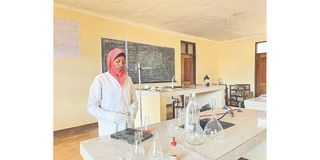
Laboratory expert, Ms Hawa Rajabu, from Shambalai Secondary School in Lushoto District, Tanga Region, prepares equipment for students’ practical exercises. This block is among those with three fully equipped laboratories visited by The Citizen during its investigation in Lushoto and Rombo districts in Tanga and Kilimanjaro region. The survey was conducted between November 2025 and January 2026. PHOTO | THE CITIZEN REPORTER
Rombo/Lushoto. Increasing investment in education and introducing mobile laboratories have been identified as key solutions to address the persistent shortage of science laboratories in Tanzania’s secondary schools, a gap that continues to undermine effective teaching and learning of science subjects nationwide.
Education experts say these interventions must go hand in hand with active community participation and broader stakeholder engagement, warning that the scale of the deficit requires coordinated and sustained efforts rather than isolated initiatives.
According to the 2025/26 budget of the Prime Minister’s Office–Regional Administration and Local Government (PMO-RALG), Tanzania still requires an additional 40.68 percent of laboratories to meet the standard requirement for all government secondary schools.
The budget shows that during the 2024/25 financial year, a total of 4,894 secondary schools required 14,682 laboratories, equivalent to three laboratories per school for chemistry, biology, and physics.
However, only 8,710 laboratories were available, leaving a shortfall of 5,972 laboratories.
This gap, equivalent to 40.68 percent, highlights longstanding challenges in implementing and enforcing Regulation 15(1)(c) of the 2016 Secondary School Registration Guidelines, which requires regional and district education officers to verify the availability and functionality of laboratories before approving school registration.
Stakeholders’ views
Education stakeholder Dr Luka Mkonongwa said the slow pace in addressing the shortage reflects limited prioritisation of science infrastructure in the education sector.
“If this issue were treated as a priority, we would have resolved it by now. Even reallocating resources such as a single government vehicle could make a meaningful contribution towards reducing the deficit,” he said. He noted that during the fourth phase administration under former President Jakaya Kikwete, the government made significant strides in constructing laboratory buildings, but many of them were left incomplete due to a lack of equipment and furnishing.
“A considerable number of laboratory structures were built, but very little was done to equip them. When inspectors visit private schools and find no laboratories, registration is denied. The same standards should apply across the board, including government schools,” he said. Dr Mkonongwa stressed that the country is fully aware of its laboratory requirements and should now focus on ensuring compliance and accountability through regular inspections.
“If Tanzania is serious about producing scientists and strengthening science education, then every school must have functional laboratories. This is not optional,” he said.
He further proposed that, just as the government has prioritised the provision of textbooks on a one-to-one basis, similar efforts should be directed towards ensuring each school has adequate laboratory facilities, with strong involvement from communities and development partners.
Researcher, educationist, and policy analyst at the Open University of Tanzania, Dr Muhanyi Nkoronoko, echoed the call for a coordinated national approach that brings together government, communities, and stakeholders. He said such collaboration could mobilise financial and material contributions to accelerate the construction and equipping of laboratories across the country. “The government should increase budget allocations for laboratory construction while also ensuring that schools receive the necessary equipment and chemicals. This will allow students to fully participate in practical learning,” he said.
Dr Nkoronoko added that overcrowding in existing laboratories continues to limit the effectiveness of science teaching. “In many schools, a single laboratory serves a large number of students at the same time. With sufficient facilities, teachers can conduct lessons more efficiently, and students can gain better hands-on experience,” he said.
Mobile laboratories
Retired physics teacher Mr John Philipo proposed the introduction of mobile laboratories as an immediate, short-term solution for schools that currently lack laboratory facilities. “Mobile laboratories can help bridge the gap by allowing students from different schools to gather at designated centres for practical sessions instead of relying solely on theoretical instruction,” he said.
According to him, such an approach would not only improve understanding of science subjects but also inspire more students to pursue science-related careers.
“Laboratories are central to science and technology education. There is no substitute for practical work, and alternative classroom exercises cannot fully replicate laboratory experience,” he said. Mr Philipo recalled that while efforts were made during the fourth phase of government to construct laboratory buildings, the subsequent phase did not sufficiently prioritise equipping them.
“Many schools still have buildings labelled as laboratories, but they remain empty shells without equipment. The focus now should be on completing these facilities while introducing mobile laboratories to serve schools that have none,” he said.
He suggested that mobile laboratories could operate on a rotational schedule, visiting different schools within a district to ensure all students have access to practical learning opportunities.
“At the same time, each district should develop a long-term plan to build laboratories in every school. Construction should go hand in hand with recruiting laboratory technicians to support teachers during practical sessions,” he added.
Council initiatives
Rombo District Education Officer Mr Vanence Mgoma said the council continues to mobilise resources from multiple sources to expand laboratory infrastructure in both existing and newly established schools.
These sources include central government allocations, locally generated revenue, development projects, stakeholder support, and community contributions. “We also set aside an annual budget specifically for improving science education, including laboratory construction and maintenance,” he said.
Mr Mgoma added that the council facilitates monitoring and coordination by providing fuel for education officers at ward and departmental levels, ensuring the timely distribution of laboratory equipment and chemicals supplied by the central government.
“These efforts go hand in hand with completing unfinished laboratory buildings and ensuring that schools receive the necessary equipment and chemicals,” he said.
He noted that the council is also focusing on increasing the number of science teachers and laboratory technicians, promoting students’ interest in science subjects, and encouraging the use of digital tools and smart classrooms in teaching.
Lushoto District Secondary Education Officer Ms Shahara Shaibu said the council has been allocating funds annually to complete at least four laboratories, while also planning to establish a dedicated education fund to address infrastructure gaps. “One of the key priorities of this fund will be to strengthen science education, given its importance at both national and community levels,” she said.
She explained that the fund will support the completion of laboratory buildings, the recruitment of science teachers, and the procurement of equipment. Additionally, it will finance teacher training programmes, including seminars scheduled from February, using locally available expertise.
“We are leveraging experienced teachers from high-performing schools such as Mazinde and Korogwe to train teachers in government schools,” he said.
Ms Shaibu added that practical lessons will be introduced early, starting from Form One, to ensure students develop essential skills before reaching upper secondary levels.
Private sector’s role
The Association of Owners and Managers of Private Schools and Colleges in Tanzania (Tamongosco) chief executive officer, Mr Benjamin Nkonya, said a new arrangement with the government allows public school students to use laboratory facilities in private schools.
He said since February 18 this year, stakeholders have been working with the Ministry of Education to inform private school owners about the collaboration, which includes government-funded access for students.
“This model is similar to arrangements seen in other sectors, where privately owned institutions provide services while the government supports beneficiaries. In this case, private schools provide facilities, and the government supports their students,” he said.
Mr Nkonya noted that many private schools have underutilised laboratories operating at around 70 percent capacity, which can now be used more efficiently.
“This partnership ensures that existing resources are fully utilised while the government continues to invest in its own infrastructure,” he said.
Students’ voices
Students have also highlighted the challenges they face due to limited laboratory facilities and equipment.
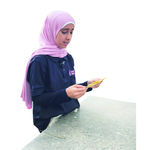
A student at Makiidi Secondary School in Rombo District, Baby Massawe, called for increased availability of equipment to allow individual participation during practical sessions.
“Sharing equipment makes it difficult to fully understand experiments. Each student should have access to the necessary tools,” she said.
Mr Emmanuel Godfrey of Mraokeryo Secondary School emphasised the need for separate laboratories for each science subject to improve learning outcomes.
Meanwhile, Mr Yusuph Immam of Motuburu Secondary School said practical lessons significantly enhance his understanding of classroom concepts.
He urged authorities to invest more in laboratories and equipment to expand learning opportunities for students across the country.
Government measures
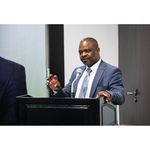
PMO-RALG Deputy Minister, Mr Reuben Kwagilwa, said the government has taken steps to ensure that newly constructed schools are equipped with all essential infrastructure, including laboratories.
He said that under the sixth phase administration, 1,300 schools have been built, each with three science laboratories, as well as additional facilities such as geology, geography, and ICT laboratories in some cases.
“These schools are fully equipped with classrooms, hostels, staff houses, dining halls, and modern learning facilities, including laboratories,” he said.
He added that the 2025/26 budget prioritises the completion of 350 laboratory buildings and the procurement of equipment and chemicals for 300 new secondary schools.
According to him, the initiative builds on earlier efforts that saw laboratory chemicals distributed to 231 ward-level schools and equipment supplied to 486 schools in two phases.
“Phase one covered 231 schools, including eight of the 26 regional girls’ schools, while phase two, targeting the remaining 255 schools, is expected to be completed by June 30, 2026,” he said.
He said the government remains committed to strengthening science education infrastructure as part of broader efforts to improve learning outcomes and prepare students for a science-driven economy.
Register to begin your journey to our premium contentSubscribe for full access to premium content