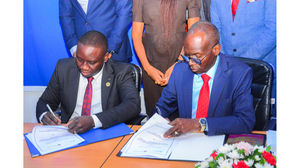
The meeting focused on the management and improvement of nature-based practices undertaken by communities to protect the environment and water sources in the Usangu Basin, under the Rufiji Basin’s Nature-based solution (NBS–Usangu) project.
Mbeya. More than Sh6 billion is set to be invested in improving water infrastructure in the Usangu Basin, Mbarali District, Mbeya Region, with five villages expected to benefit from the project.
The initiative is being implemented by the Rufiji Basin Water Board with funding from the government of Japan through the World Bank.
The announcement was made yesterday by the director of the Rufiji Basin Water Board, Mr David Munyala, during a leadership review meeting held to assess the project’s progress.
The meeting focused on the management and improvement of nature-based practices undertaken by communities to protect the environment and water sources in the Usangu Basin, under the Rufiji Basin’s Nature-based solution (NBS–Usangu) project.
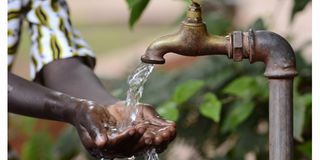
Mr Munyala said the project’s main objective is to conserve water resources for multiple uses, including domestic supply, agriculture and livestock, as well as drilling deep boreholes for educational institutions and residential areas.
“To safeguard our water resources from encroachment, we are transitioning from traditional watering practices to a modern infrastructure strategy.
By constructing designated areas for livestock, we protect the environment while still supporting the needs of pastoralists” he said.
He added that implementation of the project has started in the current financial year and will run for three years in the Usangu Basin within Mbarali District, with five villages covered in the initial phase.
In a related development, Mr Munyala said the Rufiji Basin makes a significant contribution to the national economy, noting that about 62 percent of tea production depends on the basin.
“The Rufiji Basin spans 11 regions and plays a major role in various economic sectors, including electricity generation, tourism and other activities,” he said.
For his part, the coordinator of the Nature-Based Solutions for Community Environmental Management and Climate Change Adaptation Project (NBS–Usangu), Mr David Mugiya, said the project is being implemented by the government of Tanzania with World Bank funding through the government of Japan.
He said that despite ongoing interventions, challenges remain, particularly the practice of carrying out economic activities within 60 metres of water sources.
Mr Mugiya said the project has introduced measures to relocate farmers cultivating crops within the 60-metre buffer zone and compensate them through local councils to enable them to start alternative economic activities.
He said the support would help communities abandon harmful activities near water sources, noting that the Usangu Basin is critical to hydropower dams such as Kidatu, Mtera and the Julius Nyerere Hydropower Project.
“About 15 percent of the water in these dams originates from the Usangu Basin. To safeguard this resource, the Rufiji Basin Water Board has introduced the NBS–Usangu project as a long-term solution to be implemented over three years,” he said.
Mr Mugiya added that the project will also involve dredging rivers that have changed course in order to improve water flow into hydropower reservoirs.
“We see this as a unique area where protecting rivers and water sources by restoring and improving water flow will support government efforts following major investments made,” he said.
He noted that the Usangu Basin is also facing challenges linked to climate change, with low annual rainfall ranging between 400 and 1,000 millimetres.
He said available data show that climate change impacts have contributed to droughts affecting the production of strategic crops, particularly rice.
Meanwhile, Assistant Regional Administrative Secretary for Economy and Production, Mr Said Madito, said that alongside project implementation, there is a need to explore better ways of treating water, given the heavy use of agrochemicals by rice farmers in the area.