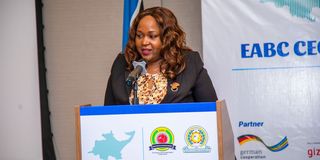
Arusha. Alternative mechanisms for financing the bloc, amid persistent delays by some member states in remitting their statutory contributions, and the appointment of a new East African Community (EAC) Secretary General will top the agenda of an emergency meeting of the Heads of State.
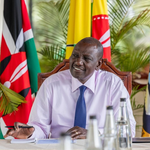
The EAC Heads of State are set to convene an emergency summit on March 7, 2026, called by the current bloc chairperson and President of Kenya, William Ruto.
The meeting will take place in Arusha, home to the organisation’s headquarters.
The regional bloc was revived in 1999 by the then presidents Ali Hassan Mwinyi of Tanzania, Daniel arap Moi of Kenya and Yoweri Museveni of Uganda.
For years, Tanzania, Kenya, Uganda and Rwanda have largely met their annual obligations, while several other partner states have fallen behind, placing a heavier burden on compliant countries.
The EAC Council of Ministers has proposed an alternative model under which partner states would contribute according to the size of their economies, measured by Gross Domestic Product (GDP), similar to the system used by the African Union (AU).
However, the proposal has met resistance, particularly from Kenya, which would shoulder a significantly higher financial obligation under the revised formula.
As of January 31, 2026, only Tanzania and Kenya had settled their contributions in full, while others had paid partially.
The delays have disrupted operations within the community, including late salary payments to staff and reduced subsistence allowances for official travel.
More than $89 million in arrears have reportedly not been remitted to the EAC Secretariat, affecting the functioning of the bloc’s key organs; the Secretariat, the East African Legislative Assembly (EALA) and the East African Court of Justice (EACJ).
The summit is also expected to consider firm recommendations aimed at strengthening the bloc’s financial sustainability and reviewing the current equal-contribution model, under which each country contributes $7 million annually to run the three organs and affiliated institutions.
A cost-cutting plan is also under consideration to streamline the organisation, which currently employs about 400 staff members, with the aim of making it leaner and more efficient.
Race for Secretary General
Since the revival of the Community in 1999, the position of Secretary General has rotated among partner states to promote unity and shared ownership of the bloc.
Those who have previously held the post include Francis Muthaura, Amanya Mushega, Juma Mwapachu, Richard Sezibera, Liberat Mfumukeko, Peter Mathuki and Veronica Nduva.
Kenya’s term ends in March this year, and the summit is expected to announce a new Secretary General to serve a five-year term.
South Sudan, Tanzania and Uganda are said to be frontrunners to produce the next office holder, with Tanzania and Uganda viewed favourably as founding members that have consistently honoured their financial obligations.
Expert opinion
A senior lecturer in international law at Tumaini University Makumira, Prof Elifuraha Laltaika, described the failure by some partner states to pay their contributions on time as a sign of weak political will.
“While it is commendable that President Ruto has convened an emergency meeting, the issue of non-payment should not even arise. This Community should serve as a model for other regional blocs in Africa,” he said.
He added that the situation suggests the bloc still has a long journey towards becoming people-centred, noting that leaders who do not prioritise the Community can easily delay or withhold contributions.
“The contributions of each partner state are the lifeblood of the Community. It is disappointing that some founding countries emphasise expanding markets for their goods without showing equal commitment to financing the institution,” he said.
Prof Laltaika warned that failure to honour statutory annual payments undermines regional integration, as the EAC’s operations depend entirely on funding from partner states.
Member states
The East African Community currently comprises eight countries: Tanzania, Kenya, Uganda, Rwanda, Burundi, South Sudan, Democratic Republic of the Congo and Somalia.
Register to begin your journey to our premium contentSubscribe for full access to premium content