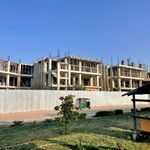
Dar es Salaam. The government has explained the decade-long delay in completing the Singida Regional Referral Hospital project, attributing such stay to contractor failure, termination of a contract, changes to the project design and the subsequent process of appointing a new contractor.
The project was incorporated into the government’s development plans in the 2016/17 financial year and was initially expected to be completed by June 2019.
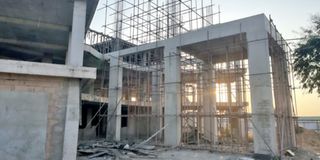
However, almost a decade later, several buildings are still under construction, with the latest phase being implemented by a Chinese contractor.
The Permanent Secretary in ministry of Health, Grace Magembe, said the delays were caused by implementation challenges, particularly during the second phase of the project.
She said the second-phase contractor failed to perform to the required standard, leading to the termination of the contract by mutual agreement. “After that, the ministry restarted the process of securing another contractor, which involved preparing tender documents as well as making improvements to the project’s design,” Dr Magembe said.
The redesign included additional VIP and VVIP wards, an orthopaedic ward and expanded external works. This required Ardhi University, the project consultant, to revise the drawings and bills of quantities before the third phase could begin.
Dr Magembe said the government did not impose liquidated damages on the second-phase contractor because the contract was terminated by mutual agreement.
She said the project was now being implemented by Hainan Co Ltd, a Class One contractor, under the supervision of Ardhi University, with the ministry monitoring progress through the consultant.
The government’s explanation follows findings by Controller and Auditor General (CAG) Charles Kichere, who has raised concerns about the project’s implementation and its impact on health services.
Mr Kichere told The Citizen’s sister paper Mwananchi in August 2026 that the 2024/25 audit found that three hospital buildings were still under construction. They included a paediatric ward, outpatient department (OPD) building and orthopaedic ward.
Four other planned facilities had not started, including a workshop for medical equipment and machinery, an ICT workshop, a catering facility and a laundry and kitchen complex.
He also said construction of a Covid-19 control facility had not been completed on time, despite funds being deposited in the Exchequer Deposit Account from October 2021.
According to Mr Kichere, the initial contractor, Mbeya University, failed to complete the works in accordance with the contract. After an assessment and termination of the contract, the works were handed over to China Hainan International.
“The main shortcomings identified were inadequate funding from the Ministry of Health, insufficient internally generated revenue to finance the construction, weaknesses in contract management, delays in completing the projects and failure to implement the procurement plan,” he said. He said these problems had consequences beyond the construction site, affecting the delivery of health services to residents.
“The situation resulted in poor service delivery, overcrowding, shortages of beds, referrals to other hospitals and high costs of transporting oxygen from Dodoma Regional Referral Hospital and Benjamin Mkapa Hospital,” Mr Kichere said.
He said patients had continued to be referred to Bugando, Kilimanjaro Christian Medical Centre (KCMC) and Benjamin Mkapa Hospital because the required facilities at Singida were not fully available. The referrals, he said, had increased both the cost of patient transportation and the overall cost of providing services.
Mr Kichere said failure to implement the hospital’s procurement plan had also delayed residents’ access to specialist services closer to their homes.
“The delay reduces efficiency, productivity and value for money in the use of public funds, while directly affecting the quality and availability of health services to citizens,” he said.
However, Mr Kichere clarified that his office had not specifically quantified the extent to which the project breached Regulation 242(2) of the 2013 Public Procurement Regulations.
He said procurement activities in the 2024/25 financial year were governed by the Public Procurement Act, 2023 and its 2024 regulations.
Mr Kichere advised hospital management to work closely with the Ministry of Health to ensure funds required for the remaining works are released on time.
The current contractor is expected to complete the project during the 2026/27 financial year.
Register to begin your journey to our premium contentSubscribe for full access to premium content