Government to tackle small-scale mining uncertainty fears
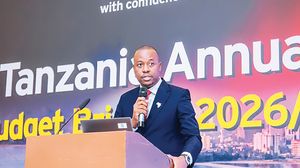
Minister for Minerals Anthony Mavunde (left) and his counterpart Planning and Investment minister, Prof Kitila Mkumbo display a document that details how to empower small scale mining operations in Tanzania over the weekend. PHOTO | COURTESY
Dar es Salaam. Tanzania will retain 10 percent of gross mineral revenue collections for research and investment under a new government initiative aimed at transforming small-scale mining from a largely speculative activity into a data-driven industry capable of attracting finance and increasing productivity.
The move, announced under the 2026/27 budget, will see the establishment of a Mineral Research Fund through which part of the revenue generated by the mining sector will be reinvested to support geological surveys, research and other strategic interventions.
Minister for Minerals Anthony Mavunde said over the weekend that the decision reflects President Samia Suluhu Hassan’s commitment to addressing long-standing challenges facing small-scale miners, including inadequate geological information, limited access to capital, outdated technology and difficulties in securing affordable financing.
Speaking in Dar es Salaam during the launch of a report on the development of small-scale mining, Mr Mavunde said reliable geological data remains one of the sector’s biggest missing links.
“Geological research is the foundation of productive mining. It helps miners understand the mineral potential of their licensed areas, make informed investment decisions, adopt appropriate technology and prepare bankable projects,” he said.
According to him, many small-scale miners operate with limited knowledge of the mineral deposits within their concessions, resulting in high operational risks, low productivity and difficulties in attracting support from financial institutions.
He said the government wants miners to move away from guesswork and embrace mining practices supported by scientific data, modern technology and sound business planning.
The report was received by the Minister of State in the President’s Office (Planning and Investment), Prof Kitila Mkumbo, who described small-scale miners as a critical pillar of Tanzania’s mining industry.
He said the segment contributes about 40 percent of revenue generated from mining activities while providing livelihoods and employment opportunities for thousands of Tanzanians, particularly young people and women.
Despite this contribution, Prof Mkumbo said small-scale miners continue to face numerous obstacles, including inadequate financing, high exploration costs, limited access to geological information, technological constraints and weak integration into formal financial systems.
“The report comes at an important time when the government is seeking practical solutions to help small-scale miners improve productivity, increase output and gradually transition into medium-sized and eventually large Tanzanian-owned mining companies,” he said.
The report recommends a range of measures aimed at strengthening the sector, including expanding access to geological information, increasing the use of modern mining technology, improving market access and promoting value addition within the country.
It also proposes stronger engagement between financial institutions and miners, as well as the possible establishment of a Mineral Development Fund to support operators who have promising mining areas but lack the collateral and technical documentation often required by lenders.
Mr Mavunde said the government is already implementing its Mining Vision 2030 strategy, dubbed Madini ni Maisha na Utajiri, which seeks to increase the area covered by detailed geological surveys from the current 16 percent to 50 percent by 2030.
He noted that developing the small-scale mining subsector is one of the vision’s key priorities due to its significant contribution to production, employment and government revenue.
The minister said the State Mining Corporation (STAMICO), working alongside the Geological Survey of Tanzania (GST), has continued to provide technical support to miners through geological research and drilling services.
The institutions currently operate 15 modern drilling rigs, which are being used to help miners obtain reliable information on mineral deposits before making investment decisions.
“These services are helping improve project credibility and increasing the confidence of financial institutions when assessing mining ventures,” he said.
Mr Mavunde added that the ministry will continue working to strengthen links between miners and lenders through improved record-keeping, mining business education, environmental compliance and wider access to geological data.
He also reiterated the government’s commitment to pursuing other reforms, including support for the proposed Small-Scale Miners Bank and expanded training programmes aimed at helping miners formalise and professionalise their operations.
The new funding mechanism, officials say, marks a significant shift in the government’s approach to mining development, placing greater emphasis on research, technology and access to finance as tools for unlocking the sector’s full potential.
Register to begin your journey to our premium contentSubscribe for full access to premium content