High costs, weak financing blamed for rising SME failure rate
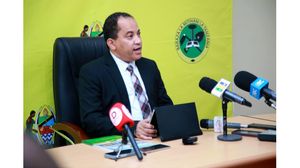
Moderator Dr. George Mulamula (left) speaks during a panel discussion on “How Capital Is Really Being Deployed in East Africa” at the Tanzania Impact Investment Forum (TIIF 2026), held in Dar es Salaam yesterday. Also pictured, from second left, are Titus Osewe of Rabo Foundation, Lilian Mramba of Grassroots Business Fund, Elija Odolo of Norfund, and Christine Maina of EAVCA.
Josephine Christopher is a senior business journalist for The Citizen and Mwananchi newspapers
Mwananchi Communications Limitted
Dar es Salaam. Tanzania is intensifying efforts to unlock growth capital for small and medium-sized enterprises (SMEs) amid fresh warnings that up to seven in every 10 young businesses fail within their first three years, underscoring the urgency of bridging the country’s persistent “missing middle” financing gap.
The concern formed the centre of discussions at the second Tanzania Impact Investment Forum (TIIF) 2026, which opened in Dar es Salaam yesterday, bringing together more than 300 investors, policymakers, development finance institutions and entrepreneurs to explore ways of strengthening access to growth capital for SMEs.
The three-day forum, hosted by the Embassy of Switzerland in Tanzania, is themed “Unlocking Growth Capital: Investing in High-Impact SMEs and Transformational Projects.”
New data presented alongside the forum, drawn from the Tanzania Investment and Consultant Group Limited (TICGL), shows that between 60 and 70 percent of newly established businesses in Tanzania collapse within three years, largely due to financing constraints, weak business systems and an unfavourable operating environment.
Speaking at the opening of the forum, Switzerland’s Ambassador to Tanzania, Nicole Providoli, said the most persistent constraint facing the sector is not the absence of ideas or early-stage funding, but the inability of growing enterprises to access scale-up capital.
“These are businesses expanding access to essential services, strengthening livelihoods, and opening new economic opportunities.
They are contributing to more inclusive and resilient communities, while also helping to build Tanzania’s next decade of growth,” she said.
“These businesses deserve capital. They are ready for it. And the question is: what would it take to get that capital to them?” she added.
She said while investor appetite for Tanzania is growing—particularly in agriculture, climate-smart solutions, manufacturing and digital services many SMEs fail to meet institutional investment thresholds due to limited track records, weak financial systems and perceived risk.
Ambassador Providoli added that TIIF is designed to directly address this mismatch by linking investment-ready SMEs with capital providers through structured deal rooms and investor matchmaking sessions.
This year, more than 30 SMEs underwent pre-forum investment readiness training in partnership with Venture Capital for Africa (VC4A), with 15 selected to pitch directly to investors.
Stanbic Bank Tanzania Managing Director Manzi Rwegasira said impact investment requires coordinated effort across all stakeholders, including government, financiers and the private sector.
“For the Government, the key is not necessarily providing funds, but creating an enabling environment that allows all actors to participate effectively in investment,” he said.
British High Commissioner to Tanzania Marianne Young also stressed the demographic opportunity, noting that Tanzania’s large youth population presents both a challenge and an economic opportunity.
“The question is how Tanzania can harness this demographic dividend to build a sustainable economy. The UK will continue to support efforts in this direction,” she said.
However, economists warn that structural constraints in Tanzania’s business environment continue to undermine SME survival rates.
University of Dar es Salaam economist Prof Abel Kinyondo said high borrowing costs and regulatory pressures remain key barriers to growth.
“Interest rates in Tanzania are still high compared to other markets, and this affects business expansion,” he said.
He also pointed to taxation and regulatory costs as additional constraints, arguing that policy reforms are needed to improve competitiveness.
“Many SMEs are not failing because there is no demand, but because operating costs are too high and the environment is not sufficiently enabling,” he said.