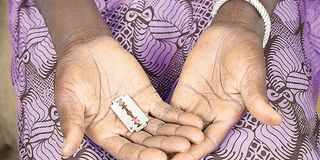
Mara. An eye-opening investigation by The Citizen has unveiled a shocking and clandestine trade in human body parts stemming from the grave practice of female genital mutilation (FGM). This disturbing revelation complicates efforts to eradicate FGM, even as laws and policies staunchly condemn it.
The investigation took place across the regions of Butiama, Musoma Urban, Tarime, and Serengeti in the Mara Region, and what was uncovered is both startling and troubling.
Deeply ingrained superstitions are not only perpetuating FGM but are also fostering a hidden market for the sale of excised female genital parts.
Throughout the investigation, the dedicated team followed protocol meticulously and discovered that they could have engaged in a purchase of these body parts.
However, after confirming the existence of this illicit trade, they made the ethical decision to cancel any potential transaction. This decision highlights the severe implications of a practice that continues to endanger the lives and rights of countless women and girls in the community.
It is a stark reminder that while laws may exist to protect individuals, deeply rooted cultural beliefs and illicit markets can undermine even the most well-intentioned efforts to bring about change.
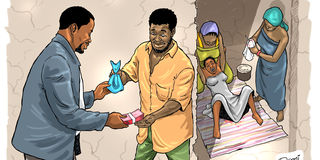
The investigation established that traditional leaders and FGM practitioners, commonly known as ngariba, are allegedly trading the removed body parts with fishing boat owners, who believe that using them during fishing activities attracts larger catches and protects them from misfortune.
The persistence of FGM in the region has largely been attributed to weak supervision and poor enforcement of Section 118 of the Law of the Child Act, Cap 13 of 2019, and Sections 21, 22, and 169A of the Penal Code, Cap 16.
As a result, incidents of FGM have continued to escalate, exposing girls to life-threatening risks, including severe physical injury, psychological trauma, and, in some cases, death.
Section 118 of the Law of the Child Act of 2019 explicitly prohibits the exploitation of children for any purpose, including the illegal trade in organs and body parts.
Meanwhile, Section 169A of the Penal Code, as amended in 2022, criminalises FGM against girls of any age.
In addition, Sections 21 and 22 of the Penal Code make it clear that remaining silent, failing to report, or neglecting to take action against such offences amounts to participation in the crime.
Under the Local Government Acts, Cap 287 and 288, local government authorities, village executive officers, and neighbourhood leaders are legally mandated to protect children’s rights within their respective jurisdictions, as outlined in Sections 142 and 143.
They are also required to report any incidents of FGM to the police or social welfare officers, while Section 13 of the Law of the Child Act obliges authorities to protect children from harmful cultural practices.
However, the investigation found that despite the existence of these legal safeguards, enforcement remains a major challenge.
In Mara Region, particularly in Serengeti, Butiama, and Tarime districts, girls below the age of 18 continue to face the threat of FGM, largely driven by the illegal trade in female genital parts obtained through the practice.
Data from the 2015/16 Tanzania Demographic and Health Survey (TDHS) show that the prevalence of FGM among women aged 15 to 49 remains high in the region, underscoring the enduring influence of deeply rooted traditional beliefs.
Health experts warn that the effects of FGM on girls under 18 are severe and often irreversible.
These include extreme pain, excessive bleeding (haemorrhage), shock, and, in some cases, death.
The use of unsterilised instruments significantly increases the risk of bacterial infections, tetanus and the transmission of sexually transmitted infections such as HIV and hepatitis, particularly when cutting tools are reused on multiple victims.
In addition, tissue damage and swelling caused by the procedure can obstruct urination, lead to chronic infections, and result in long-term reproductive and obstetric complications.
A 2025 factsheet report by the United Nations Population Fund (UNFPA) on FGM in Tanzania indicates that weak enforcement of existing laws continues to undermine national efforts to eliminate the practice.
“Enforcement remains weak due to limited resources and fear of confronting cultural leaders. As a result, many cases of FGM go unreported, and perpetrators rarely face legal consequences,” reads part of the report.
On access to health services, the report notes that survivors of FGM often suffer severe physical and psychological harm, including trauma, childbirth complications, and long-term health challenges.
It further observes that many survivors lack access to quality healthcare and psychosocial support, particularly in marginalised and remote communities.
During the investigation, several fishermen separately told The Citizen that November and December are regarded as peak months for the trade in genital parts, coinciding with the period when FGM is commonly carried out in many communities.
The report further alleges that, beyond fishing, genital parts obtained through FGM are believed to be used in other economic activities, including farming, livestock keeping, trade, and mining.
“Some clans, especially among the Irege and Wagoreme communities, conduct the practice during this period. After the cutting ceremonies, fishermen approach the cutters (ngariba) to obtain the body parts,” said one fisherman, who spoke on condition of anonymity.
“It is widely believed that keeping these body parts on fishing boats brings good fortune and ensures a better catch,” he added.
The Wairege are a Kurya sub-clan predominantly based in Tarime District, though some have settled in other parts of Mara Region.
The Wagoreme community is mainly found in Serengeti District, particularly in Ngoreme Division, where FGM is reportedly practised throughout the year.
Explaining how the trade operates, another fisherman, identified here as Mr Migi Migi (not his real name), said fishermen rarely purchase the body parts directly from FGM practitioners.
“In most cases, it is the boat owners, who are also the financiers, who approach the cutters or traditional elders to buy the genital parts,” he said. “Those of us employed to work on the boats do not buy them ourselves. We are simply given the parts and instructed on how to use them,” added Mr Migi Migi.
He explained that the body parts are sometimes used to wash fishing boats along the shore, based on the belief that mixing them with water used to clean vessels attracts more fish.
Another fisherman, a member of the Kerewe community who has been engaged in fishing activities since 1993, said genital parts are readily available in areas such as Kibui and Kinesi, where many cutters and traditional elders reside.
“At the moment, sardines, commonly known as dagaa, and Nile perch are the most abundant fish. But it is believed that using genital parts acts as a catalyst, protection, and attraction, enabling fishermen to catch more fish,” he said.
The fisherman acknowledged that possession of human genital parts constitutes a serious criminal offence, a fact that explains the secrecy and caution exercised by those involved.
He added that women are not allowed to purchase the body parts, suggesting that the trade is dominated by men involved in fishing activities.
Another source, who also spoke on condition of anonymity, revealed that the trade in human body parts linked to FGM is not limited to Mara Region, but also exists in Simiyu and Geita regions.
“I personally witnessed this while I was in Simiyu Region. I saw a cutter leaving a cutting ceremony carrying genital parts in a bucket. When I asked about it, I was told they were being taken for preservation and eventual sale to buyers,” the source said.
“These practices have existed for many years. The difference now is that they are carried out in greater secrecy,” added the source.
FGM survivor Ms Rhobi Samwelly said genital parts obtained through FGM may be sold, as victims are never informed about what happens to them after the procedure.
“In my own case, when I was mutilated, I never saw my genital organ, and I do not know where it was taken. What I know is that when a girl is cut, traditional elders and FGM practitioners share the money paid by parents,” she said.
Ms Samwelly, who is also the executive director of Hope for Girls and Women in Tanzania, a non-governmental organisation that supports girls and women escaping violence, including FGM, said economic incentives may be a key driver of the practice.
“Once a girl is mutilated, parents believe her chances of marriage improve, and they expect to receive a substantial number of cattle as bride price,” she said.
She added that comprehensive research and sustained investigations could help expose and dismantle the entire network behind the practice.
“In November 2025 alone, we rescued more than 200 girls from FGM. However, many others had already been mutilated, and by the end of December 2025, many more girls were at risk,” she said.
Another source claimed that law enforcement agencies were largely preoccupied with preparations for the October 29, 2025, General Election, allowing those involved in FGM and related activities to operate with minimal scrutiny.
However, a local government officer for Itiryo Village in Tarime District, Ms Veronica Elias, said village leaders had been working closely with stakeholders to combat FGM, though she denied knowledge of any trade in body parts.
“I have served this village for the past 10 years, and I have never encountered such a case. If such a trade exists, security organs and responsible authorities should work tirelessly to dismantle the network,” she said.
Ms Elias acknowledged that FGM remains a major challenge in the area due to the strong influence of traditional elders.
She added that in some cases, girls are mutilated and then openly paraded through the streets in broad daylight as part of cultural rituals.
Despite ongoing collaboration with stakeholders, she noted that the geographical remoteness of some areas often delays the response of security agencies.
“The government should increase funding to enable authorities to supervise and address the issue more effectively,” she said.
Meanwhile, the Head of the Gender and Children Desk for Mara Region, Inspector of Police Charles Ezekiel, dismissed claims that genital parts obtained through FGM are traded in the region.
“That is hearsay. We are not aware of any trade in genital parts. However, the police, in collaboration with other experts, will investigate the allegations to establish the truth,” he said.
Inspector Ezekiel acknowledged the existence of FGM among some Kurya communities, attributing it to long-standing cultural beliefs.
He explained that some pastoralist families believe that FGM reduces women’s sexual desire, particularly in cases where men migrate for extended periods in search of income through mining or other activities.
“They believe that cutting women ensures marital fidelity while husbands are away. That is said to be the origin of the practice,” he said.
He dismissed claims linking FGM to fishing or mining success, saying there was no evidence to support such assertions.
“If such uses had existed, they would have been known long ago. There has been no official confirmation to support these claims,” said Inspector Ezekiel.
The Director of the Child Development Department at the Ministry of Community Development, Gender, Women and Special Groups, Mr Sebastian Kitiku, said the ministry was unaware of any trade in genital parts.
“We are unaware if genital parts are being sold, who they may be sold to, or how the transactions are conducted. If such a trade is taking place, it is clearly illegal and not authorised. Any such trade would obviously be carried out in extreme secrecy because the act itself is against the law,” he said.
“At present, we have no official information confirming that these items are being sold. However, if such information emerges, it would be clear that anyone involved is engaging in an illegal trade,” Mr Kitiku added.
He stressed that even if this business existed, and someone were to buy genital parts through it, the items cannot bring wealth or prosperity, “That is the message we continue to emphasise.”
He explained that for genital parts to be sold, FGM must first have taken place, noting that once the practice is committed, it can escalate to the act of selling.
Mr Kitiku added that the law already addresses those who carry out FGM and must also extend to those who sell such parts.
He insisted that evidence is needed to identify those involved so that the law can take its course.
“If there is evidence or verified information that such activities are taking place, we urge anyone with this knowledge to provide accurate details on where and how the incidents are occurring. This will enable us to work with the relevant authorities to identify the perpetrators and take appropriate legal action,” he said.
Register to begin your journey to our premium contentSubscribe for full access to premium content