Tanga. In the lush green hills of Muheza District in Tanga Region, cocoa farming is steadily reshaping the fortunes of smallholder farmers who once depended on middlemen and unstable markets.
Through the warehouse receipt system (WRS) and a shift towards organic farming, growers in Mashewa village and surrounding areas say they are now earning higher incomes, enjoying stronger bargaining power, and accessing a more stable market that has enabled them to invest in housing, education, and other basic needs.
For decades, farmers in the area struggled with fluctuating prices dictated by middlemen, leaving them with little control over earnings from their harvests.
Cocoa farmer Ramadan Rugambwa from Shembekeza village recalls years of uncertainty when buyers dictated low farm-gate prices.
“At that time, the market was very unstable. Buyers came from different areas, and prices were very low. We started selling a kilogramme at Sh200, then it rose to Sh500 and later Sh700,” he says.
He says the introduction of the WRS, in collaboration with Muheza District Council, marked a turning point by enabling farmers to sell through structured auctions rather than relying on informal buyers. The change, he adds, has transformed his personal life.
“In the first season, I laid the foundation of my house, the second season I reached window level, and now I am at the lintel stage. I believe within the next two seasons I will complete it. Before this system, I had no such hope,” he says.
Mr Rugambwa, who began with one hectare of cocoa in 1995, says increased earnings have enabled him to expand his farm and boost production.
“Currently in a season I can harvest cocoa worth between Sh10 million and Sh12 million, unlike before when I used to get between Sh2 million and Sh3 million a year,” he says.
However, he notes that crop diseases and climate change remain major challenges, especially as organic farming limits the use of strong chemical pesticides.
“We rely on organic farming to protect our market. The challenge is that pest control requires constant monitoring because we do not use chemical sprays,” he says, calling for more training on safe and effective natural alternatives.
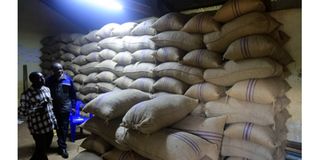
Under the current system, cocoa is delivered to the Mashewa warehouse, where buyers compete in auctions, and the highest bidder secures the produce.
Another farmer, Ms Zaina Kaniki, says the system has freed farmers from debt cycles previously created by middlemen.
“In the past, we sold cocoa at very low prices because of debts owed to middlemen. Now farmers can save money in banks and manage their finances independently,” she says.
Ms Kaniki says cocoa farming has enabled her to buy land and begin constructing her own house.
“If it were not for cocoa, I would not have managed to buy a plot. Now I am building my house and living better with my children,” she says.
For Ms Sofia Ngumulo from Kitivyo hamlet, cocoa farming has long been part of her family’s livelihood, but she says profitability has improved significantly in recent years.
She recalls how farmers previously relied on high-interest loans from middlemen once cocoa trees began flowering, leaving them with little profit at harvest.
“Now I am educating my child in a fee-paying school using cocoa income. I have also bought another farm worth more than Sh2 million. Life is completely different,” she says.
Muka Agricultural Marketing Cooperative Society (AMCOS) executive secretary, Ms Mwanahawa Seleman, says the WRS has brought the market closer to farmers and improved transparency in pricing.
A consignment of cocoa stored in a warehouse under the warehouse receipt system (WRS) used for trading by farmers in Muheza District, Tanga Region. PHOTO | MBONEA HERMAN
“In the past, when a farmer handed over cocoa to a trader, they had no information about the actual market price. Today, auctions are held locally, and prices are visible to everyone,” she says.
Muheza District Council Agricultural Officer, Mr Nyeza Adam, says cocoa and spices in the district are largely produced under organic farming systems, which are in high demand in European and global markets.
“Organic farming increases the value of our crops because we avoid harmful chemical inputs and rely on natural fertilisers and environmentally friendly pesticides,” he says.
He adds that improved farming techniques and agricultural education are beginning to yield positive results, noting that the council collected Sh70 million in revenue from cocoa within six months.
Muheza District Executive Director, Mr Jumaa Muhina, says the government, working with stakeholders, continues to support farmers through improved seedlings to boost production.
“In the 2025 and 2026 seasons, more than 200,000 cocoa and spice seedlings have been distributed. The aim is to increase production and improve livelihoods,” he says.
He adds that the council will continue encouraging investment in cocoa, spices, and citrus crops due to their strong contribution to household incomes and the district economy.
For farmers in Kisiwani, Tongwe, Potwe, Magoroto, Bwembwera, Nkumba, and Kwezitu wards, cocoa has evolved from a subsistence crop into a key driver of economic stability.
Through the WRS and organic farming, they now see cocoa not just as a crop, but as a pathway to dignity, development, and improved living standards.