Rusumo. The government is stepping up investment in roads, railways, ports and airports as it seeks to position itself as a regional transport and logistics hub serving East and Central Africa.
The strategy is centred on improving links between the Port of Dar es Salaam and neighbouring countries, including the Democratic Republic of Congo (DRC), Rwanda, Burundi, Zambia, Uganda, Malawi Mozambique and Kenya through an integrated transport network.
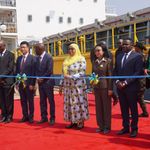
The latest milestone came last week when President Samia Suluhu Hassan launched construction of the 506-kilometre Tabora–Kigoma section of the Standard Gauge Railway (SGR), a project expected to strengthen trade with countries in the Great Lakes region.
Speaking during the launch in Kigoma on July 20, President Hassan said the government was positioning the region as more than the western terminus of the SGR.
She said Kigoma was being developed into a logistics and commercial gateway connecting Tanzania with eastern DRC, Burundi and Zambia through a combination of rail, lake and road transport.
The railway project forms part of a broader investment programme that includes expansion of Kigoma Port, the introduction of modern cargo vessels on Lake Tanganyika, rehabilitation of the historic MV Liemba, construction of a government shipyard and improvements at Kigoma Airport.
The projects are intended to improve the movement of goods between the Indian Ocean and the Great Lakes region while lowering transport costs and reducing transit time.
The government’s transport agenda also extends beyond the railway network.
At the weekend, Minister for Works Abdallah Ulega inspected the 92-kilometre Lusahunga–Rusumo road in Kagera Region, which links Tanzania with Rwanda and provides access to Burundi and eastern DRC.
Mr Ulega said President Hassan had directed the Ministry of Works to prioritise roads that strengthen cross-border connectivity and support regional trade.
“If you travel across Tanzania today, you will see roads, bridges, ports and railways under construction. The objective is to position Tanzania as the region’s leading transport hub,” he said.
He said strategic infrastructure would improve trade, facilitate movement of people and goods and enhance Tanzania’s competitiveness within the East African Community (EAC).
According to Mr Ulega, improvements to the Lusahunga–Rusumo road have significantly reduced travel time to Rwanda, making the corridor more efficient for transporters and traders.
Before visiting Kagera, the minister inspected the Kasulu–Manyovu road in Kigoma Region, another strategic route expected to improve access to Burundi and Rwanda once completed.
The projects form part of a wider programme to expand and modernise Tanzania’s road network.
According to the Ministry of Works, Tanzania’s road network currently spans 37,734.41 kilometres, of which 12,225.26 kilometres are paved.
Presenting the ministry’s budget estimates in Parliament in May, Mr Ulega said the Tanzania National Roads Agency (Tanroads) had completed 243.13 kilometres of tarmac roads and rehabilitated 94.36 kilometres of gravel roads during the financial year.
He said the country’s paved road network had expanded considerably since Independence in 1961, when Tanzania had only 1,360 kilometres of tarmac roads.
Successive governments constructed 9,369.81 kilometres of paved roads before the Sixth Phase Government took office. Since then, an additional 1,495.45 kilometres of roads and 18 major bridges have been completed, according to the minister.
The government expects continued investment in transport infrastructure to strengthen Tanzania’s position as a gateway for regional trade, supporting growing cargo volumes through the Port of Dar es Salaam while improving connectivity with landlocked neighbouring countries.
Officials say the long-term objective is to build an integrated transport system capable of supporting economic growth, attracting investment and reinforcing Tanzania’s role as a logistics centre for East and Central Africa.
Register to begin your journey to our premium contentSubscribe for full access to premium content