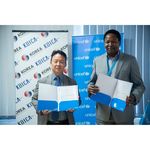
Dar es Salaam. Korea International Cooperation Agency (KOICA) has committed $48.5 million (about Sh126.46 billion) to projects in Tanzania’s education, health and water sectors.
The projects, which are at different stages of implementation, were presented during a media stakeholders’ workshop held in Dar es Salaam on Tuesday.
KOICA Education Programme Officer Jade Lawrence said the funding includes $10 million for Science, Technology, Engineering and Mathematics (STEM) education and $19.5 million for Technical and Vocational Education and Training (TVET).
Another $10 million is allocated for a Centre for Digital Health, while $9 million will support a water supply project in Kisarawe District, Coast Region.
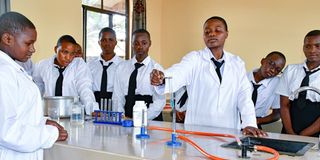
“The $10 million STEM project is aimed at encouraging students to pursue science subjects by addressing shortages of equipment and teachers,” said Ms Lawrence.
She said the programme is expected to benefit more than 3,000 students in Dodoma and Simiyu regions, covering all eight districts in Dodoma and five districts in Simiyu.
According to her, 13 model schools are being equipped with science laboratories and ICT facilities.
In the vocational education sector, Ms Lawrence said KOICA is constructing Morogoro Polytechnic College in Kihonda to strengthen technical training for young people.
The project also includes Training of Trainers programmes to improve teaching capacity.
KOICA has partnered with companies including Kilombero Sugar and Empower Leaf to align training with labour market needs.
On water supply, Ms Lawrence said the Kisarawe Water Project, implemented with the Rural Water Supply and Sanitation Agency (Ruwasa), will serve 19 villages across seven wards and is expected to reach full completion by 2031.
She said local artisans are being trained to maintain infrastructure, while 20 government officials will receive specialised training in South Korea.
In the health sector, KOICA is working with the Ministry of Health and the President’s Office–Regional Administration and Local Government on the GoTHoMIS project to establish a Centre for Digital Health.
Ms Lawrence said ICT equipment has been installed in 235 health facilities in Dodoma, while a Health Information System has been introduced in 153 primary healthcare centres.
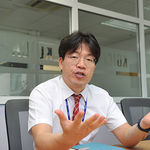
KOICA Country Director Sikhyon Kim said improved engagement with stakeholders, including the media, is key to raising awareness of project impact.
“Communication is critical for us to understand the community,” he said. “In the past, we may have had limited media engagement and limited understanding of the local community.”
He said improved communication would help raise awareness of project impacts in Tanzania and South Korea, pledging more transparent and regular engagement with media houses.
“Through your constructive comments and our shared views, we can build stronger cooperation,” he said, inviting journalists to visit KOICA-supported projects to enhance public understanding of Korea’s development assistance.
KOICA Deputy Country Director Seunghoon Beck said the agency has maintained an annual budget of about $23 million in Tanzania over the past three years, with increases expected as South Korea expands its Official Development Assistance (ODA) budget.
Addressing scholarship opportunities limited to government officials, Mr Beck said the arrangement reflects the KOICA government-to-government grant aid model.
“The ultimate goal is for trained officials to use the knowledge acquired in Korea for Tanzania’s benefit while strengthening cooperation between our two governments,” he said.
He clarified that other Korean programmes, including the Global Korea Scholarship (GKS), remain open to university students and private sector applicants.
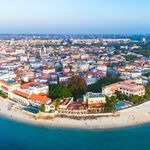
Mr Beck also highlighted ongoing infrastructure works, including a fisheries processing centre in Zanzibar.
In Dar es Salaam, he said KOICA is supporting referral hospitals through the construction of additional wards, including Neonatal Intensive Care Units (NICU), to reduce maternal and child health risks.