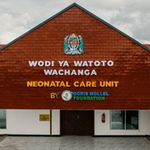
Kwimba. Tanzania’s largest neonatal care facility has opened in Kwimba District of Mwanza region, with capacity to save an estimated 1,300 prematurely born babies each year.
The modern facility, expands access to specialised newborn services in rural areas.
The Kwimba Neonatal Care Unit (NCU), constructed by the Doris Mollel Foundation, is the biggest of its kind in the country and the first purpose-built, patient-centred neonatal facility in rural Tanzania, according to the foundation.
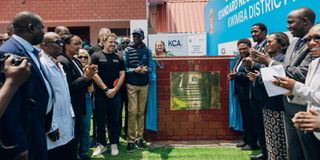
Launching the unit, the World Health Organization Regional Director for Africa, Prof Mohamed Janabi, said the project demonstrates how decentralised infrastructure can extend life-saving care beyond major urban centres.
“Kwimba is the answer to a question we have asked for too long: how do we reach the unreachable? Not with grand policy alone, but with district-level infrastructure that puts care where the mothers are,” he said.
“This facility is a blueprint for every rural community across Africa still waiting for its first neonatal intensive care unit," he said.
Bridging a critical gap
Kwimba District records 18,073 births annually, according to district officials, with approximately seven percent of babies born with low birth weight. Until now, the district had no neonatal intensive care beds, forcing families to travel nearly 100 kilometres along unpaved roads to Mwanza City for treatment.
Health officials say many critically ill newborns did not survive the journey.
Mwanza Region serves more than 3.5 million people across eight districts. Specialised neonatal services have largely been concentrated in the regional capital, leaving rural communities underserved despite high fertility rates and pregnancy-related complications requiring urgent intervention.
Founder of the Doris Mollel Foundation, Ms Doris Mollel, said the opening marks a shift from advocacy to direct investment in health infrastructure.
“I am proud of the collaborative work the foundation carried out hand in hand with the government in pushing for recognition of World Prematurity Day as a WHO calendar day. Today is proof that this is just the beginning, and there is more we can achieve together,” she said.
The Executive Chairman and Chief Executive Officer of Keep a Child Alive, Antonio Ruiz-Giménez Jr., whose organisation funded the project, described the initiative as a matter of equity rather than charity.
“This is not charity; this is justice. No child should be left behind in accessing equal opportunity,” he said.
Mothers already benefiting
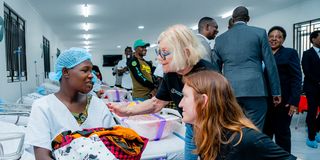
Jenny Petro, 26, a resident of Irumba, delivered her second child at 35 weeks last week. She was admitted to the facility after being diagnosed with high blood pressure and later gave birth safely.
“I have been taught how to care for my baby and how to provide skin-to-skin care. This place is very clean and the services are good. Even though I do not yet know when I will be discharged, I have peace knowing that my baby is doing well. Many thanks to the donors who collaborated with the Doris Mollel Foundation,” she said.
Dr Milka Emmanuel said the modern facility, equipped with advanced medical equipment, eliminates separation between mother and child — a critical factor for preterm babies who require skin-to-skin, or Kangaroo Mother Care, to regulate body temperature and strengthen bonding.
“Before this unit, we only had one room where we cared for a few premature babies, and they did not stay with their mothers. Now we can care for more than 1,000 premature babies each year. This is good news for us and for residents of Mwanza Region,” she said.
Esther Mathias, 21, who gave birth three weeks ago at eight months’ gestation, said she had feared losing her child.
“This is my second child, and I was very worried. But the services here are very good, and we are very grateful for saving our children’s lives,” she said.
Designed as a national model
Tanzania reduced under-five mortality from 81 to 67 deaths per 1,000 live births between 2015 and 2022, according to official statistics.
However, deaths within the first 28 days of life now account for nearly 40 percent of all under-five deaths, underscoring the need for strengthened neonatal care at district level.
The Kwimba NCU features 15 specialised neonatal beds fitted with incubators and warming equipment, Kangaroo Mother Care suites allowing mothers to remain with their babies, a dedicated breastfeeding and nutrition support centre, and on-site training facilities for community health workers.
To ensure uninterrupted service, the unit is powered by a solar-backed electricity system to cushion against grid outages.
The project was delivered through cooperation between the government of Tanzania and the Doris Mollel Foundation.
The Ministry of Health provided regulatory support, land and committed to staffing the unit with government-employed nurses and clinical officers.
Project leaders say the Kwimba Neonatal Care Unit has been designed as a replicable model for district-level neonatal services that can be adapted across Tanzania and other African countries.
Register to begin your journey to our premium contentSubscribe for full access to premium content