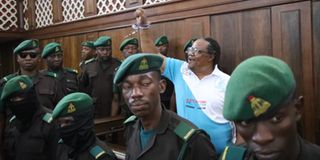
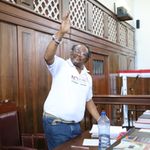
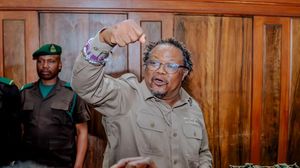
Dar es Salaam. Treason trial accused person, Chadema national chair Tundu Lissu, failed to contain his frustration over how his witness, Ms Brenda Rupia, was cross-examined regarding her profession in relation to her responsibilities within the party.
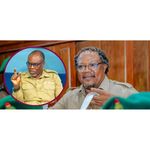
In the middle of the interrogation, Mr Lissu was forced to intervene while complaining about the prosecutor cross-examining the witness, Senior State Attorney Job Mrema.
Mr Lissu expressed annoyance, stating that the attorney was cross-examining the witness too loudly.
A second time, Mr Lissu was also forced to intervene, expressing displeasure over State Attorney Mrema calling the witness a fraudster, while stating that the word is unrecognised and is local slang from the attorney's home region.
Mr Lissu, who is also an advocate, faces a treason charge, accused of committing the offence of threatening the government, contrary to section 39(2)(d) of the Penal Code (PC) 2023 Revision.
He is alleged to have, on April 3, 2025, as a Tanzanian citizen, with seditious intent, incited the public to prevent the conduct of the 2025 General Election, by uttering and publishing words online to coerce the Head of the Tanzanian Government.
The words alleged to be treasonous were uttered by Lissu as follows: "They are saying one thing here, this stance indicates rebellion, it is true..., because we are saying we will block the election, we will incite rebellion, that is how to achieve change..., so we are going to disrupt things..., very much so, this election we are truly going to disrupt it..., we are going to disrupt things very badly..."
The case is being heard by a panel of three judges: Dunstan Ndunguru (panel leader), James Karayemaha and Ferdinand Kiwonde, at the High Court Dar es Salaam Sub-Registry, currently at the defence stage.
Ms Rupia is the fourth defence witness in the case. Introducing herself before commencing her evidence, she described herself as the party’s director of communications and publicity.
Yesterday, after completing her main evidence led by the accused, Mr Lissu, prosecutors began asking her cross-examination questions regarding various matters she explained in her evidence, an interrogation that concluded today, Wednesday, September 9, 2026.
Below is an excerpt of the interrogation between her and Attorney Mrema.
Attorney: Is it correct that you stated you are the Chadema director of communications and publicity?
Witness: That is correct.
Attorney: Regarding communications, what specific matters are you involved in?
Witness: I usually call journalists to come cover events, and the party communicates with the public.
Attorney: How do those subordinates under you execute their communication duties?
Witness: They usually communicate with the public through media outlets on behalf of the Communications Director.
Attorney: In other words, one of your duties is to inform the public, isn't that right?
Witness: That is correct.
Attorney: You will agree with me that one of the laws in this country regulates information services, is that correct?
Witness: That is correct.
Attorney: And you, as the director of communications and publicity, have you ever read that law?
Witness: I have read it before.
Attorney: Do you use it?
Witness: It is used.
Attorney: I am asking you as the director of communications, do you use it in your activities?
Witness: Yes, it is used.
Attorney: Who usually uses it? I am asking you right here.
Witness: Yes, I use it.
Attorney: What did you study?
Witness: Accountancy.
Attorney: Would I be correct to say you have no education whatsoever regarding journalism matters?
Witness: That is correct.
Attorney: And you have not attended any journalism college.
Witness: I have not.
Attorney: Witness, have you ever heard the term "kishoka" [unregistered practitioner]?
Witness: I have never heard it.
Attorney: You will agree with me that anyone performing information services without qualifications to provide such services according to law violates information provision ethics in this country?
Witness: I do not know.
Attorney: Is it correct by your answers you are telling the judges that while working for Chadema informing the public, you are not required to possess qualifications specified by the Information Act?
Lissu: My Lords, the attorney is asking harshly and shouting at my witness.
Witness: It is true the attorney is shouting.
Judge: Perhaps that is just his speaking style. Maybe he wants even the people upstairs [in the upper gallery of the courtroom] to hear, unless he is intimidating the witness.
Attorney: Witness, now answer my question.
Witness: That is not correct.
Attorney: Witness, do you want to tell the judges that it is not correct for you, working as communications director, not to have the qualifications specified by the Information Act?
Witness: It is not correct that I know nothing, because in my department, there are many of us.
Attorney: Witness, you will agree with me that anyone without journalism qualifications is a fraudster [kanjanja]?
Witness: I do not know the meaning of "kanjanja".
Lissu: My Lords, let the attorney ask clear matters. That word "kanjanja" is not in the dictionary. Let the attorney not use dialect words from his home region.
The court granted Attorney Mrema the opportunity to clarify the meaning and terminology so the witness understood before recording her response.
Attorney: My Lords, this is a word very commonly used in the media industry; its meaning is a person who provides information services without professional expertise or education, just like a crafty opportunist.
Judge Ndunguru: Witness, undoubtedly you have understood.
Witness: That is not correct, My Lords.
Earlier, the witness was cross-examined by State Attorney Winiwa Kasala regarding her profession as follows:
Attorney: Is it correct that your responsibilities are as director of communications?
Witness: That is correct.
Attorney: Witness, is it correct that you have not explained to the Court your journalism education?
Witness: I have none.
Attorney: Is it correct or not correct that, in executing your duties, you operate out of routine without journalism qualifications?
Witness: That is not correct.
Register to begin your journey to our premium contentSubscribe for full access to premium content